
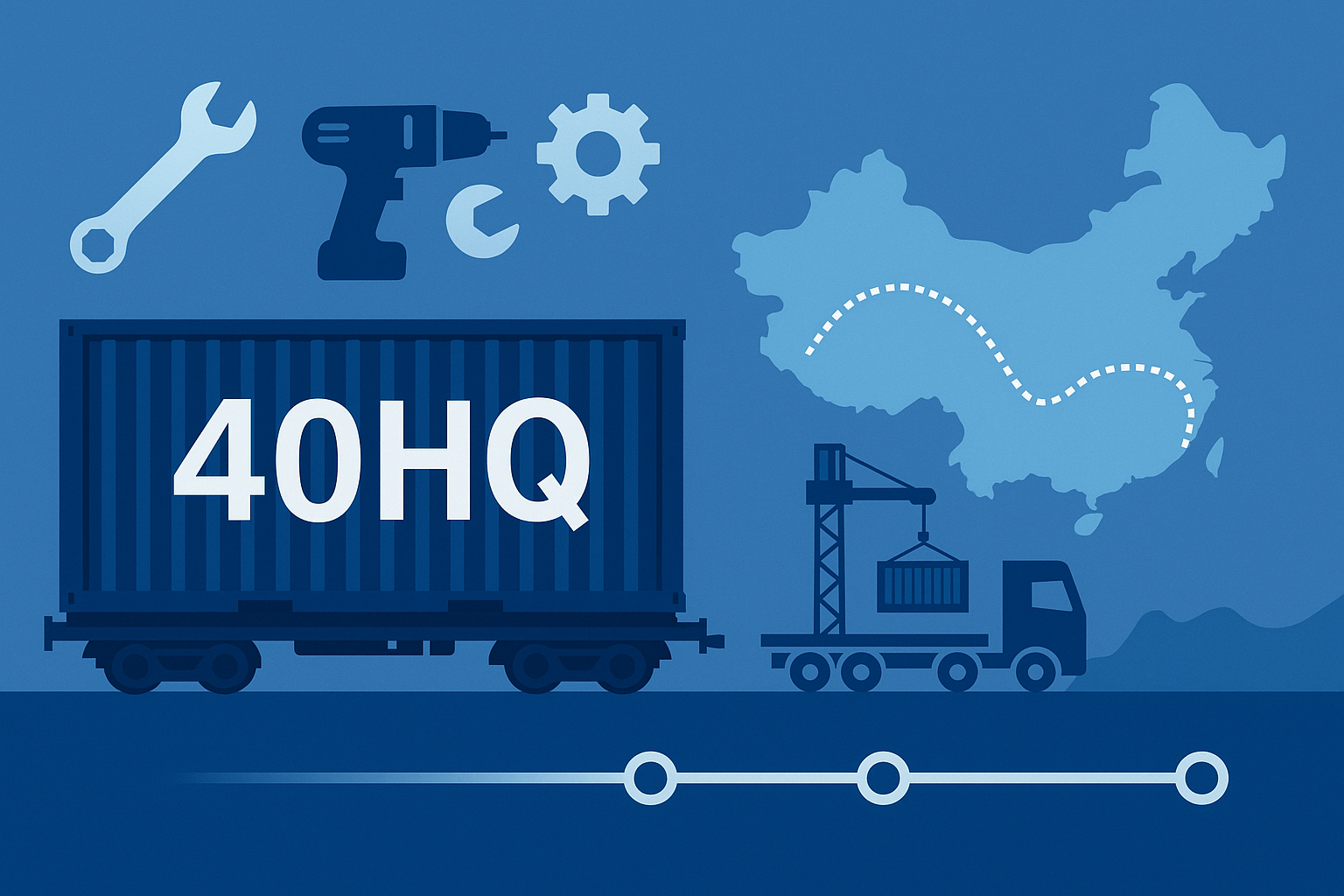
Although 40HQ FCL detention prevention for hardware tools from China to Europe has become a major challenge for many importers, it can be managed effectively with the right operational strategies. Moreover, as supply chains tighten and European ports experience seasonal congestion, companies need practical steps to avoid rising detention fees. Therefore, this article provides a clear, actionable framework—supported by insights from Top China Freight and resources such as our homepage—to help you move hardware tools from China to Europe on time and without unnecessary cost.

What Makes 40HQ FCL Detention Prevention for Hardware Tools from China to Europe So Challenging?
Detention spikes quickly on the China–Europe lane, especially when hardware tools require long unloading times due to mixed carton sizes, sharp-edge items, and palletized configurations. Moreover, European ports such as Rotterdam, Hamburg and Antwerp experience seasonal congestion, which increases truck appointment delays. Although many shippers assume detention is unavoidable, the issue usually begins earlier—at booking confirmation, container loading, and document readiness. When these three areas fall out of sync, detention costs compound rapidly.
Because hardware tools are often heavy, dense, and irregularly shaped, carriers also expect stricter compliance with weight distribution rules. Therefore, a proactive approach involving route planning, early document filing, and optimized packing is essential.
How Should You Optimize 40HQ Container Loading to Reduce Detention Risk?
Efficient loading dramatically reduces unloading times in Europe. Furthermore, organized cargo placement helps trucking companies complete deliveries within free-time limits.
Segment tools by weight and size
Although many suppliers load cartons as delivered, segmenting them helps prevent rehandling at destination. Lighter cartons should face the doors, while heavy mechanical tools should be fixed deeper inside the 40HQ.
Create a logical unloading path
Additionally, the final unloading sequence should match the consignee’s warehouse receiving plan. When forklifts can move through the container without rearranging items, unloading speeds improve instantly.
Use reinforced pallets for heavy tools
Mixed hardware loads often collapse due to sharp metal edges. However, reinforced pallets with corner protection reduce damages and speed up EU customs inspection.
How Can Booking Strategies Prevent Detention Before Cargo Even Ships?
Detention prevention begins weeks before sailing. Because European ports operate under slot-control systems, early booking improves the likelihood of obtaining morning truck appointments, reducing the risk of missing delivery windows.
Choose carriers with predictable Europe schedules
Although the cheapest rate may be tempting, unpredictable transshipments increase detention risks. Stable carriers cost slightly more but reduce downstream delays—especially during peak seasons.
Lock in trucking appointments early
Booking ocean freight should coincide with securing inland transport at the destination. Moreover, importers who pre-book trucking capacity enjoy priority unloading, particularly in peak months.
Coordinate route selection with demand cycles
During periods of Mediterranean port congestion, Northern European gateways move faster. Therefore, switching between Rotterdam and Hamburg based on weekly traffic forecasts keeps transit predictable.
Why Is Customs Readiness Essential for Hardware Tools?
Most detention cases arise because customs documentation is incomplete. Hardware tools are frequently classified under multiple HS Codes, and minor discrepancies cause inspection delays. Nevertheless, early preparation eliminates unnecessary stops.
Key customs documents for EU hardware tool imports
| Document | Purpose | Common Issues |
|---|---|---|
| Commercial Invoice | Declares value & product description | Missing tool specs or material composition |
| Packing List | Lists carton and pallet quantities | Inaccurate weight distribution |
| CE / Compliance Certificates | Confirms EU conformity | Missing for power tools |
| Bill of Lading | Ownership & transport record | Mismatch between shipper and consignee |
| HS Code Declaration | Determines duties | Incorrect metal category or function |
Because European customs increasingly use automated scanning systems, consistent documentation speeds clearance and allows trucks to enter terminals without delay.
How Does Supply Chain Synchronization Reduce Detention Fees?
Although hardware tools move in bulk, their supply chain involves several fragmented steps—factory readiness, export filing, carrier cut-offs, sailing windows, destination arrival, customs, and final-mile delivery. When one step slips, detention becomes unavoidable.
Improve readiness alignment
Suppliers should finalize export cartons 48 hours before CY cut-off. Moreover, coordinating this timeline with China trucking teams prevents rushed loading.
Share ETA updates in real time
Europe-bound routes often see shifting ETAs due to transshipment congestion in Singapore or Colombo. However, live tracking gives importers more time to adjust trucking appointments and warehouse labor planning.
Create a unified loading–delivery calendar
When production schedules and deliveries do not align, detention costs rise sharply. A synchronized calendar ensures every node—from China to Europe—moves in the same rhythm.
Case Studies
Shanghai → Rotterdam(Hardware Tools, 40HQ)
- Cargo: Assorted hand tools, power tool components, metal fasteners
- Volume: 1 × 40HQ
- Method: FCL ocean
- Loading Strategy: Segmented cartons by material type
- Transit Time: 31 days
- Detention Avoided: 4 days saved due to early trucking booking
- Cost Impact: ~€480 saved
Ningbo → Hamburg(Industrial Hardware Kits, 40HQ)
- Cargo: Industrial tool sets, precision metal parts
- Volume: 1 × 40HQ
- Method: FCL ocean
- Documentation Strategy: Early HS Code verification
- Transit Time: 34 days
- Detention Avoided: 3 days saved
- Cost Impact: ~€360 saved
Why Should Importers Work with a Professional Logistics Partner?
Although shippers can manage detention mitigation independently, many lack synchronized visibility across carriers, customs brokers and trucking companies. Therefore, partnering with an experienced provider such as Top China Freight improves planning accuracy. Our teams coordinate with suppliers, verify loading standards, prepare customs files, and arrange delivery appointments. Additionally, our sea freight, air freight, and FCL/LCL services offer flexible alternatives when urgent shipments require faster control.
What Cost Structure Should Importers Expect for Detention Prevention?
| Cost Category | Typical Range | How Prevention Reduces Cost |
|---|---|---|
| Detention Fees | €90–€180/day | Faster unloading + aligned trucking |
| Storage Fees | €40–€80/day | Early customs clearance |
| Truck Standby | €60–€120/hour | Pre-booked appointments |
| Document Recheck | €15–€35 | Accurate HS coding & packing data |
| Emergency Warehousing | €200–€400/day | Avoided by stable routing |
Although the exact amounts vary by port, allocating budget to planning—rather than paying penalties—generates measurable savings.
Conclusion
In summary, 40HQ FCL detention prevention for hardware tools from China to Europe relies on proactive planning, documentation accuracy and synchronized movement across the supply chain. Moreover, shippers who apply structured loading rules and route selection strategies reduce detention risk dramatically. When supported by expert logistics partners, importers gain a stable, predictable delivery experience and should request a tailored plan to protect their next shipment.
Request A Free Quote
Need a reliable logistics partner? Share your shipment details and we’ll provide a tailored quotation quickly and accurately.
FAQ:
What factors influence detention fees in Europe?
Detention depends on port congestion, truck availability, customs inspection time and warehouse readiness. Better planning and early appointments help reduce exposure.
How early should trucking be booked for a 40HQ shipment?
Booking 5–7 days before vessel arrival ensures better slot availability and prevents delivery delays that trigger detention fees.
Can split deliveries increase detention risk?
Often yes. Multiple destinations require precise unloading sequences; otherwise, trucks wait longer and detention fees rise.
How can importers prevent customs inspections?
Providing accurate product descriptions, CE certificates and packing data reduces inspection likelihood, speeding clearance.
Do carriers offer extra free detention days?
Some premium contracts include extended free time, but availability depends on season and carrier negotiation.