
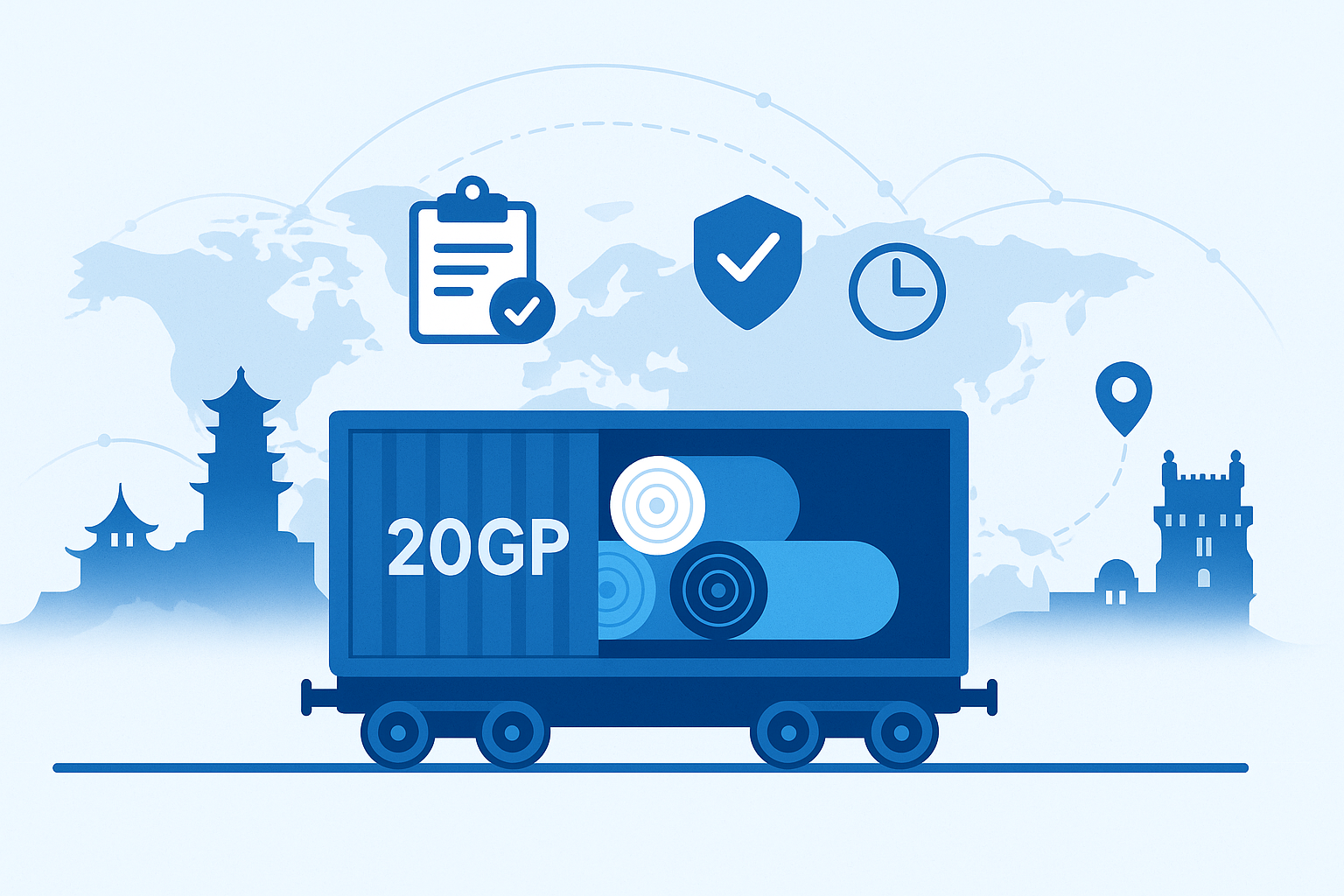
Although many textile importers focus on freight rates or supplier lead times, the real challenge often lies in 20GP FCL detention prevention for textiles from China to Portugal. Therefore, businesses that fail to control documentation, container flow, and last-mile coordination frequently face unnecessary fees and delivery disruptions. As a result, this article provides practical, repeatable strategies you can implement immediately, and it links each step with the operational realities handled daily by global forwarders such as Top China Freight.
Why Does 20GP FCL Detention Prevention Matter for Textile Supply Chains?
Because textile shipments move through multiple checkpoints, delays can quickly accumulate and trigger costly detention charges. Moreover, apparel and fabric importers often operate on tight distribution calendars; therefore, any slowdown at origin, transshipment, or destination immediately impacts sales cycles. When FCL processes stay aligned with production schedules and customs requirements, textile supply chains flow more predictably and support better profit margins.
How Can Shippers Optimize 20GP Container Loading for Textile Cargo?
Proper loading is the cornerstone of detention prevention, since poorly organized cargo often requires extra handling at destination. Additionally, textile shipments with multiple SKU types, rolls, or cartons must be positioned strategically to reduce unloading time.
Key loading optimization steps
- Use a unified packing list layout that clearly indicates item grouping and weight distribution.
- Position heavier textile rolls at the bottom layers to simplify cargo removal.
- Implement palletization only when required by the buyer, since it increases container volume usage.
- Add QR-coded labels to reduce unloading confusion.
These actions support 20GP container loading optimization, ensuring faster cargo release upon arrival and reducing congestion at the consignee’s warehouse.
What Documentation Helps Reduce Detention for Textile Imports?
Clear documentation significantly shortens customs processing time. Although textile items rarely fall under restricted goods, detailed descriptions are required to avoid additional inspections.
Common documentation required
- Commercial invoice with fabric composition
- Packing list with roll count and carton numbers
- HS code verification for textile categories
- Certificate of origin when required by Portugal
- Export declaration consistent with China export documentation for textiles
Furthermore, when these documents follow uniform formatting, customs clearance becomes smoother and predictable, enabling importers to avoid unnecessary storage days at the terminal.
How to Coordinate Customs Clearance to Prevent FCL Detention?
Since customs delays often trigger detention, importers must prepare clearance steps before vessels arrive. Therefore, strong coordination between suppliers, forwarders, and customs brokers ensures timely processing.
You may consider pre-submitting documents to your broker or partnering with a service provider offering end-to-end support, such as customs brokerage integrated within broader logistics solutions. When needed, you may also use specialized partners offering guidance similar to what Top China Freight provides through its streamlined customs brokerage service.
Case Studies
Smooth Textile Delivery From Guangzhou to Porto
Cargo: 20GP containing 520 rolls of polyester fabric
Shipper: Mid-size apparel wholesaler
Route: Guangzhou → Porto
Mode: FCL
Transit Time: 30 days
Total Cost: Competitive mid-market rate
Outcome: By applying detention-free FCL shipping strategies—including early customs document preparation and pre-booked drayage—the consignee unloaded the container within 24 hours, avoiding USD 400–600 in potential detention fees.
Lisbon Distribution Project for High-Value Textile Blends
Cargo: Mixed textile rolls (cotton–spandex blends)
Shipper: EU fashion label sourcing from Zhejiang
Mode: 20GP FCL
Route: Ningbo → Lisbon
Transit Time: 32 days
Total Cost: Standard all-in FCL rate
Outcome: The importer coordinated with Top China Freight’s team to optimize loading order and secure customs clearance. Because unloading became much faster, the consignee prevented detention charges entirely and maintained consistent delivery schedules.

How to Manage Transit Time for Detention Prevention on the China–Portugal Route?
Transit time accuracy influences labor scheduling, warehouse availability, and truck dispatch. Consequently, delayed arrival predictions make it harder to book drayage on time.
Below is a reference table outlining general transit ranges for common China export regions to Portugal:
| Origin Port (China) | Destination (Portugal) | Transit Time Range | Notes |
|---|---|---|---|
| Shanghai | Porto | 29–34 days | Stable weekly sailings |
| Ningbo | Lisbon | 31–36 days | Occasional transshipment |
| Qingdao | Porto | 33–38 days | Longer northern route |
| Shenzhen | Lisbon | 28–33 days | Fastest South China route |
Data based on market averages; may vary.
These insights strengthen transit time management for FCL shipments, helping reduce port storage costs and avoid last-minute trucking delays.
Why Partnering With a Professional Forwarder Reduces Detention Risk?
Although companies can manage parts of the process internally, professional logistics partners bring structure, visibility, and contingency planning. Moreover, forwarders like Top China Freight provide tailored textile shipping solutions across sea, air, and multimodal channels. When cargo requires more resilient routing, importers may explore complementary services such as sea freight or door-to-door service to streamline the entire supply chain.
By relying on experienced partners, textile importers gain consistent access to scheduling support, customs compliance guidance, and long-term detention reduction strategies.
What Role Does Supply Chain Visibility Play in Detention Prevention?
Since textile orders often follow fast-moving retail cycles, visibility affects restocking decisions. Therefore, importers must track not only vessel departure and arrival but also customs status and final-mile movement.
Key visibility tools
- Real-time vessel tracking dashboards
- Automated customs status notifications
- Warehouse appointment scheduling systems
- ETA variance alerts
These technologies support textile supply chain efficiency improvement, especially during seasonal demand spikes.
Conclusion
Although many importers underestimate the impact of detention on cost and schedule performance, effective planning dramatically improves outcomes for 20GP FCL detention prevention for textiles from China to Portugal. Moreover, when documentation, loading, transit time control, and destination coordination work in harmony, textile shipments move with stability and predictable cost structures. Therefore, businesses aiming to protect margins and avoid operational disruptions should adopt the prevention strategies outlined here and partner with a capable logistics provider for long-term success.
Request A Free Quote
Need a reliable logistics partner? Share your shipment details and we’ll provide a tailored quotation quickly and accurately.
FAQ:
What affects detention fees for textile FCL shipments?
Detention fees rise when containers are not returned within the allowed free days. Delays often come from customs issues, slow unloading, or missing documents. Early coordination reduces the risk significantly.
How can I speed up customs clearance for textile imports?
Accurate HS codes, clear fabric descriptions, and pre-submitted documents help accelerate clearance. Working with an experienced broker also keeps inspections and paperwork delays under control.
Should I book drayage before the vessel arrives?
Booking early is recommended. Pre-arranged trucking ensures quick pickup once the container is released, reducing the chance of entering detention due to truck shortages or peak-season congestion.
What documentation errors commonly slow textile imports?
Incorrect HS codes, missing roll counts, and inconsistent invoice–packing list details frequently trigger customs questions. Clean, unified documentation helps avoid rechecks and storage fees.
How do peak seasons influence detention risk?
Peak demand reduces trucking capacity, increases port congestion, and slows warehouse processing. Planning earlier departure windows and forecasting orders minimizes detention exposure.