
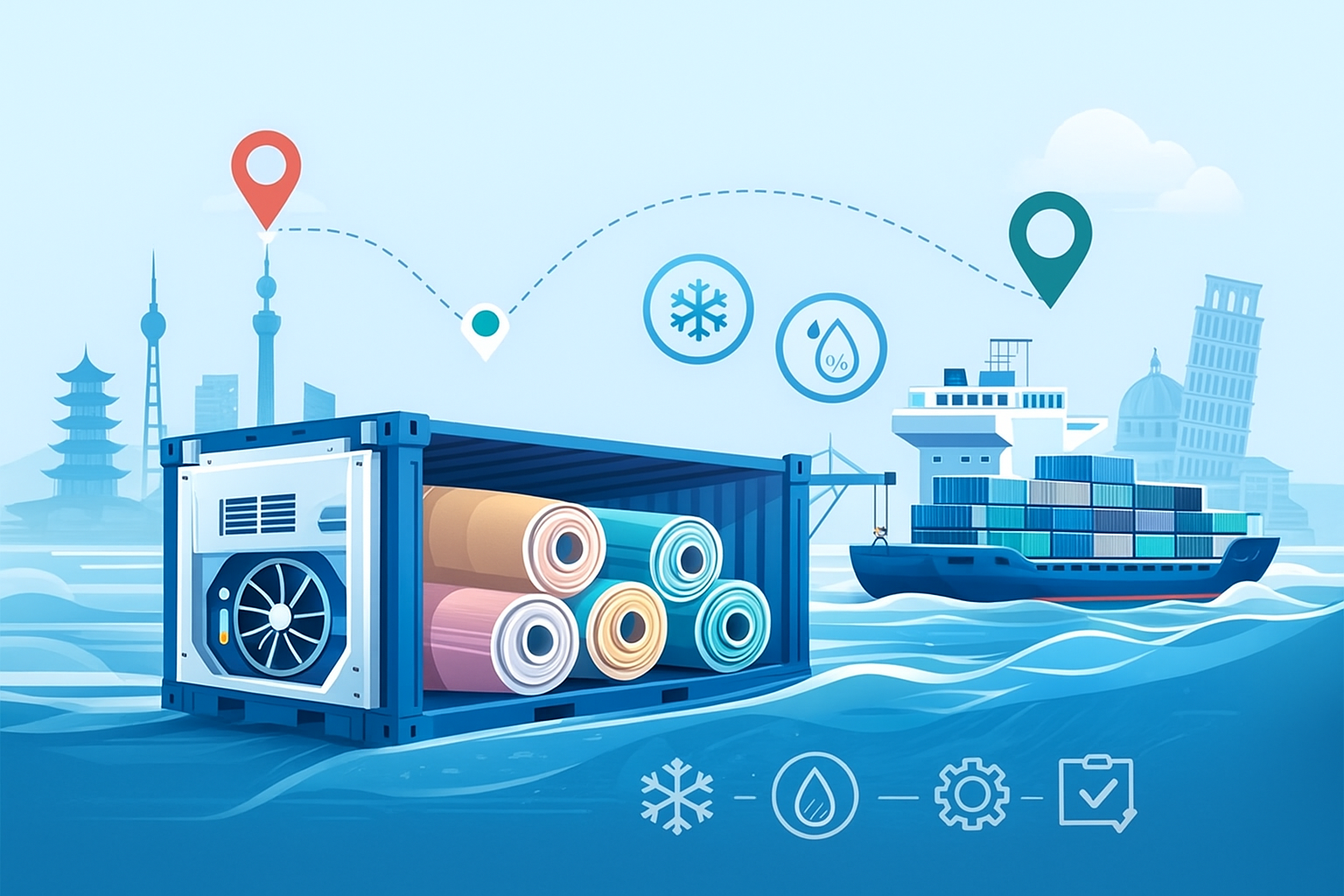
Although textile supply chains demand precise timing and strict moisture control, managing the Reefer FCL transit time for textiles from China to Italy becomes even more challenging during seasonal congestion and unpredictable routing changes. Therefore, importers must combine temperature-controlled planning, accurate documentation, and proactive tracking, and resources like the Top China Freight homepage help build a reliable foundation. Moreover, this guide provides actionable strategies to stabilize transit times, protect textile integrity, and streamline the China–Italy cold-chain workflow.
What Makes Reefer FCL Essential for Textile Shipments?
Textiles can absorb moisture, deform under unsuitable temperatures, or lose quality during long-haul ocean transport. Consequently, reefer FCL containers offer controlled humidity, stable airflow, and precise temperature settings that keep fabrics intact. Moreover, temperature-controlled shipping for textile products reduces mold growth and fiber distortion—risks that frequently impact garments, cotton blends, wool, leather patches, and technical fabrics.
Because reefer units protect sensitive materials throughout the supply chain, they remain the preferred choice for high-value or fashion-grade textiles destined for Italian apparel manufacturers.
How Is Reefer FCL Transit Time from China to Italy Determined?
Reefer transit time varies depending on carrier routing, port rotation, equipment availability, and seasonal freight conditions. Although the baseline schedule may appear stable, reefers often move through specific terminals with limited capacity, which can extend handling times.
Key Transit Time Influencers
- Port congestion at Shanghai, Ningbo, or Qingdao
- Reefer-capable terminal space in Genoa, La Spezia, or Trieste
- Carrier reefer slot allocation
- Seasonal slowdowns linked to European textile demand cycles
- Routing through transshipment hubs such as Singapore or Piraeus
Because of this variability, importers should rely on predictive scheduling tools that monitor reefer container flows and alert buyers to potential delays.
What Transit Times Should Importers Expect for China–Italy Reefer FCL?
Transit time typically ranges 27–40 days, depending on routing and vessel frequency. Although direct services provide shorter windows, transshipment routes offer better flexibility during peak seasons.
Estimated Reefer FCL Transit Time for Textiles (China → Italy)
| Route Type | Transit Time | Notes |
|---|---|---|
| China → Genoa | 27–33 days | Fastest discharge for apparel supply chains |
| China → La Spezia | 30–36 days | Stable option with strong rail access |
| China → Trieste | 32–40 days | Slightly longer; efficient inland links |
Moreover, seasonal textile cycles—such as spring/summer collection launches—can impact carrier reefer allocation, causing variations in overall transit time reliability.
How Documentation Accuracy Impacts Reefer Transit Time?
Although documentation seems unrelated to transit speed, errors often cause customs delays or terminal holds, extending the total journey. Because textile moisture-protection requirements appear in packing descriptions, missing details may prompt inspections or reefer integrity checks.
Common Documentation Needs for Textile Reefers
- Commercial invoice with textile fiber composition
- Packing list with bale counts and weights
- HS codes for garment fabrics, yarns, or semi-finished textile goods
- Moisture-control specifications
- Certificates for fabric treatments (if applicable)
Therefore, documentation accuracy plays a key role in minimizing downstream delays at Italian discharge ports.

Case Studies
Textile Reefer Shipment via Shanghai → Genoa
Origin: Shanghai
Destination: Genoa, Italy
Cargo Type: High-quality cotton blends
Transit Time: 29 days
Freight Method: Reefer FCL with temperature & humidity control
Cost Reference: Mid-range seasonal pricing
Key Success Factors: Early booking, moisture-control packaging, stable carrier schedule
Because the importer tracked reefer temperature using remote monitoring, small deviations were corrected quickly. Moreover, advance customs documentation allowed immediate release at Genoa, resulting in a smooth inland transfer to northern Italy.
Reefer FCL Textiles via Ningbo → La Spezia
Origin: Ningbo
Destination: La Spezia, Italy
Cargo Type: Wool fabrics + technical textiles
Transit Time: 33–36 days
Freight Method: Reefer FCL with advanced humidity control
Cost Reference: Upper-mid due to seasonal demand
Key Success Factors: Predictive scheduling tools, carrier reefer availability, optimized routing
Although peak-season congestion affected several Asia–Europe routes, the importer used a predictive scheduling platform to avoid sailings with high delay risk. Consequently, reefer conditions remained stable during transit, protecting fabric quality and reducing delivery variability.
Documentation & Temperature-Control Checklist
Reefer FCL Documentation & Handling Requirements for Textiles
| Requirement Type | Key Actions | Common Issues |
|---|---|---|
| Commercial Docs | Match fiber composition & origin data | Incorrect HS codes |
| Packing Details | Specify bale count, weight & moisture protection | Missing moisture specs |
| Reefer Settings | Set temperature & ventilation parameters | Improper vent openings |
| Monitoring | Use real-time reefer data tracking | Gaps in trip data |
| Customs Prep | Prepare certificates & treatment declarations | Delayed clearance |
Because each requirement supports stable reefer conditions, combining accurate documentation with strong temperature-control practices ensures predictable transit times.
How Supply-Chain Visibility Improves Transit-Time Predictability?
Visibility platforms consolidate vessel ETAs, reefer temperature data, port updates, and customs progress into a single interface. Additionally, they help identify disruptions early—such as weather patterns affecting Mediterranean routes or slowdowns at transshipment hubs. Because textiles often serve seasonal production cycles, proactive adjustments based on these insights keep deliveries aligned with Italian apparel supply chains.
Many companies integrate visibility tools provided by experienced partners like Top China Freight to strengthen monitoring and reduce timeline uncertainty.
it. Ut elit tellus, luctus nec ullamcorper mattis, pulvinar dapibus leo.
How Do Italian Customs Requirements Influence Reefer FCL Transit Time?
Italian customs require precise documentation for textiles, especially when fabrics undergo chemical treatments, bleaching, or finishing processes. Although customs clearance at Italian ports is efficient, discrepancies such as incorrect fiber composition or missing certificates can extend reefer dwell time. Moreover, customs may inspect moisture-control procedures for sensitive textiles arriving in reefers.
Because customs holds shorten the effective “shelf life” of production timelines, importers must ensure documentation accuracy before cargo departs China.
Conclusion
Effective management of the Reefer FCL transit time for textiles from China to Italy requires accurate documentation, proactive routing, climate-stable loading methods, and strong end-to-end visibility. Moreover, textile importers who coordinate closely with carriers, customs brokers, and inland distributors consistently achieve reliable delivery timelines that support Italy’s fast-moving apparel and manufacturing sectors. When businesses seek professional cold-chain guidance, partnering with experienced logistics teams helps maintain product quality and operational stability.
Request A Free Quote
Start shipping smarter with TopChinaForwarder today! 🚢✨ Request a Free Quote 📝 and get a tailored logistics plan built around your cargo and timeline.
FAQ:
What affects reefer FCL transit time for textiles?
Routing choices, port congestion, reefer availability, and seasonal textile cycles all influence timing.
How early should I book a reefer container?
Securing reefer space 2–3 weeks early helps guarantee availability during peak textile seasons.
Can moisture damage occur during reefer transit?
It can if ventilation is misconfigured, so proper airflow and desiccants are essential.
Does transshipment increase transit time risk?
Sometimes. Routing through hubs adds variability, though it increases sailing frequency.
Is real-time reefer monitoring worth the cost?
For high-value textiles, monitoring helps prevent quality issues and reduces operational risk.