
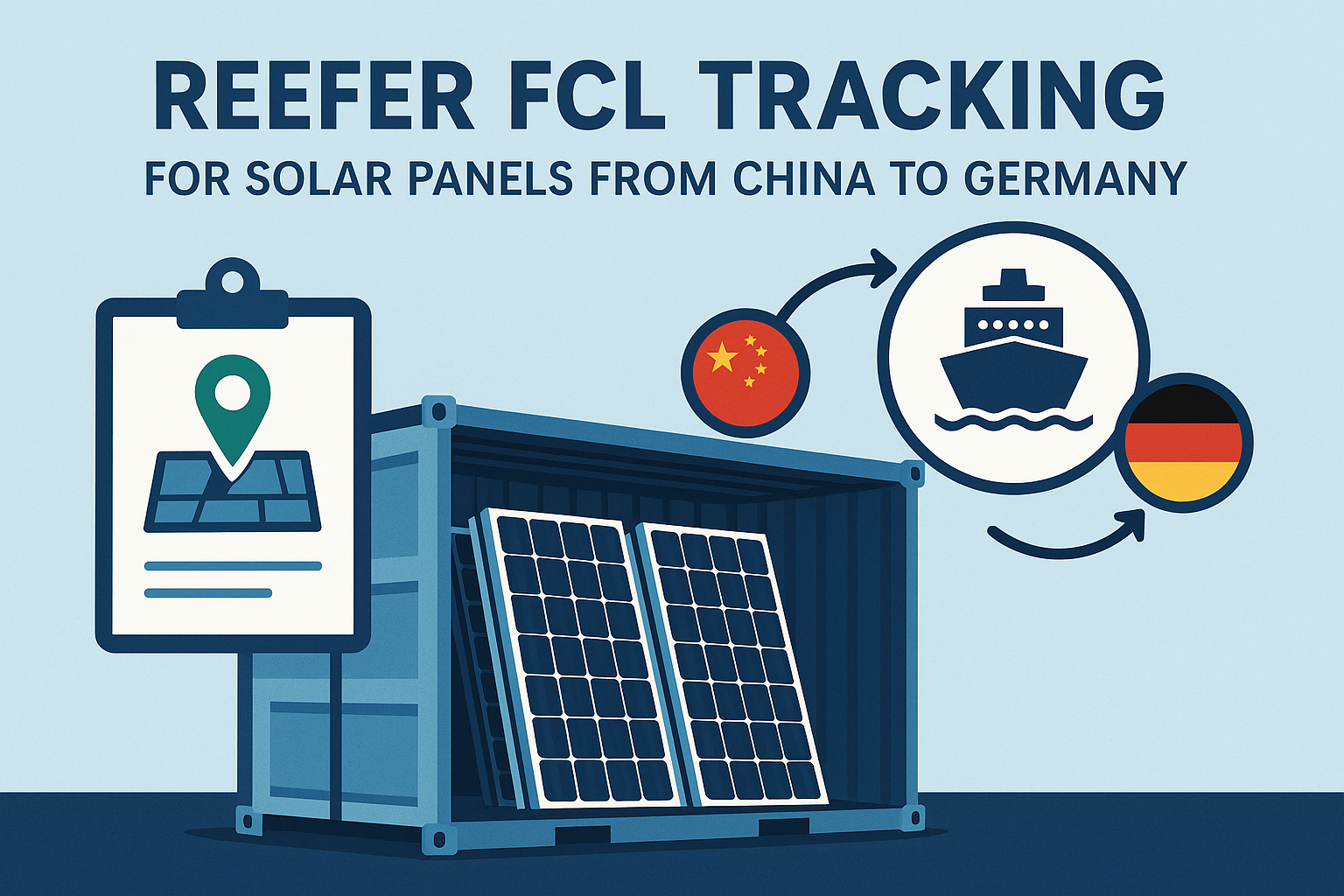
Shipping renewable energy equipment requires accuracy, reliability, and real-time monitoring. Managing Reefer FCL tracking for solar panels from China to Germany ensures temperature stability, transparency, and secure delivery across long ocean routes. This article explores the importance of reefer tracking, transit processes, costs, and logistics best practices for solar exporters.

Why Is Reefer FCL Shipping Necessary for Solar Panels?
Solar panels, though durable, are sensitive to humidity and extreme temperature fluctuations. Reefer containers provide a controlled environment (18–25°C) that minimizes condensation risks and protects delicate silicon components.
| Container Type | Temperature Control | Best For | Typical Cargo Weight (Tons) |
|---|---|---|---|
| 20GP Standard | No | Regular goods | 22 |
| 40HQ Standard | No | General dry cargo | 28 |
| Reefer FCL (20GP/40HQ) | Yes (−25°C to +25°C) | Solar panels, electronics | 26–28 |
Moreover, reefer containers are equipped with IoT-based tracking systems, enabling exporters to monitor location, temperature, and humidity levels throughout the journey.
What Is Reefer FCL Tracking and How Does It Work?
Reefer FCL tracking combines GPS, temperature sensors, and telematics technology to provide end-to-end visibility during shipment. The system transmits real-time data through satellite networks and GSM signals, allowing users to view updates via web portals or mobile apps.
Main tracking features include:
- Continuous location updates every 30 minutes.
- Temperature deviation alerts.
- Humidity and vibration monitoring.
- Geofencing for port entry and departure notifications.
These features ensure solar panels remain within optimal conditions and comply with European import safety standards.
How Long Is the Reefer FCL Transit Time from China to Germany?
Transit time depends on the departure port, destination terminal, and carrier route. The average transit time from China to Germany ranges from 30 to 38 days.
| Route | Port of Loading | Destination Port | Transit Time (Days) | Remarks |
|---|---|---|---|---|
| Shenzhen → Hamburg | Shekou Port | Port of Hamburg | 30–33 | Fastest and most stable route |
| Ningbo → Bremerhaven | Ningbo Port | Bremerhaven | 32–36 | High reliability and volume |
| Shanghai → Rotterdam → Hamburg (Transship) | Shanghai Port | Hamburg via Rotterdam | 34–38 | Slightly longer with transshipment |
Additionally, using direct sailings and efficient inland rail connections shortens total delivery time to major German cities such as Berlin, Munich, and Frankfurt.
What Factors Affect Reefer FCL Tracking and Transit Performance?
Even with advanced tracking, several variables influence overall shipment efficiency.
| Factor | Description | Impact on Transit |
|---|---|---|
| Port Congestion | Busy terminals delay loading/unloading | +3–5 days |
| Customs Inspection | Random checks in Hamburg or Bremerhaven | +2 days |
| Weather Conditions | Storms in the Indian Ocean or Suez | +3 days |
| Equipment Shortage | Reefer container availability | +5 days |
| Documentation Errors | Incorrect paperwork or HS codes | +1–3 days |
Hence, exporters must coordinate documentation and booking early to ensure on-time sailing and delivery.
Real Case Studies: Reefer FCL Solar Panel Shipments to Germany
Case 1 – Shenzhen to Hamburg
Cargo: 40HQ Reefer, 26 tons of photovoltaic modules
Transit Time: 31 days
Cost: USD 3,850
Result: Continuous GPS tracking ensured 100% visibility and zero temperature deviation.
Case 2 – Ningbo to Bremerhaven
Cargo: 20GP Reefer, 22 tons of mono-crystalline panels
Transit Time: 33 days
Cost: USD 3,420
Result: Minor delay of two days due to port congestion, but product integrity maintained.
What Are the Costs Involved in Reefer FCL Tracking for Solar Panels?
Reefer shipping costs are slightly higher than standard FCL due to equipment, monitoring, and power requirements.
| Cost Element | Average Range (USD) | Description |
|---|---|---|
| Ocean Freight | 3,500 – 4,200 | Based on port pair and season |
| Reefer Surcharge (RSC) | 150 – 250 | Energy and maintenance fee |
| Tracking Subscription | 50 – 100 | GPS/IoT monitoring platform |
| Insurance | 0.3% – 0.6% of cargo value | All-Risk coverage |
| Customs and Handling | 120 – 200 | Export/import documentation |
Despite higher rates, tracking-enabled reefer FCL shipping provides unmatched security and compliance for solar products.
What Documents Are Required for Reefer Solar Panel Exports?
Accurate documentation accelerates customs clearance and prevents delays at European ports.
| Document | Purpose |
|---|---|
| Bill of Lading | Confirms shipment and carrier contract |
| Commercial Invoice | Declares shipment value for customs |
| Packing List | Specifies cargo details and count |
| Certificate of Origin | Ensures duty preference under EU-China agreements |
| Product Compliance Certificate | Verifies CE and ISO standards |
| Insurance Certificate | Confirms full-value cargo coverage |
Proper documentation not only ensures regulatory compliance but also protects shippers during inspection disputes.
How Does TopChinaFreight Simplify Reefer FCL Tracking for Solar Panels?
TopChinaFreight specializes in renewable energy logistics, offering customized Reefer FCL tracking for solar panels from China to Germany. Their integrated technology platform combines real-time tracking, temperature management, and predictive analytics for route optimization.
Service Highlights:
- IoT-based reefer container tracking across all major carriers.
- Proactive monitoring and alert system for temperature deviations.
- Door-to-door delivery with customs clearance in both countries.
- Strategic partnerships with COSCO, Maersk, and MSC for space security.
- Dedicated solar logistics team with export documentation expertise.
Additionally, their multilingual customer service team provides 24/7 updates throughout the transit process.
Conclusion
In summary, Reefer FCL tracking for solar panels from China to Germany ensures real-time visibility, cargo protection, and on-time delivery. With reliable tracking technology and specialized reefer logistics, exporters minimize risks associated with temperature fluctuations and port delays. Partnering with experienced providers like TopChinaFreight offers comprehensive support — from booking to delivery — ensuring efficient, safe, and traceable shipments for the growing renewable energy industry.
Request A Free Quote
Get started with TopChinaFreight today! 🚢✨ Simply Request a Free Quote 📝 to receive a customized shipping solution tailored to your needs. Our experts will provide the best rates 💰, fastest routes 🚀, and professional guidance 🌍 for your international logistics.
FAQs
Q1.Why use Reefer FCL shipping for solar panels to Germany?
Reefer FCL shipping keeps solar panels at stable temperatures, preventing damage from humidity or heat during long-distance sea transport.
Q2.How does Reefer FCL tracking work?
It uses GPS and IoT sensors to transmit real-time data about temperature, location, and humidity through satellite and GSM networks.
Q3.What is the average transit time from China to Germany?
Transit typically takes 30–38 days depending on port location, carrier route, and customs clearance processes.
Q4.Are Reefer FCL containers more expensive than standard FCL?
Yes, Reefer FCL containers cost 10–20% more due to power supply, cooling system maintenance, and limited availability.
Q5.How can I track my Reefer shipment during transit?
Your freight forwarder provides online access to live tracking portals displaying container position, temperature, and real-time alerts.