
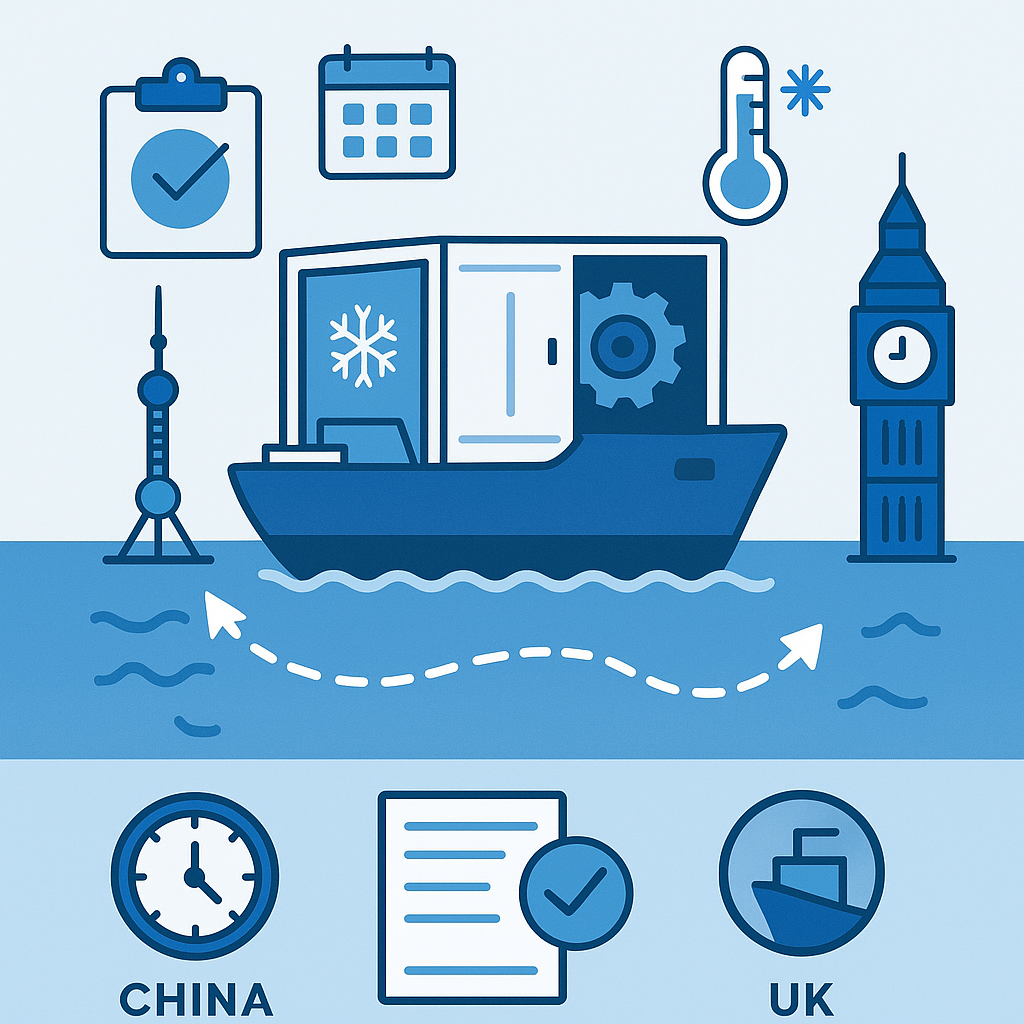
Because machinery is highly sensitive to temperature, vibration, and humidity, importers rely on a clear Reefer FCL booking process for machinery from China to UK to secure stable performance and predictable delivery. Moreover, as UK import rules tighten, shippers must follow a structured booking sequence to avoid delays, documentation risks, and cargo rejection. As operations grow more complex, working with a dependable logistics provider such as Top China Freight, starting from our homepage, ensures each step—from equipment allocation to export compliance—is executed with accuracy.
What Does a Reefer FCL Booking Process Involve for Machinery Exports?
Although refrigerated containers are often associated with food logistics, machinery that contains hydraulics, electronics, or temperature-sensitive components also requires precise cold-chain control. Therefore, the booking process represents more than reserving equipment; it coordinates cargo preparation, compliance, loading, and transit timing.
A complete reefer booking workflow includes:
- Cold-chain machinery assessment
- Reefer equipment allocation
- Temperature configuration request
- Export documentation preparation
- UK customs pre-clearance review
- Loading supervision
- Sensor and data-logger installation
- Sailing schedule confirmation
Because each step affects the next, importers use structured booking procedures to maintain visibility and reduce operational risks.
Why Machinery Requires Reefer FCL Instead of Standard FCL?
Machinery with lubricants, cooling fluids, precision electronics, or rubber components can degrade when exposed to extreme temperatures. Consequently, reefer containers stabilize the environment, protect sensitive materials, and reduce condensation.
Machinery types requiring reefer protection
• Medical machinery with calibration settings
• Packaging equipment with lubricated components
• Laboratory hydraulic systems
• Semiconductor and PCB production units
• Fine mechanical assemblies
• High-precision European equipment returning for repair
Although many factories underestimate thermal sensitivity, UK importers frequently report that cold-chain handling prevents corrosion and electrical failure during long haul ocean transit.
What Steps Make Up the Reefer FCL Booking Process From China to the UK?
The full booking process contains a clear sequence. Although some steps vary depending on the machinery type, the overall flow remains consistent.
Step 1 — Submit Machinery Details
Shippers provide cargo dimensions, weight, value, temperature range, and sensitivity notes. Moreover, early submission improves equipment allocation during peak season.
Step 2 — Request Reefer Equipment Allocation
Carriers confirm inventory and allocate a container. Because reefer units are limited, early booking ensures stable routing.
Step 3 — Set Temperature and Humidity Parameters
Machinery requires stable levels, usually between +5°C and +25°C depending on component design. Temperature configuration must be approved by both shipper and carrier.
Step 4 — Prepare Export Documents
This includes:
- Commercial invoice
- Packing list
- HS code declarations
- Machinery compliance certificates
- UKCA/CE documentation
Step 5 — Pre-Loading Inspection
Inspectors verify the packaging quality, frame stability, and moisture protection. Although often optional, pre-loading checks significantly reduce risk.
Step 6 — Machinery Loading and Securing
Technicians load the machinery using forklifts or cranes, apply secure bracing, and position temperature sensors.
To streamline multi-factory shipments, many companies integrate our FCL/LCL consolidation service for synchronized loading.
Step 7 — Carrier Schedule Confirmation
The vessel schedule is locked, and shippers receive the expected UK arrival window.
Step 8 — UK Customs Pre-Submission
Documents are reviewed for accuracy. Early pre-submission reduces clearance delays upon arrival.
Step 9 — Data Logger Activation
Sensors and data loggers are activated to record temperature throughout the journey.
Step 10 — Final Reefer Booking Approval
All data is confirmed, and shipping instructions are issued before the container is accepted at the port.
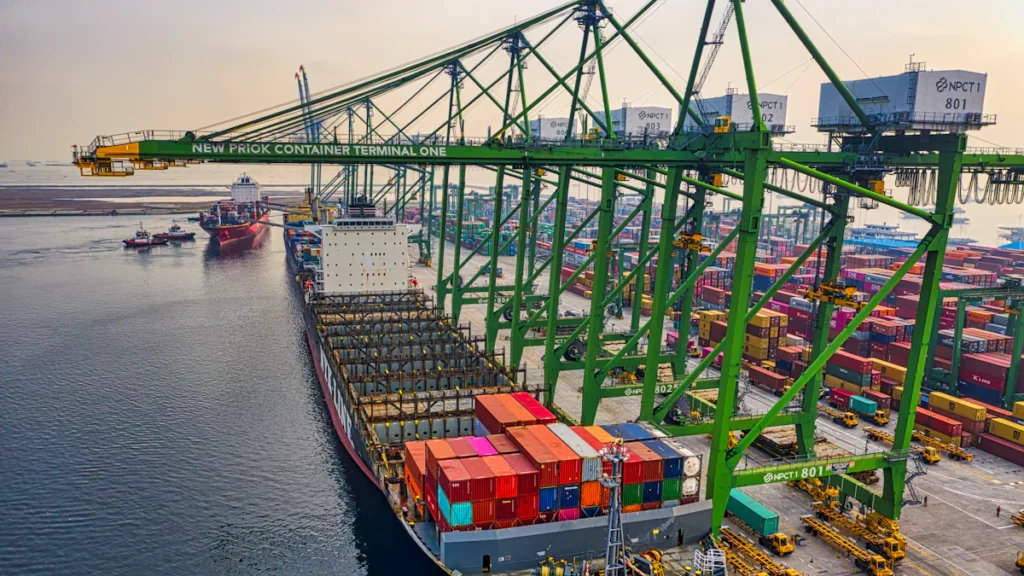
Which Chinese Ports Are Most Efficient for Reefer Machinery Booking?
Machinery shippers typically use ports with advanced cold-chain infrastructure and strong UK-bound schedules.
China’s Top Ports for Reefer Machinery
| Port | Strength | Why It Matters |
|---|---|---|
| Shanghai | Best carrier frequency | Ideal for time-sensitive machinery |
| Ningbo | Reliable reefer availability | Lower congestion risk |
| Shenzhen (Yantian) | Fast equipment turnaround | Good for urgent orders |
| Qingdao | Strong UK route links | Suitable for northern factories |
Because reefer equipment supplies are uneven, selecting the correct port improves booking success and reduces waiting time.
How Long Does the Reefer FCL Booking Process Take From Start to Finish?
Although timelines vary by port and season, a predictable booking window helps supply chain managers align production with vessel schedules.
Typical booking timeline overview
| Booking Stage | Estimated Timeframe |
|---|---|
| Machinery data submission | 1–2 days |
| Reefer equipment allocation | 2–5 days |
| Document preparation | 1–3 days |
| Pre-loading inspection | 0.5–1 day |
| Loading and sealing | 0.5–1 day |
| Sailing confirmation | Same day |
| UK customs pre-submission | 1 day |
Because the UK frequently adjusts customs rules for machinery, preparation time increases when HS codes, certifications, or documentation require revision.
Real Case Studies
Shanghai → Felixstowe (Precision Laboratory Machinery)
Cargo Type: Temperature-sensitive laboratory calibration machines
Temperature Setting: +18°C
Transit Time: 28 days
Outcome: Machinery arrived fully calibrated without requiring re-alignment; UK customs released the container on the same day.
Because calibration accuracy was critical, Top China Freight coordinated early equipment reservation, precise temperature settings, and full sensor monitoring to ensure stability.
Shenzhen → Southampton (Hydraulic Production Machinery)
Cargo Type: Medium-weight hydraulic machinery with pressurized components
Temperature Setting: +12°C
Transit Time: 31 days
Outcome: No condensation or lubricant issues; unloading teams confirmed machinery in perfect operating condition.
The shipper used our China cold-chain assessment service to determine the correct temperature range, preventing viscosity issues during transit.
What Documents Are Required for Reefer Machinery Clearance in the UK?
The UK enforces clear requirements for machinery entering the country. Therefore, documentation accuracy has a direct influence on port clearance and inspection probability.
Customs Documentation Checklist
| Document | Purpose | UK Impact |
|---|---|---|
| Commercial invoice | Value declaration | Required for duty calculation |
| Packing list | Weight & dimensions | Supports reefer allocation |
| HS code declaration | Machinery classification | High impact on inspection |
| UKCA/CE certificates | Safety confirmation | Mandatory for machinery |
| Serial number list | Identification | Reduces customs queries |
| Temperature records | Cold-chain proof | Helps avoid extended checks |
Accurate documentation helps ensure that the reefer container moves smoothly through UK inspection channels.
Lorem ipsum dolor sit amet, consectetur adipiscing elit. Ut elit tellus, luctus nec ullamcorper mattis, pulvinar dapibus leo.
What Risks Should Shippers Consider When Booking Reefer FCL for Machinery?
Although reefer shipping reduces environmental risks, several operational risks still require attention. However, they can be mitigated through proper preparation and structured communication.
Key risks
• Incorrect temperature settings damaging electronics
• Lubricant thickening in underheated machinery
• Condensation forming on exposed steel
• Delays caused by incomplete documentation
• Port congestion extending UK arrival windows
Because risks increase during peak seasons, many importers use door-to-door planning through our door-to-door service to reduce transit misunderstanding.
Conclusion
In closing, the Reefer FCL booking process for machinery from China to UK revolves around structured planning, cold-chain configuration, and precise documentation. Moreover, when shippers integrate pre-loading inspections, stable routing, and early customs submission, machinery arrives in optimal condition. If your team requires a reliable route plan or equipment allocation strategy, Top China Freight can support end-to-end cold-chain logistics from China to all major UK ports.
Request A Free Quote
Need a reliable logistics partner? Share your shipment details and we’ll provide a tailored quotation quickly and accurately.
FAQ:
How early should I book reefer equipment for machinery?
Booking 2–3 weeks ahead improves availability and helps avoid peak-season shortages.
What happens if temperature settings are incorrect?
Incorrect settings may damage electronics or seals, and carriers may refuse loading.
Is pre-loading inspection mandatory?
It is optional but strongly advised because it verifies packaging quality and moisture protection.
Do reefer containers reduce condensation?
They can, but using desiccants and sealed packaging ensures better moisture control.
Is transshipment risky for machinery cargo?
Only slightly. Choosing stable hubs and monitoring sensors minimizes risk.