
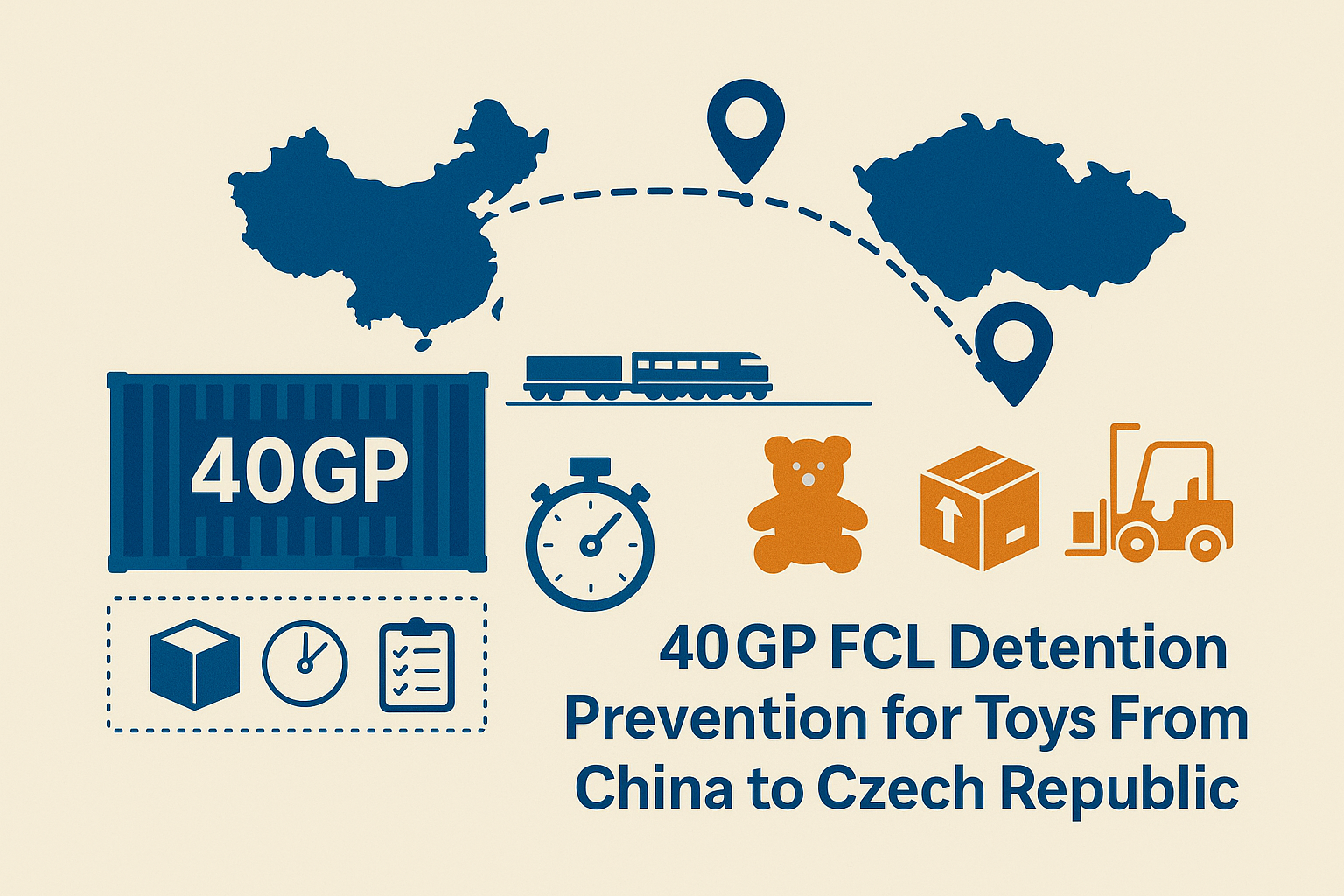
Managing 40GP FCL detention prevention for toys from China to Czech Republic has become a critical part of stable European supply chains, especially as ports tighten storage rules and increase penalties. Therefore, this article offers clear, practical steps to help importers avoid unexpected detention charges and maintain predictable toy shipments from China to Europe. Moreover, businesses seeking smoother scheduling can always leverage experienced partners such as Top China Freight, whose homepage is available through this link to the official website.
What Causes Detention Risks for 40GP Toy Shipments?
Detention problems usually arise when containers stay too long outside the terminal after being discharged, and toy shipments are particularly vulnerable because of strict EU safety checks and extensive labeling requirements. Moreover, inaccurate delivery schedules or incomplete customs documents often delay truck dispatch and cause costly daily penalties. When importers understand these triggers early, they can allocate resources and reduce unnecessary charges effectively.
How Toy Cargo Characteristics Increase Delay Potential
Because toys require batch-level inspection, packaging conformity checks, and product certificates, they often pass through multiple verification stages. Consequently, even a small mismatch between the invoice and product list may trigger additional inspections. Additionally, inland trucking delays in Central Europe can extend container usage days, further increasing detention exposure.
How Can Importers Optimize 40GP Container Usage Time?
Importers can reduce detention by synchronizing vessel schedules with warehouse availability and ensuring trucking is pre-booked well before the vessel arrives. Furthermore, real-time container tracking service enables buyers to predict port unloading windows and prevent idle days. Although each shipment varies, a well-prepared importer can ensure toy cargo moves quickly through the entire inland chain.
Aligning Warehouse Slots With Port Schedule
Because warehouse space for toys is often seasonal, companies should coordinate unloading slots at least one week before ETA. Additionally, aligning working hours with truck arrival improves flow and avoids peak-hour congestion, especially in Czech Republic inland hubs.
Preparing Customs Files Before Vessel Arrival
Although preparing toy-related documents seems routine, timely submission is essential. Therefore, importers should finalize the China export documentation checklist early and verify HS codes and conformity declarations before the vessel departs.
What Documents Help Avoid Delays in Czech Republic Customs?
Toy cargo entering the EU must meet safety compliance, and missing files frequently create long delays. Therefore, importers should focus on ensuring documents are complete and consistent across suppliers, carriers, and brokers.
Essential Documents for Toy Import Clearance
Below is a simplified reference table that helps importers prepare efficiently:
Toy Import Documentation Checklist
| Document Type | Required For | Notes |
|---|---|---|
| Commercial Invoice | Customs entry | Must match packing list item-by-item |
| Packing List | Cargo verification | Include toy material details |
| Bill of Lading | Container release | Ensure shipper/consignee details correct |
| Certificate of Conformity | EU toy compliance | Mandatory for most toy categories |
| HS Code Verification | Duty calculation | Avoid misclassification delays |
| Product Safety Report | EU safety check | Needed for electronic toys |
This documentation list reinforces a smooth clearance process and reduces detention exposure.
How Do Transit Choices Influence Detention for 40GP Shipments?
Transit routes and port choices significantly affect detention costs. Moreover, importers shipping toys from China to Czech Republic often rely on Hamburg, Koper, or Gdańsk as gateway ports before entering Central Europe via trucking or rail.
Cost and Transit Comparison of Common Gateway Ports
Transit Route Comparison for Toy Shipments
| Route | Typical Transit Time | Notes |
|---|---|---|
| China → Hamburg → Czech Republic | 32–38 days | Stable schedules and strong rail links |
| China → Koper → Czech Republic | 28–33 days | Faster for South China origins |
| China → Gdańsk → Czech Republic | 34–40 days | Good option for North/East EU |
Because each route offers different inland connections, importers should select the one that best fits warehouse timing and trucking availability.
Why Synchronizing Trucking and Warehouse Operations Matters
Even when the container arrives on time, inefficient inland coordination can cause unexpected detention days. Consequently, importers should confirm trucking lead time, warehouse staffing, and unloading capacity before the container is released. Additionally, using FCL/LCL services via this link helps importers secure more predictable inland handling capacity.
Case Studies
Shenzhen to Prague (Hamburg Routing)
Route: Shenzhen → Hamburg → Prague
Cargo Type: Plastic educational toys, 1×40GP
Weight/Volume: 21 tons / full container load
Transit Time: 35 days sea + 2 days rail
Cost Range: USD 4,150–4,600 (variable by season)
Challenge: Risk of customs delay due to missing conformity files
Solution: Documents verified against China export documentation checklist before vessel departure
Outcome: Container released within 16 hours, zero detention charges
Ningbo to Brno (Koper Routing)
Route: Ningbo → Koper → Brno
Cargo Type: Battery-powered toys
Weight/Volume: 18.5 tons / 40GP
Transit Time: 30 days sea + 3 days truck
Cost Range: USD 4,350–4,900
Challenge: High risk of storage overflow in receiving warehouse
Solution: Warehouse slot reserved 8 days before ETA; trucking scheduled 72 hours in advance
Outcome: Container unloaded within allowed free time, avoided detention and extra trucking fees
When Should Importers Involve a Freight Forwarder?
Although some shipments appear straightforward, detention avoidance often requires dedicated coordination between carriers, terminals, truckers, and customs brokers. Consequently, partnering with an experienced provider such as Top China Freight ensures smoother scheduling, complete documentation, and more predictable inland operations. Additionally, importers handling seasonal toys or multi-supplier orders may benefit from integrated sea freight solutions available via this link.
Which Cost-Control Measures Help Reduce Detention Fees?
Cost-control strategies allow importers to optimize budgets, especially during peak shipping months. Therefore, combining efficient documentation, pre-booked trucking, and clear warehouse coordination minimizes unnecessary expenses.
Cost Elements to Monitor
Importers should track these cost categories to make informed decisions:
Key Costs Affecting 40GP Detention Exposure
| Cost Type | Importer Influence | Comment |
|---|---|---|
| Detention Fees | High | Charged per day after free time |
| Demurrage Fees | Medium | Occur if container remains in port |
| Trucking Lead Time | High | Late booking increases idle days |
| Warehouse Labor | Medium | Impacts speed of unloading |
| Documentation Errors | High | Directly cause customs delays |
Therefore, importers should evaluate these factors before shipping toys to the Czech Republic and adjust handling strategies early.
Conclusion
In summary, successful 40GP FCL detention prevention for toys from China to Czech Republic relies on early planning, accurate documentation, synchronized trucking, and consistent EU safety compliance. Additionally, importers that adopt proactive supply chain planning and visibility tools significantly reduce detention exposure. For reliable support, companies may connect with professionals who specialize in China–EU shipping and request an optimized plan for upcoming toy shipments.
Request A Free Quote
Need a reliable logistics partner? Share your shipment details and we’ll provide a tailored quotation quickly and accurately.
FAQ:
How are detention fees calculated for 40GP containers?
Fees are charged per calendar day after the free time expires. The rate depends on the carrier, destination, and season. Planning trucking and warehouse unloading early helps avoid these extra costs.
What affects the trucking schedule for inland Czech deliveries?
Lead time, driver availability, warehouse readiness, and European highway traffic all influence timing. Booking trucks 2–4 days before discharge improves reliability.
Are electronic toys harder to clear through customs?
Often they are. Batteries and wiring require extra declarations and tests. Providing complete product specs helps prevent inspection delays.
Should I insure my toy cargo against delay-related losses?
Delay insurance is optional but useful for high-value seasonal toys. Policies typically cover unexpected disruptions and provide partial reimbursement.
How do I choose the best EU gateway port?
Consider origin factory location, inland trucking time, rail links, and warehouse distance. Each port offers different advantages for Czech-bound shipments.