
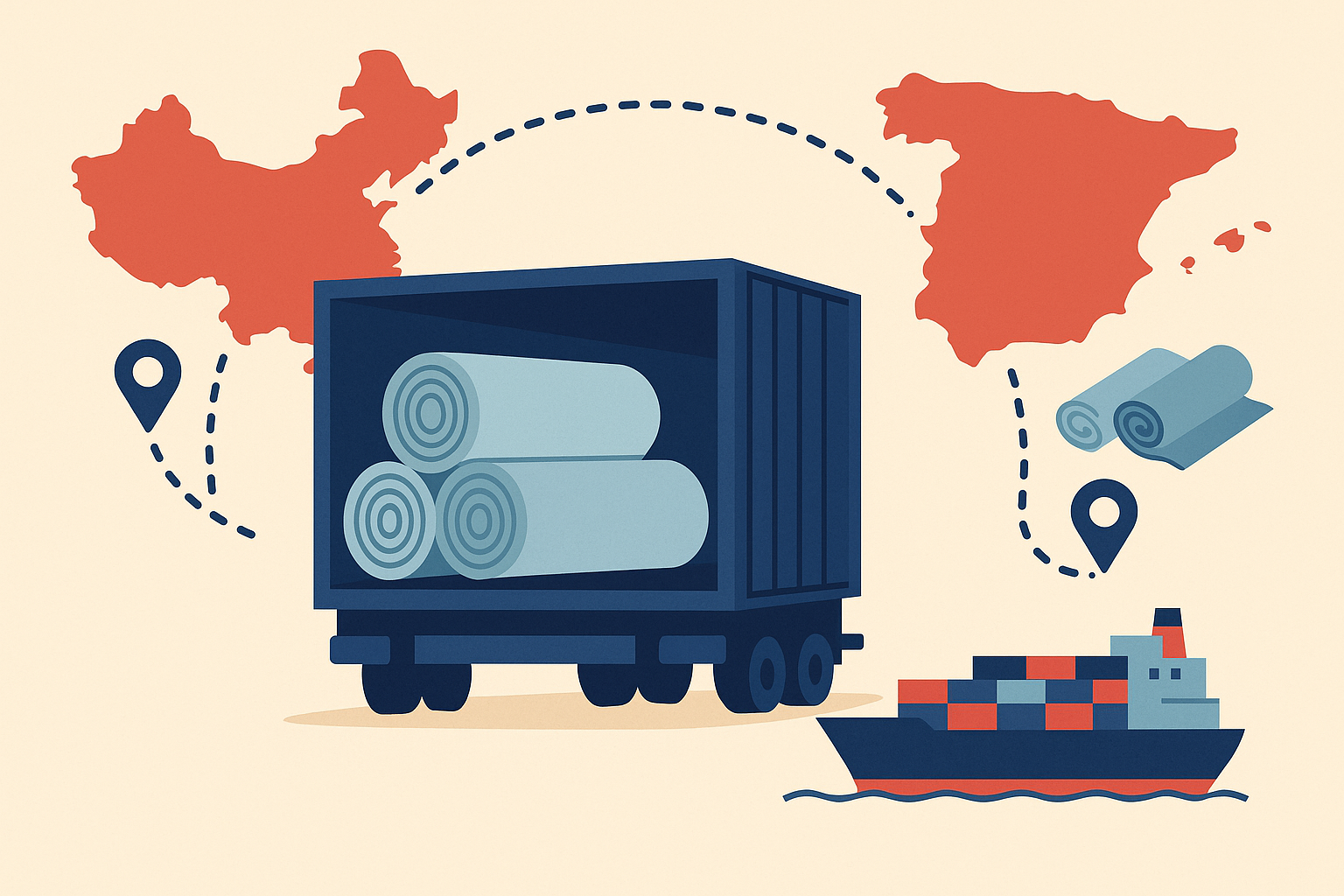
Understanding the 40HQ FCL shipping cost for textiles from China to Spain is essential for importers who manage fast-moving apparel cycles and strict distribution timelines. Therefore, this guide delivers a practical, data-driven view of freight charges, transit expectations, and cost-control strategies backed by real-market behavior. Moreover, you will learn how partners like Top China Freight help buyers plan budgets, stabilize delivery schedules, and optimize end-to-end textile supply chains.

What Determines the 40HQ FCL Shipping Cost for Textiles From China to Spain?
The 40HQ FCL shipping cost varies due to several factors such as origin port selection, carrier pricing cycles, textile cargo volume density, and seasonal demand. Moreover, textile shipments often move in large batches driven by fashion releases, wholesale restocking, or e-commerce transitions, meaning price swings influence overall business planning.
Because textile importers must balance cost and timing, understanding freight rate components becomes essential. Although shipping rates fluctuate weekly, cost structures follow consistent logic that allows importers to forecast budgets with greater accuracy.
Why Do Textile Shipments Require Cost Stability?
Textile supply chains are highly time-sensitive because apparel, home textiles, and fabric rolls support seasonal launches and promotional cycles. Consequently, cost fluctuations directly affect margin calculations. Moreover, textile importers operate in markets where rapid turnover is critical, so they must protect cost predictability across freight, customs, and inland delivery.
Because apparel and fabrics often move in high volumes, even small freight rate shifts may significantly impact COGS calculations. Therefore, cost stability is as important as transit reliability for Spain-bound buyers.
How Much Does a 40HQ FCL Shipment Typically Cost From China to Spain?
Although freight rates shift weekly, textile importers can expect the following reference cost patterns:
- Base Ocean Freight: varies by carrier, usually influenced by vessel space demand
- Bunker Adjustment Factor (BAF): fluctuates with fuel price conditions
- Peak Season Surcharges (PSS): applied during textile rush periods
- Destination Handling Charges (DTHC): standard for Spanish ports like Valencia and Barcelona
Moreover, transshipment routes via Rotterdam or Algeciras may offer lower freight costs but increase variance in arrival times. Although these options save money, textile importers must consider how delays affect stock availability.
What Key Variables Influence Shipping Costs for Textiles?
Textile shipments experience cost shifts due to operational and market variables. Therefore, understanding each factor helps importers negotiate better rates.
Origin Port Pricing
Shanghai, Ningbo, and Shenzhen offer competitive rates due to high textile export volumes. However, northern ports may charge more when equipment availability is tight.
Container Equipment Availability
Textiles usually require 40HQ containers due to volume. Moreover, container shortages during peak export months raise freight prices.
Carrier Rate Cycles and Vessel Space
Carriers adjust rates weekly. Consequently, buyers must check price movements in advance to avoid sharp increases.
Transit Time and Routing
Direct routes to Spain cost more but reduce uncertainty. Transshipment routes often cost less but extend transit by several days.

Case Studies
Ningbo → Valencia (Apparel Fabrics)
Cargo: Fabric rolls + cotton blends
Container: 40HQ
Volume: 69 CBM
Freight Cost: Mid-range carrier rate
Transit Time: 33 days
Outcome: Cargo arrived without delay due to fast-rotation service.
✔ Insight: Forecasting seasonal demand early allowed lower rate negotiation and avoided PSS surges.
✔ Supply Chain Tip: Early booking prevented equipment shortages.
Shenzhen → Barcelona (Ready-Made Garments)
Cargo: Packed garments for retail distribution
Container: 40HQ
Volume: 68 CBM
Freight Cost: Low-to-medium via transshipment
Transit Time: 39 days
Outcome: Minor inspection added one day, but overall cost remained competitive.
✔ Insight: Choosing a transshipment route saved money without harming schedule.
✔ Supply Chain Tip: Proper documentation avoided longer inspection delays.
Should Textile Importers Consider Multimodal Options?
Yes. Although sea freight is cost-efficient, multimodal options reduce risk.
- Sea + Rail to Madrid improves speed for inland buyers
- Sea + Truck works for short-distance hubs
- Air + Sea hybrid supports urgent retail drops
Moreover, multimodal routing helps avoid seasonal bottlenecks common in textile cycles.
To manage multimodal planning effectively, importers often rely on providers offering services like sea freight or door-to-door solutions.
What Reference Costs Should Textile Importers Expect?
Although freight rates change weekly, reference patterns help importers plan budgets with stability. Moreover, textile shipments—because of their volume—follow typical ocean freight pricing logic.
Reference Cost Components for 40HQ Textile Shipments
| Cost Component | Description | Influence on Total Cost |
|---|---|---|
| Base Ocean Freight | Carrier freight rate | Highest share of cost |
| BAF | Fuel-related surcharge | Medium impact |
| PSS | Seasonal surcharge | High during textile peaks |
| THC & DTHC | Handling charges at both ends | Standard amount |
| Documentation Fees | Export & import paperwork | Minor but required |
| Inspection Fees | Only if cargo flagged | Adds delay + cost |
Although not fixed, these components allow textile buyers to benchmark against market averages.
What Are the Inland Delivery Considerations in Spain?
Final delivery influences total cost significantly.
- Valencia: reliable processing + strong inland transport
- Barcelona: fast for fashion supply chains
- Bilbao: convenient for northern Spain distribution
- Madrid (via rail): cost-effective for large textile centers
Moreover, inland trucking availability affects final arrival time. Therefore, textile importers should pre-book trucking slots during seasonal peaks.
Conclusion
In conclusion, mastering the 40HQ FCL shipping cost for textiles from China to Spain requires understanding freight components, routing choices, carrier cycles, and seasonal textile patterns. Moreover, importers who plan early, maintain documentation accuracy, and compare transit options can significantly stabilize costs. Therefore, businesses aiming for reliable textile delivery should evaluate multiple carriers, forecast demand precisely, and request expert guidance to improve both cost and supply chain visibility.
Request A Free Quote
Need a reliable logistics partner? Share your shipment details and we’ll provide a tailored quotation quickly and accurately.
FAQ:
What affects weekly 40HQ textile freight rates from China to Spain?
Rates depend on carrier cycles, fuel costs, space demand, and seasonal textile volume.
How early should textile buyers book a 40HQ container?
Booking 10–14 days ahead ensures equipment availability and protects cost stability.
Do transshipment routes significantly lower cost?
Often they do, especially for non-urgent textile orders, though they add several days.
How can textile importers reduce demurrage risk?
Preparing documents early and coordinating trucking avoids storage or port delays.
How much do inland Spanish trucking costs influence total expenses?
They add a meaningful portion, especially during peak e-commerce seasons.