
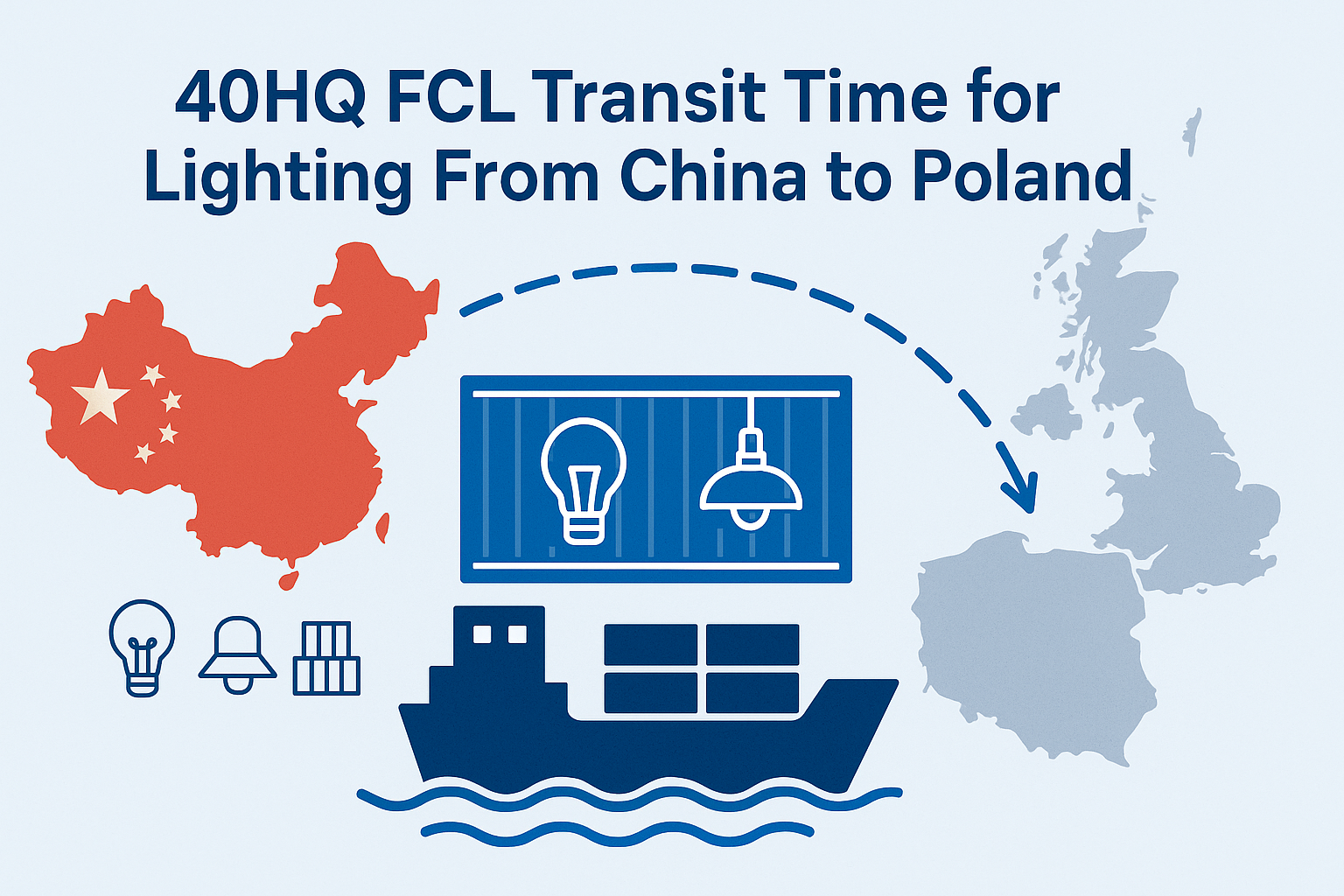
Understanding the 40HQ FCL transit time for lighting from China to Poland is essential for lighting importers who face tight delivery schedules and rising supply chain pressure. Therefore, this guide provides a practical, data-driven view of transit planning from China to Europe while offering actionable strategies that help businesses ship smarter with support from partners like Top China Freight. Moreover, you will learn clear methods to reduce delays, control costs, and improve end-to-end reliability.
What Defines the 40HQ FCL Transit Time for Lighting From China to Poland?
The transit time for a 40HQ container shipping lighting products from China to Poland varies according to the route, carrier schedule, and port congestion. Moreover, lighting suppliers often prefer stable shipping schedules because these shipments frequently support project-based installations with strict deadlines. Additionally, importers must evaluate port-to-port durations across major lanes such as Shanghai–Gdansk, Ningbo–Gdynia, and Shenzhen–Szczecin.
Lighting cargo rarely fits into flexible timelines; therefore, decisions on routing must consider seasonal disruptions, vessel rotations, and customs procedures. When businesses forecast these factors accurately, they streamline delivery planning and avoid bottlenecks across the broader supply chain.

What Documentation Is Required for Lighting Shipments Into Poland?
Lighting fixtures, LED modules, architectural lamps, and electrical components require strict compliance. Moreover, missing documents can delay clearance and push transit time beyond the planned delivery schedule.
Key Compliance Requirements
- Commercial invoice
- Packing list
- Bill of lading
- CE certification for electrical lighting
- HS code verification sheet
- Power specifications in product description
- Polish/EU safety declaration
Importers should therefore verify documentation early to ensure smooth customs approval. Additionally, when necessary, professional partners providing customs brokerage support can help accelerate compliance review.
How Long Does 40HQ FCL Transit Typically Take From China to Poland?
Although transit can vary, most 40HQ FCL shipments for lighting products require:
- 28–38 days for direct or near-direct vessel routes
- 35–45 days for transshipment routes via Hamburg, Rotterdam, or Antwerp
- 42–55 days during peak months or congestion periods
Additionally, customs clearance in Poland typically requires 2–4 days if documentation is complete. However, incomplete paperwork may extend this timeline and impact the supply chain further.
To keep shipments moving efficiently, many importers work with experienced freight forwarders who continuously monitor routing options and vessel schedule stability.
China–Poland Transit Time Comparison (Reference Only)
| Route Option | Typical Transit Time | Notes |
|---|---|---|
| Shanghai → Gdansk | 28–35 days | Most stable and most used for lighting |
| Ningbo → Gdynia | 30–38 days | Fewer blank sailings than other routes |
| Shenzhen → Gdansk | 32–40 days | Good for electronics + lighting |
| Qingdao → Gdansk | 35–45 days | Longer due to routing and feeder steps |
Case Studies
Shanghai → Gdansk (Commercial Lighting Project)
Cargo: LED panels, aluminum track lights
Container: 40HQ
Volume: 68 CBM
Transit Time: 31 days
Shipping Mode: Direct service
Landed Result: Shipment arrived earlier than planned due to stable carrier rotation and proactive documentation review.
✔ Why it mattered: The importer avoided labor rescheduling and met installation deadlines for a retail construction site.
Shenzhen → Gdynia (Architectural Lighting Fixtures)
Cargo: High-value architectural lighting
Container: 40HQ
Volume: 61 CBM
Transit Time: 38 days
Shipping Mode: Transshipment via Rotterdam
Landed Result: Minor customs delay due to incomplete CE certificate, adding 2 days to final delivery.
✔ Lesson learned: Prepare CE documents early and validate product specifications before export clearance.

Why Partnering With Experienced Forwarders Improves Transit Predictability?
Although many importers attempt to plan shipments independently, experienced freight partners provide route visibility, carrier allocation support, and compliance review that improve stability. Therefore, companies in the lighting sector rely on specialized forwarders for container booking, cost control, and schedule optimization.
Moreover, logistics providers like Top China Freight offer China–EU ocean freight, multimodal solutions, and stable container allocation during peak seasons. Their expertise helps reduce transit variance and ensures lighting importers maintain predictable delivery workflows.
To further enhance transit flexibility, urgent lighting shipments can also be moved via air freight when project deadlines cannot tolerate long delays.
What Does the FCL Shipping Workflow Look Like for Lighting Goods?
Because lighting shipments frequently include mixed SKUs, fragile goods, and high-value components, importers must follow a structured process. Consequently, coordinated planning reduces delays and handling risks.
FCL Workflow Overview
| Step | Activity | Notes |
|---|---|---|
| 1 | Booking container space | Reserve 40HQ early during peak season |
| 2 | Factory loading | Verify packaging and palletizing |
| 3 | Export customs | Submit documents and certifications |
| 4 | Ocean transit | Monitor vessel ETA and potential delays |
| 5 | Poland customs | Ensure CE and HS codes match |
| 6 | Inland delivery | Trucking to distribution hubs or warehouses |
How Can Lighting Importers Improve Long-Term Transit Reliability?
Long-term reliability requires strategic planning instead of reacting to delays. Consequently, lighting importers can apply the following methods:
- Maintain annual forecasts for major lighting projects
- Compare transit time by port pairs before choosing origin
- Validate carton strength and palletizing method
- Combine FCL and LCL strategies for SKU diversity
- Use sea–rail multimodal transit to shorten lead time
- Audit carriers quarterly to track performance
- Build 2–3 supplier clusters to balance origin options
Additionally, companies integrating steady delivery with their sales cycles gain stronger competitive advantage in the European lighting market.
Conclusion
In summary, managing the 40HQ FCL transit time for lighting from China to Poland requires understanding route dynamics, customs requirements, vessel schedules, and seasonal constraints. Moreover, lighting importers who plan ahead and work with specialized forwarders can maintain stable supply chains and reduce risk. Therefore, businesses seeking predictable delivery should request professional route evaluations, optimize documentation, and align shipping plans with project timelines to achieve reliable results.
Request A Free Quote
Start shipping smarter with TopChinaForwarder today! 🚢✨ Request a Free Quote 📝 and get a tailored logistics plan built around your cargo and timeline.
FAQ:
How early should I book a 40HQ container for lighting shipments?
Booking 10–14 days in advance helps secure equipment and avoids peak-season shortages.
What documents are essential for lighting imports into Poland?
Commercial invoice, packing list, CE certificate, HS codes, and product specifications ensure smooth clearance.
How much can seasonal congestion affect transit time?
Congestion may extend transit by 5–10 days, especially during Q4 and pre-Chinese-New-Year periods.
Does transshipment significantly delay lighting cargo?
Often it adds several days, but reliable carriers can minimize additional waiting time.
How do inland deliveries affect final arrival time?
Trucking schedules add 1–4 days depending on distance to Polish distribution centers.