
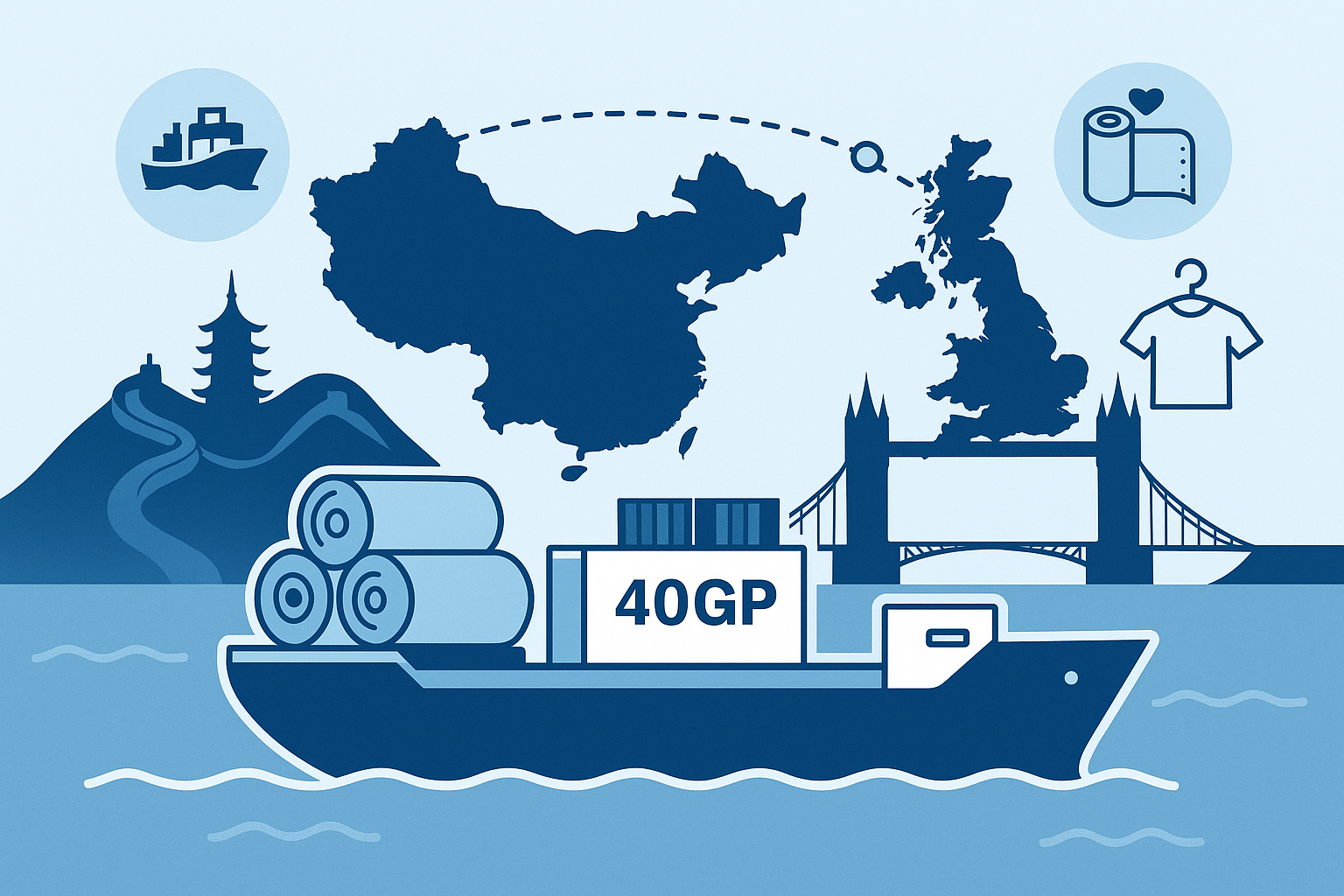
Although managing the 40GP FCL sailing schedule for textiles from China to UK can feel overwhelming during fluctuating demand cycles, understanding sailing frequency, peak-season allocation, and port behavior helps importers stabilize loading plans. Therefore, this guide maps out routes, transit expectations, supplier coordination methods, and cost-time benchmarks that keep textile shipments reliable. For broader references, you may visit the Top China Freight homepage at https://topchinafreight.net/。
What Shapes the 40GP FCL Sailing Schedule for Textiles from China to the UK?
Because textiles move in large volumes and often support strict production or retail seasons, the sailing schedule is shaped by demand surges, carrier allocation, and route reliability. Moreover, textile exporters rely on consistent weekly sailings to avoid pressure on garment factories and UK-based buyers.
Key Influencing Factors
- Weekly sailing frequency from major China ports
- Carrier allocation changes
- Seasonal peaks for garment manufacturers
- Destination port congestion in Felixstowe, Southampton, London Gateway
- Transit-time variations caused by weather and routing
Since textile supply chains depend heavily on timeline precision, exporters must analyze sailing patterns before arranging production windows.
Which China Ports Offer the Most Reliable Textile Sailing Schedules?
Although many ports export textiles, some provide more stable weekly departures. Furthermore, textile clusters often determine the ideal loading port.
Major Textile Export Ports
- Shanghai – strongest weekly frequency
- Ningbo – cost-effective and popular for fabric rolls
- Shenzhen / Yantian – ideal for apparel manufacturers in South China
- Qingdao – preferred by North China textile mills
Because these ports run dense Europe-bound networks, textile shippers gain predictable planning windows.

How Do Weekly Sailings Impact Textile Export Planning?
Since textiles support fast-moving fashion cycles, consistent weekly sailings help maintain inventory stability. Moreover, early booking increases space stability during UK peak retail seasons.
Weekly Sailing Considerations
- Matching booking dates with production completion
- Avoiding UK port congestion periods
- Choosing direct or transshipment routes
- Aligning warehouse schedules with factory output
Therefore, textile exporters must match sailing schedules with their critical cut-off times.
What Are the Main China–UK Routes for 40GP FCL Textile Shipments?
Since shipping lines adjust routes frequently, understanding their structure helps exporters maintain scheduling stability.
Common China → UK FCL Routes for Textiles
| China Port | Typical Route | Transit Time | Strength |
|---|---|---|---|
| Shanghai | Direct to Felixstowe | 28–34 days | Fast & stable |
| Ningbo | Via Singapore/Colombo | 30–38 days | Cost-efficient |
| Shenzhen | Direct to Southampton | 30–36 days | Strong for apparel |
| Qingdao | Via Busan | 32–40 days | Good for North textile mills |
Because fashion seasons depend on on-time arrival, importers choose routes with fewer transshipments.
Why Transit Time Matters for Textile Supply Chains
Although textiles are not fragile, they support strict retail timelines. Therefore, transit-time predictability matters more than speed.
Typical Textile Transit Time
- Direct: 28–34 days
- One transshipment: 32–40 days
- Peak-season delay risk: +3–6 days
Moreover, sailing stability ensures apparel firms meet UK buyers’ delivery schedules.
Case Studies
Bulk Fabric Rolls (Card Format)
Origin: Ningbo
Destination: Felixstowe → Leicester
Container: 1 × 40GP
Cargo: 22 tons of fabric rolls
Transit Time: 32 days
Cost: USD 3,150 approx.
Because the buyer required steady weekly replenishment, the shipper aligned factory finishing cycles with weekly CY cut-offs, achieving consistent arrival dates.
Finished Apparel Shipment
Origin: Shenzhen
Destination: Southampton → Birmingham
Container: 1 × 40GP
Cargo: 10,800 pcs garments (mixed SKUs)
Transit Time: 30 days
Cost: USD 3,380 approx.
The exporter used direct sailing to maintain retail-season launch timing and applied palletized loading to ensure SKU integrity.
Why Top China Freight Supports Textile Shippers Effectively
Top China Freight offers structured schedule visibility, seasonal demand planning, and route comparison for textile exporters. Moreover, our team provides stable capacity through carrier partnerships and assists with supply-chain timing, customs, consolidation, and compliance. If needed, shippers may also explore sea freight services or door-to-door solutions for complete visibility.
What Documentation Affects Departure Timing for Textiles?
Since textile cargo volumes are high and often include mixed SKUs, documentation accuracy ensures smoother loading and faster CY entry.
Required Documentation for Textile Shipments
| Document | Function |
|---|---|
| Invoice & Packing List | Fabric or apparel classification |
| Bill of Lading | Transport record |
| HS Code Declaration | Determines duties |
| Origin Certificate | Required by many EU buyers |
| Quality/Color Test Reports | For apparel brands |
When exporters require smoother customs inspection, they may use customs brokerage services.
Conclusion
In summary, understanding the 40GP FCL sailing schedule for textiles from China to UK requires analyzing port behavior, weekly schedules, transit times, and seasonal patterns. Moreover, precise planning ensures smoother retail launches and avoids stock shortages. Therefore, textile exporters benefit significantly from consistent booking cycles, predictable transit windows, and strategic route selection supported by an experienced logistics partner.
Request A Free Quote
Need a reliable logistics partner? Share your shipment details and we’ll provide a tailored quotation quickly and accurately.
FAQ:
How often do ships sail from China to the UK for textile cargo?
Weekly sailings are available from major ports, with frequency increasing during peak textile seasons.
Which port is best for UK textile shipments?
Felixstowe and Southampton are preferred due to strong garment-industry distribution.
Do textile shipments need special packaging?
Most fabric rolls don’t, but finished garments benefit from palletizing.
How early should I book a 40GP for textile exports?
Booking 1–2 weeks ahead improves space stability.
Can LCL be used for textiles?
Yes, but FCL protects SKU integrity better for garments.