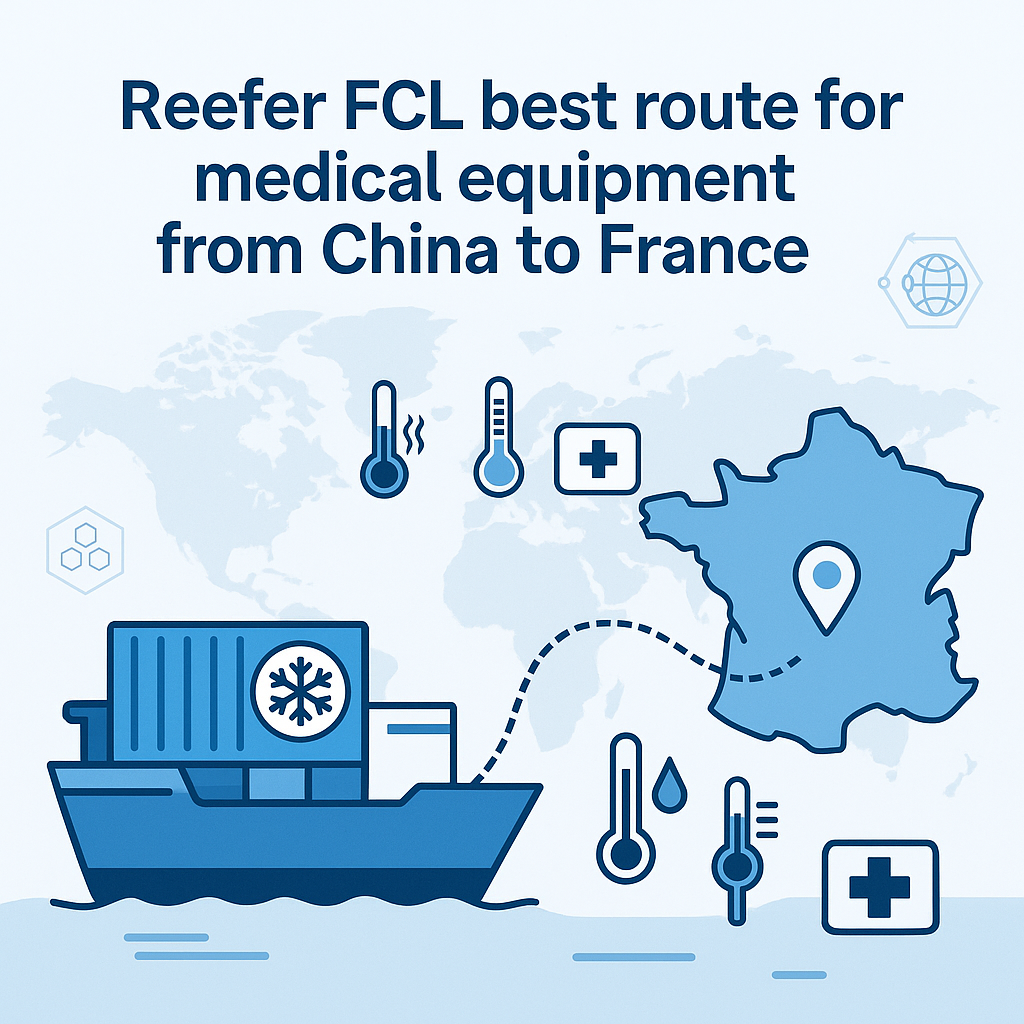
Although the Reefer FCL best route for medical equipment from China to France requires strict temperature control, the bigger challenge lies in choosing the right route that balances transit time, compliance, and risk control. Therefore, this guide offers a practical, step-by-step framework supported by real shipping cases and insights from cold-chain professionals, starting with our Top China Freight homepage.
What defines the Reefer FCL best route for medical equipment from China to France?
Choosing the best route depends on transit time stability, temperature reliability, and customs compliance. Moreover, medical equipment—such as diagnostic devices, imaging components, and sterilized materials—must remain within strict temperature bands. Therefore, the shipping corridor must minimize transshipping risk while offering predictable vessel schedules.
Why do medical devices require specialized reefer handling?
Medical equipment is often sensitive to temperature, humidity, and shock. Therefore, humidity and temperature monitoring for FCL shipments is essential to prevent degradation of sensors, electronic boards, and sterilized components. Additionally, France applies strict device integrity standards upon import, increasing the importance of compliant cold-chain management.
How does the China–France reefer FCL route usually operate?
Most routes follow a direct or semi-direct corridor from major Chinese ports—Shanghai, Ningbo, and Shenzhen—toward major French and EU gateways such as Le Havre, Marseille, or Antwerp (transit to France). Because some shipments require faster options, shippers may choose optimized routing based on vessel frequency and cold-chain reliability.
Major Port Routes for Reefer Medical Equipment
Origin Port
Destination Port
Transit Time
Route Type
Notes
Shanghai
Le Havre
29–34 days
Semi-direct
Stable reefer capacity
Ningbo
Marseille
30–36 days
Transshipment
Shorter inland path
Shenzhen
Antwerp (France via truck)
32–38 days
Indirect
High reefer relia
What export documents are needed for medical devices?
Since medical equipment involves regulated materials, accurate documents are mandatory. Furthermore, compliant export documents for medical devices minimize inspection risk and ensure seamless entry into the EU market.
Required Documents Checklist
Commercial Invoice & Packing List
Certificate of Origin
Device Safety Certification (CE/ISO13485)
Sterilization reports (when applicable)
HS codes & technical description
Temperature requirement declaration
To streamline this step, you may rely on the professional customs brokerage service provided by Top China Freight.
Case Studies
Reefer FCL, Shanghai → Le Havre (Diagnostic Machines)
Outcome: Because the shipper selected a semi-direct route with stable reefer plug availability, temperature deviation remained within ±0.3°C. Therefore, the shipment cleared France customs smoothly and met the hospital installation schedule.
Outcome: The cargo used a reefer container loading process for sensitive cargo with barrier-film packaging. Consequently, France import regulations for medical equipment were met without delays. Final distribution proceeded through Marseille’s cold-chain corridor.
How can Top China Freight optimize the China–France cold-chain route?
Top China Freight offers reliable cold-chain route planning, stable reefer container allocation, and compliance support. Additionally, our sea freight solutions include route comparison, documentation review, and real-time temperature monitoring. Because medical equipment requires precision handling, professional support helps ensure safe, compliant delivery.
Which cold-chain risks should medical importers avoid?
Medical equipment logistics involves strict standards. Therefore, importers must avoid:
Temperature spikes during transshipment
Low battery life in monitoring devices
Incorrect HS code classification
Moisture accumulation
Reefer malfunction without backup alerts
What cost components influence reefer FCL pricing to France?
Reefer FCL pricing involves base freight, reefer surcharges, peak-season adjustments, and inland trucking. Moreover, cost comparison for reefer routes to Europe reveals that corridor selection directly impacts total cost.
Reefer FCL Cost Breakdown Overview
Cost Component
Description
Base ocean freight
Core reefer rate
Reefer plug & monitoring fee
Continuous temperature control
Documentation fees
Export/import paperwork
THC
Terminal handling
Fuel adjustment
Seasonal BAF
Insurance
Strongly recommended
Conclusion
The Reefer FCL best route for medical equipment from China to France depends on route stability, cold-chain consistency, and compliance accuracy. Moreover, selecting ports with strong reefer infrastructure ensures predictable transit time and reduced risk. For shippers seeking safe, timely, and compliant transport, professional cold-chain planning is essential.
Request A Free Quote
Start shipping smarter with TopChinaForwarder today! 🚢✨ Request a Free Quote 📝 and get a tailored logistics plan built around your cargo and timeline.