
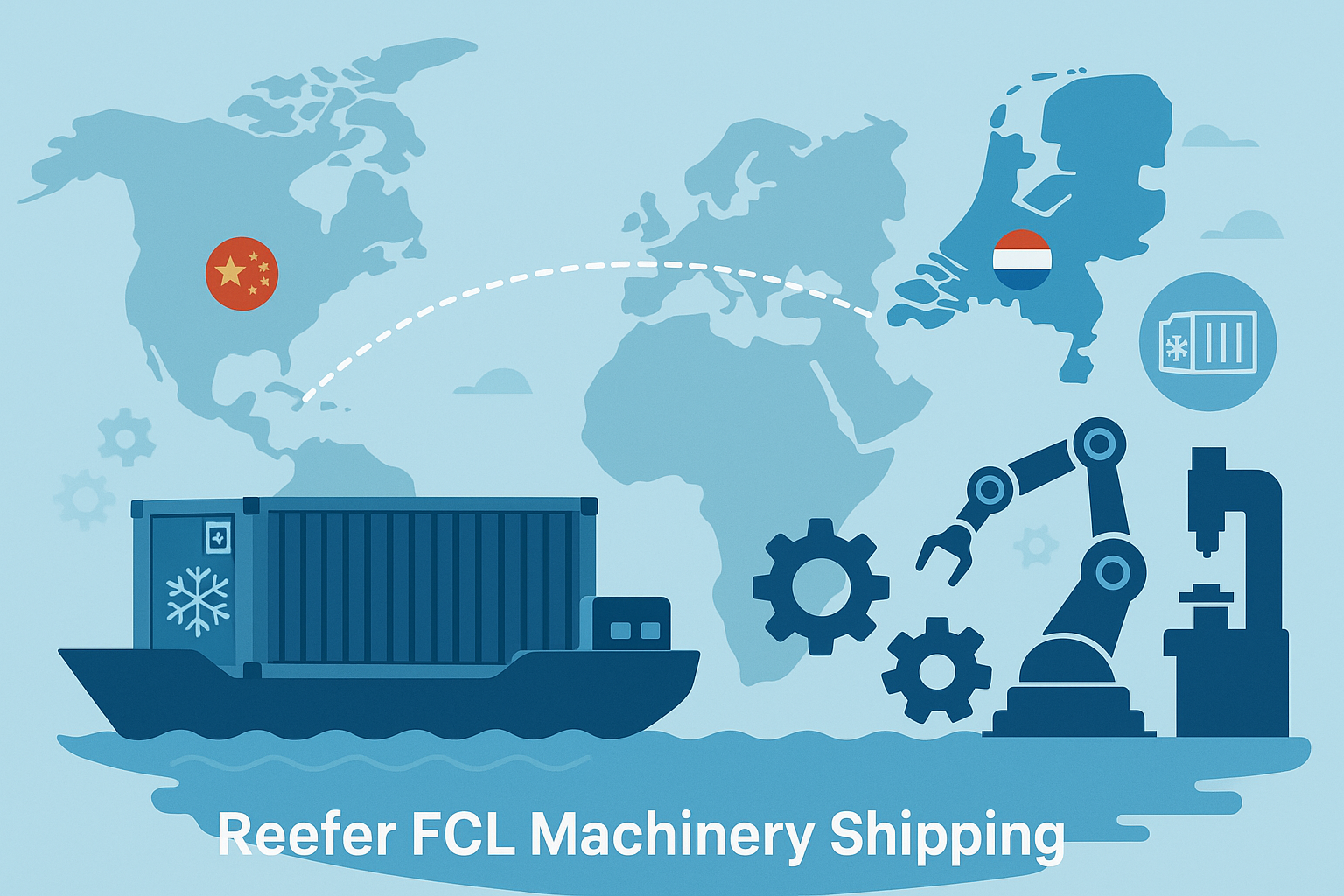
Because machinery often needs stable, temperature-controlled handling, understanding the Reefer FCL transit time for machinery from China to Netherlands helps importers build predictable schedules and avoid costly delays. Therefore, this guide explains transit variations, routing choices, documentation, and cold-chain best practices while offering practical strategies for smoother door-to-door planning. For broader logistics references, you may visit our Top China Freight homepage.
What Determines the Reefer FCL Transit Time for Machinery?
Although most importers assume that all reefer containers follow similar schedules, machinery shipments actually differ because of cargo sensitivity, inland drayage distance, customs workload, and specific EU port routing. Moreover, carriers adjust transit days according to weather, vessel capacity, and cold-chain demand, especially during peak seasons. As a result, transit time can fluctuate even on stable China–Europe lanes.
Key Timing Drivers
- Departure port frequency
- Machinery size and reefer airflow requirements
- Transshipment hub performance
- Vessel congestion in Rotterdam and Antwerp
- Cold-chain slot availability
- Document readiness and cargo inspection probability
Additionally, reefer containers require earlier cut-off deadlines, meaning shippers must organize booking, packing, and pre-cooling earlier than general dry cargo.
How Long Does Reefer FCL Transit Usually Take From China to the Netherlands?
In general, reefer FCL shipments from major Chinese ports take 30–42 days door-to-door, depending on the chosen route. Moreover, some routings skip congested hubs and produce faster delivery even without premium surcharges.
To help you plan, below is a reference transit time table:
Reference Reefer FCL Transit Time
| China Port | Netherlands Route | Estimated Transit Time | Notes |
|---|---|---|---|
| Shanghai | via Rotterdam | 31–36 days | Most stable schedule |
| Ningbo | via Antwerp | 33–38 days | Good for machinery in wooden crates |
| Shenzhen | via Rotterdam | 34–42 days | Longer sea distance |
Although these are indicative values, they reflect typical cold-chain performance used by machinery importers.
Why Do Machinery Shipments Need Reefer Containers?
Machinery often includes components such as lubricants, electronics, precision parts, and hydraulic systems that must be kept within a controlled temperature range. Therefore, many importers choose reefer containers not for freezing but for temperature stability.
Benefits of Reefer Containers for Machinery
- Protects electronic control units
- Reduces risk of condensation inside crates
- Ensures stable conditions during longer voyages
- Minimizes temperature-related deformation
- Supports high-value machinery with strict QC requirements
Additionally, reefer containers allow remote monitoring, enabling supply-chain managers to track temperature and humidity throughout the voyage.
What Is the Best Route for Reefer FCL Machinery Shipments?
Because different EU ports have varying congestion levels, importers should compare routing options carefully. Moreover, faster inland delivery sometimes outweighs a slightly longer sea leg.
Route Comparison for Machinery Reefer FCL
| Route | Strength | Limitation |
|---|---|---|
| Shanghai → Rotterdam | Fastest customs clearance | Peak-season congestion |
| Ningbo → Antwerp | Stable arrivals | Occasional trucking delays |
| Shenzhen → Rotterdam | Reliable cold-chain capacity | Slightly longer sailing time |
When importers prioritize cost efficiency over speed, Rotterdam remains the preferred option because of high reefer plug-point availability.
How to Optimize Reefer FCL Transit Time for Machinery?
Because reefer machinery shipments follow strict protocols, importers can shorten delays by improving preparation and communication. Furthermore, well-planned booking steps ensure better access to cold-chain capacity.
Optimization Checklist
- Pre-cool machinery components 24 hours before loading
- Confirm reefer temperature settings with suppliers
- Prepare all documents in advance
- Use carriers with strong EU reefer networks
- Track transit using smart-reefer tools
- Choose efficient inland terminals for final delivery
Additionally, coordinating with a knowledgeable logistics partner helps ensure proper setup and prevents errors at the origin terminal.
Case Studies
Precision Machinery in Reefer FCL (Card Format)
Origin: Ningbo
Destination: Rotterdam → Eindhoven
Container: 1 × 40RH
Cargo: Temperature-sensitive precision equipment
Transit Time: 35 days
Total Cost: Approx. USD 4,200
The shipper maintained 18°C stable temperature to protect calibration integrity. Moreover, early documentation review avoided customs delays and ensured smooth inland delivery.
Heavy Engineering Machinery (Card Format)
Origin: Shenzhen
Destination: Rotterdam → Utrecht
Container: 1 × 40RH
Cargo: Hydraulic machinery needing humidity control
Transit Time: 37 days
Total Cost: Approx. USD 4,380
Because the supplier pre-tested the reefer setup 24 hours before stuffing, the cargo maintained stable humidity throughout the voyage, improving final QC performance.
Why Choose Top China Freight for Reefer FCL Machinery Shipping?
Top China Freight provides tailored solutions for complex machinery loads, offering consistent reefer allocation, optimized routing, and end-to-end temperature monitoring. Moreover, our team coordinates flexible inland trucking and supports supply-chain planning through FCL & LCL services when machinery shipments vary in size.

What Documents Are Required for Cold-Chain Machinery Shipments?
Because reefer machinery loads require technical documentation as well as standard logistics paperwork, importers should prepare a full checklist.
Required Documents
| Document | Purpose |
|---|---|
| Commercial Invoice | Verifies declared value |
| Packing List | Confirms crate dimensions and materials |
| Bill of Lading | Proof of shipment |
| Machinery Specification Sheet | Confirms temperature sensitivity |
| CE or Safety Certificates | EU compliance check |
| Certificate of Origin | Preferential duty programs |
Additionally, providing full crate diagrams reduces inspection likelihood.
Conclusion
In conclusion, understanding the Reefer FCL transit time for machinery from China to Netherlands helps importers build more predictable supply chains while reducing temperature-related risk. Additionally, optimized documentation, stable routing, and experienced logistics partners support smoother cold-chain delivery. Therefore, when planning your next shipment, consider requesting a tailored transit analysis and freight estimate to ensure full visibility from China to the Netherlands.
Request A Free Quote
Need a reliable logistics partner? Share your shipment details and we’ll provide a tailored quotation quickly and accurately.
FAQ:
Do all machinery shipments require reefer containers?
Not always. Only equipment sensitive to temperature, humidity, or condensation benefits from reefer transport. Review machinery specifications before selecting.
How early should I book a reefer FCL?
Booking 2–3 weeks ahead is ideal because reefer capacity fills faster than dry equipment containers.
What happens if reefer power is interrupted?
What happens if reefer power is interrupted?
How can I track reefer container status?
Carriers provide online tracking plus smart-reefer temperature logs accessible in real time.
Should I use door-to-door service for machinery?
Door-to-door simplifies coordination and avoids multiple vendors, especially when inland trucking is complex.