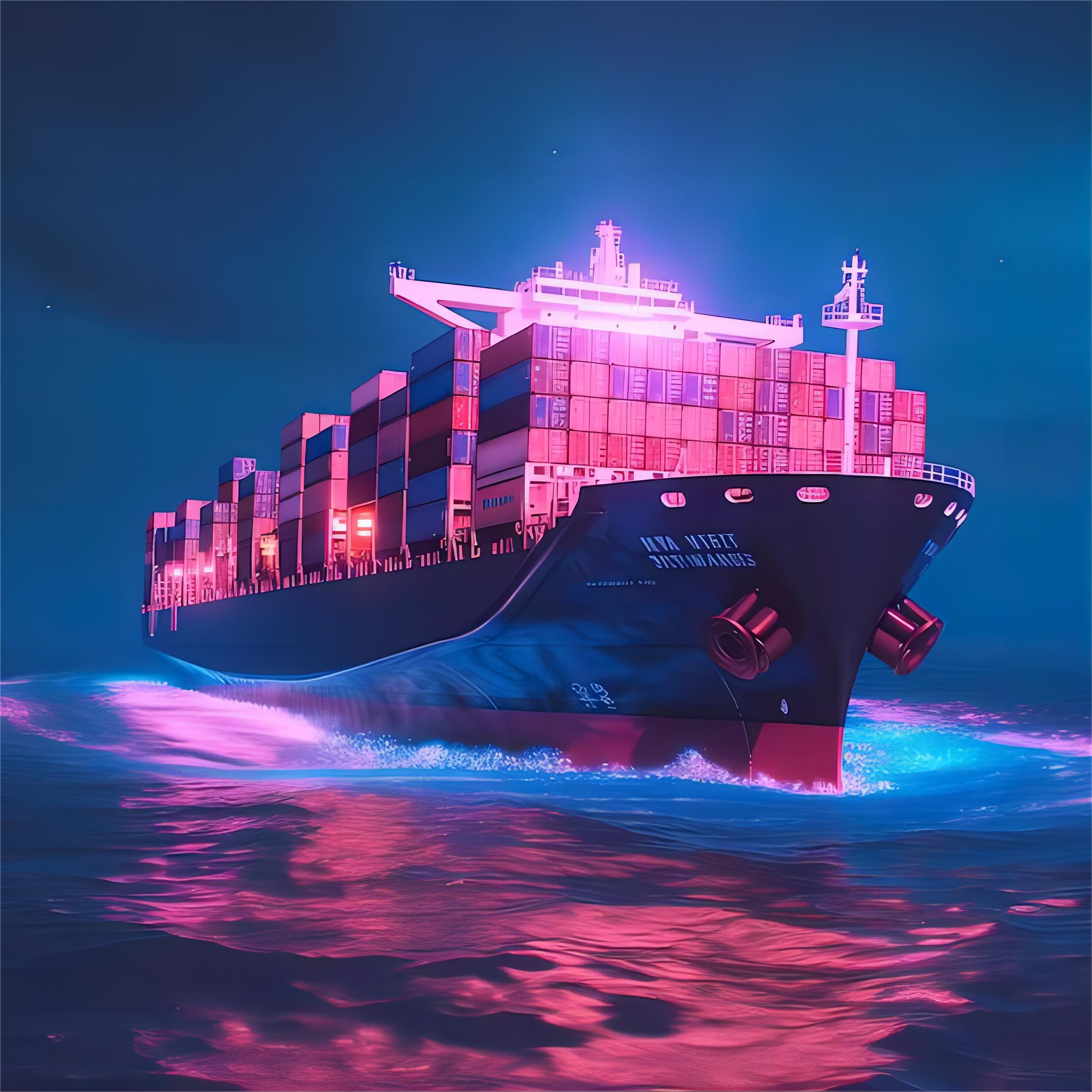
40HQ FCL Tracking for Machinery from China to Ireland
Shipping industrial machinery from China to Ireland demands precise planning and transparent tracking. Understanding the intricacies of 40HQ FCL (Full Container Load) shipments is vital for businesses prioritizing efficiency and visibility. Top China Freight excels at streamlining this complex logistical process. Our comprehensive tracking solutions ensure your valuable assets arrive safely and on schedule, providing peace of mind throughout the entire journey.
✦
What is 40HQ FCL Shipping and Why Choose it for Machinery?
A 40HQ container, or 40-foot High Cube, measures 40 feet long, 8 feet wide, and 9.5 feet high. This extra height provides approximately 300 cubic feet more capacity than a standard 40-foot container, making it ideal for bulky or tall machinery.
Choosing FCL (Full Container Load) means your goods occupy the entire container. Consequently, this method offers enhanced security, as your machinery is not mixed with other shippers’ cargo. Furthermore, it significantly reduces the risk of damage or misplacement during transit.
For importing substantial industrial equipment or multiple large machines from China to Ireland, FCL is often the most cost-effective solution. Moreover, it provides greater control over scheduling and transit times. This dedicated space ensures your valuable machinery receives priority handling throughout its journey.
The Critical Importance of 40HQ FCL Tracking for Machinery from China to Ireland
Maintaining visibility over your 40HQ FCL shipment is paramount for effective supply chain management. Real-time tracking allows businesses to monitor their machinery’s progress from the factory floor in China to its final destination in Ireland. Therefore, proactive decision-making becomes possible.
Knowing the exact location and estimated arrival time of your heavy equipment helps in planning installation schedules and workforce deployment. Without a doubt, this minimizes downtime and operational disruptions. Furthermore, it allows for swift responses to any unforeseen delays.
Accurate tracking also mitigates risks associated with international shipping, such as theft or damage. By continuously monitoring your cargo, you can promptly address any anomalies or deviations from the planned route. Indeed, this level of transparency is invaluable for high-value machinery imports.
Navigating the 40HQ FCL Shipping Process from China to Ireland
The journey for your machinery begins with careful planning and booking with a reputable freight forwarder. Initially, this involves selecting the right vessel and ensuring all necessary export documentation is prepared in China. Subsequently, your machinery is loaded and secured within the 40HQ container.
Once loaded, the container is transported to a major Chinese port, such as Shanghai, Ningbo, or Shenzhen. Here, it undergoes customs clearance for export before being loaded onto a container ship. This sea freight leg is the longest part of the transit.
Upon arrival at an Irish port, typically Dublin or Cork, the container is unloaded. Subsequently, it moves through import customs clearance. Finally, after all duties and taxes are settled, the container is transported by truck directly to your designated facility in Ireland. This seamless progression ensures timely delivery.
How Does 40HQ FCL Tracking for Machinery Work in Practice?
Effective 40HQ FCL tracking relies on a combination of technologies and information sharing. Primarily, each shipment is assigned a unique Bill of Lading (B/L) number. This number acts as your primary identifier for tracking your container.
Freight forwarders and shipping lines provide online portals where you can enter your B/L number or container number. Consequently, you receive updates on vessel location, port calls, and estimated arrival times. These systems leverage satellite tracking and port data.
Advanced logistics platforms integrate data from various carriers and ports, offering a consolidated view of your shipment’s status. Moreover, some systems provide real-time alerts for significant milestones or potential delays. This comprehensive approach ensures you are always informed about your machinery’s whereabouts.
Customs Clearance and Documentation for Machinery Imports to Ireland
Importing machinery into Ireland from China necessitates meticulous adherence to customs regulations. Initially, you will require an EORI (Economic Operators Registration and Identification) number to conduct import activities. Moreover, accurate classification of your machinery using HS codes is critical for determining correct duties and VAT.
A reliable customs brokerage service is invaluable for navigating these complexities. They ensure all declarations are correctly filed and duties are paid promptly. Consequently, this prevents costly delays and potential penalties at the Irish border.
Proper documentation is the cornerstone of a smooth customs process. Without appropriate paperwork, your 40HQ FCL machinery shipment could face significant holdups. Therefore, preparing all documents in advance is highly recommended for efficient clearance.
| Document Type | Purpose | Requirement |
|---|---|---|
| Commercial Invoice | Details goods, value, seller/buyer | Mandatory |
| Packing List | Itemizes contents, weights, dimensions | Mandatory |
| Bill of Lading (B/L) | Contract of carriage, title to goods | Mandatory |
| Certificate of Origin | Proves country of manufacture (for duties) | Often required |
| EORI Number | Economic Operator Registration | Mandatory for EU importers |
| Technical Manuals/Specs | For customs classification, inspections | As needed |

Understanding 40HQ FCL Shipping Costs and Transit Times
The overall shipping from China to Europe for a 40HQ FCL container of machinery involves several cost components. These typically include ocean freight, origin charges (e.g., terminal handling, documentation), destination charges (e.g., port fees, customs clearance), and inland transportation in Ireland. Furthermore, insurance is strongly recommended for valuable equipment.
Current door-to-door freight rates for a 40HQ from China to Ireland can range significantly based on market conditions, fuel surcharges, and carrier capacity. As of late 2024, typical ocean freight for this route might fall between $3,500 and $5,500, excluding local charges, duties, and VAT. However, these figures are subject to change. Note: Freight rates are subject to change based on fuel costs, carrier capacity, and seasonal demand. Contact us for a current quote tailored to your specific shipment.
Transit times for 40HQ FCL machinery from major Chinese ports to Ireland generally range from 30 to 40 days. This duration primarily depends on the specific port of loading, the shipping line’s route, and whether direct or transshipment services are used. For example, a direct service from Shanghai to Dublin will be faster than one involving multiple stops. Seasonal variations and port congestion can also impact the delivery schedule.
How Does 40HQ FCL Compare to Other Shipping Options?
When importing machinery, FCL is not the only option. Comparing it with other methods helps determine the most suitable approach for your specific needs. Each method offers distinct advantages and disadvantages concerning cost, speed, and cargo volume. Therefore, a careful evaluation is essential.
For smaller machinery or components that don’t fill a 40HQ, LCL (Less than Container Load) might seem appealing. However, LCL shipments often entail more handling and can experience longer transit times due to consolidation. Conversely, FCL provides dedicated space and generally faster port-to-port transit for larger volumes.
Alternatively, for urgent machinery parts or critical components, air freight offers significantly faster transit times, typically 5-8 days from China to Ireland. Nevertheless, the cost of air freight is substantially higher than sea freight, making it impractical for full 40HQ machinery shipments unless extreme urgency dictates. For instance, air freight for a 40HQ volume could be 5-10 times more expensive than sea freight.
| Shipping Method | Cost (40HQ Equivalent) | Transit Time (China to Ireland) | Best For / Limitations |
|---|---|---|---|
| 40HQ FCL Sea Freight | $3,500 – $5,500 (Ocean Freight) | 30 – 40 days | Best for: Large, heavy machinery; cost-efficiency. Limitations: Longer transit times. |
| LCL Sea Freight | $80 – $150 per CBM (for smaller volumes) | 35 – 50 days | Best for: Small machinery, parts; low volume. Limitations: More handling, potential delays, higher CBM cost. |
| Air Freight (Equivalent Volume) | $20,000 – $50,000+ | 5 – 8 days | Best for: Urgent, high-value, small machinery; critical parts. Limitations: Extremely high cost, volume/weight restrictions. |
Real-World Machinery Shipments: Case Studies
Examining actual shipping scenarios provides valuable insights into the complexities and successful execution of 40HQ FCL tracking for machinery from China to Ireland. These examples highlight various challenges and how they were overcome, offering practical lessons for importers.
Case Study 1: Large CNC Machine Import
This case involved a manufacturing company in Cork importing a large CNC machine, critical for expanding their production line. The primary concern was minimizing transit time while ensuring secure handling of the delicate equipment. Therefore, diligent tracking was a top priority.
| Detail | Value | ||||
|---|---|---|---|---|---|
| Route | Shanghai, China Dublin, Ireland | ||||
| Cargo | CNC Machining Center, 60 CBM, 12,500 kg | ||||
| Container | 1 x 40HQ | ||||
| Shipping Details | Carrier: COSCO, Port of Loading: Shanghai, Port of Discharge: Dublin, Route Type: Direct | ||||
| Cost Breakdown (Estimated Q4 2024) | Ocean Freight: $4,800 | Origin Charges: $650 | Destination Charges: $700 | Customs & Duties (est): $1,800 | Total Landed Cost: $7,950 |
| Timeline | Booking to Loading: 5 days | Sea Transit: 32 days | Customs Clearance: 3 days | Total Door-to-Door: 38 days | |
| Key Insight | Proactive communication with the freight forwarder and real-time tracking minimized uncertainties and facilitated timely factory preparation. The direct route saved 5-7 days compared to transshipment services. |
Case Study 2: Agricultural Equipment for a Farm in Limerick
An agricultural enterprise in Limerick needed to import specialized farming machinery before the planting season. Cost-effectiveness was a major consideration, alongside reliable delivery. Consequently, a detailed cost analysis and consistent tracking were fundamental to the project’s success.
| Detail | Value | ||||
|---|---|---|---|---|---|
| Route | Ningbo, China Cork, Ireland | ||||
| Cargo | Tractor Attachments & Processing Units, 65 CBM, 10,000 kg | ||||
| Container | 1 x 40HQ | ||||
| Shipping Details | Carrier: MSC, Port of Loading: Ningbo, Port of Discharge: Cork, Route Type: Transshipment via Rotterdam | ||||
| Cost Breakdown (Estimated Q1 2025) | Ocean Freight: $3,900 | Origin Charges: $580 | Destination Charges: $650 | Customs & Duties (est): $1,500 | Total Landed Cost: $6,630 |
| Timeline | Booking to Loading: 7 days | Sea Transit: 38 days | Customs Clearance: 4 days | Total Door-to-Door: 49 days | |
| Key Insight | Opting for a transshipment route offered a significant cost saving of 15% compared to direct services, at the expense of an additional week in transit. Regular tracking updates were crucial for managing the extended timeline and coordinating local delivery. Utilizing an express service for a small, critical part needed urgently was also considered for minor components. |
Case Study 3: Industrial Robot Arms for an Automation Project
A Dublin-based tech firm imported several industrial robot arms for an automation project with strict deadlines. The primary challenge was ensuring the safe transport of delicate, high-value electronics. Hence, enhanced tracking and robust packaging were non-negotiable requirements for this 40HQ FCL tracking for machinery from China to Ireland.
| Detail | Value | ||||
|---|---|---|---|---|---|
| Route | Shenzhen, China Dublin, Ireland | ||||
| Cargo | Industrial Robot Arms (x5), 55 CBM, 8,000 kg | ||||
| Container | 1 x 40HQ | ||||
| Shipping Details | Carrier: Maersk, Port of Loading: Shenzhen, Port of Discharge: Dublin, Route Type: Direct | ||||
| Cost Breakdown (Estimated Q2 2025) | Ocean Freight: $5,200 | Origin Charges: $720 | Destination Charges: $780 | Customs & Duties (est): $2,000 | Total Landed Cost: $8,700 |
| Timeline | Booking to Loading: 6 days | Sea Transit: 30 days | Customs Clearance: 2 days | Total Door-to-Door: 38 days | |
| Key Insight | The firm paid a premium for a direct service and a top-tier carrier to ensure faster transit and reduced handling. Continuous 40HQ FCL tracking provided crucial updates, allowing the installation team to prepare precisely. This minimized project delays and ensured the delicate equipment arrived without incident. |
Optimizing Your Machinery Import Strategy: A Decision Framework
Choosing the optimal shipping strategy for your machinery from China to Ireland depends on several key factors. Evaluating your priorities carefully will guide you towards the most effective solution. Therefore, consider these aspects before making a decision.
If budget is your primary concern, FCL sea freight remains the most cost-effective option for large volumes. Nevertheless, be prepared for longer transit times. Conversely, if speed is paramount for urgent projects or time-sensitive production, air freight is the undisputed choice, despite its significantly higher cost.
The nature of your cargo also plays a crucial role. Delicate or high-value machinery benefits from the dedicated space and reduced handling of FCL. Furthermore, consider the volume thresholds; for shipments consistently exceeding 15-20 CBM, a 40HQ FCL is almost always more economical than LCL. Hybrid solutions, like sea-air for smaller critical components, can also offer a balanced approach.
Ensuring Smooth 40HQ FCL Tracking for Machinery to Ireland
Effectively managing the import of machinery via 40HQ FCL from China to Ireland is a multifaceted endeavor. It requires a deep understanding of logistics, customs, and robust tracking capabilities. By prioritizing visibility and partnering with experienced freight forwarders, businesses can significantly enhance their supply chain efficiency. This meticulous approach minimizes risks and ensures the timely delivery of vital industrial assets.
Ultimately, successful 40HQ FCL tracking for machinery from China to Ireland hinges on detailed planning and continuous communication. From initial booking to final delivery, every step contributes to a seamless import experience. Therefore, investing in reliable logistics support is key to your operational success.
Ready to streamline your 40HQ FCL tracking for machinery from China to Ireland? Contact us today for a personalized quote and expert guidance. Our team is prepared to help you navigate every step of your international shipment.
Request Quote