
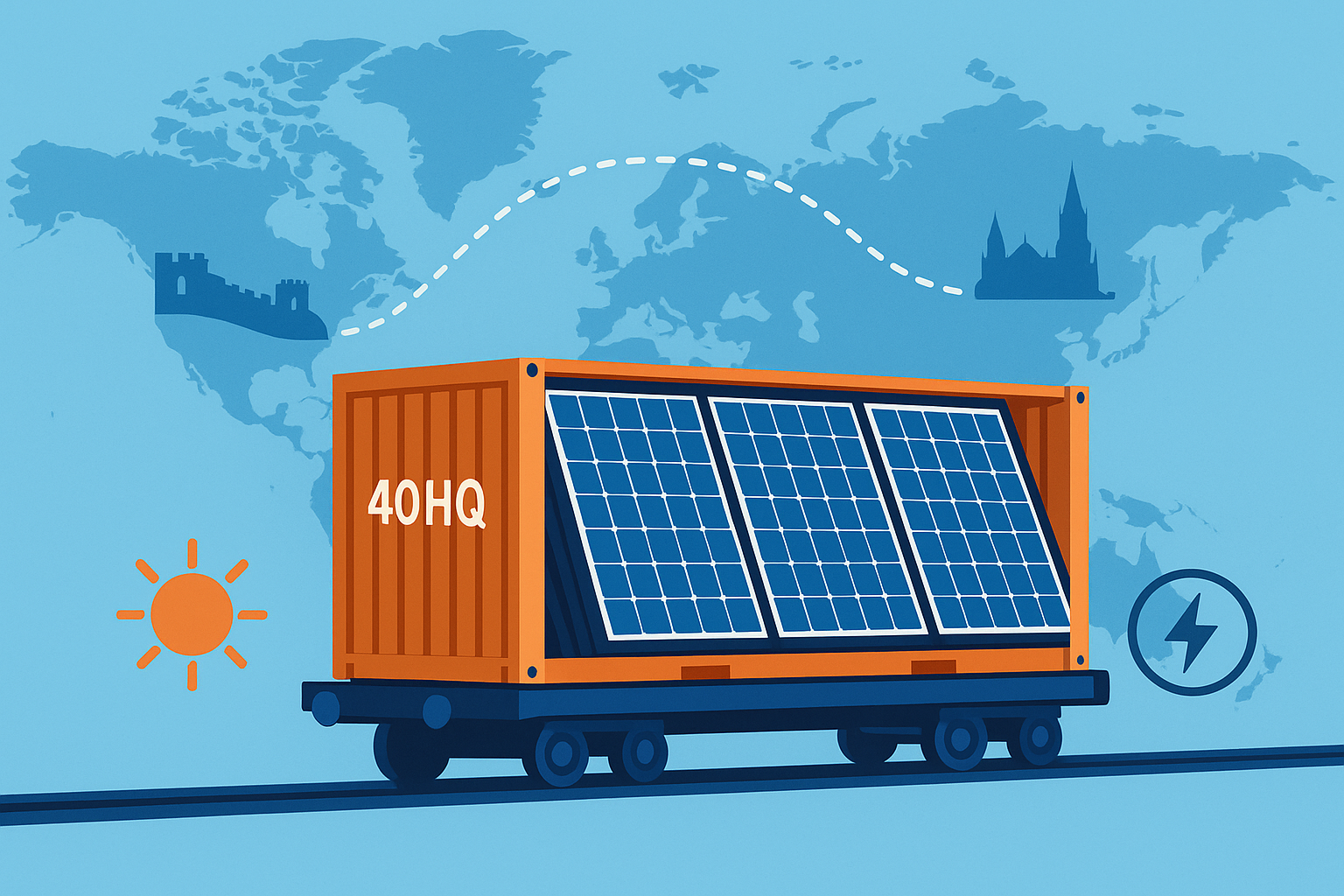
Because shipping photovoltaic modules requires both precision and cost stability, understanding the 40HQ FCL shipping cost for solar panels from China to Poland becomes essential for importers planning large-scale renewable energy deployments. As freight rates fluctuate and demand continues rising, businesses need clear cost structures, accurate loading strategies, and route optimization to keep their supply chain resilient. Therefore, this guide outlines practical steps and offers reliable insights supported by solutions from Top China Freight.
What Factors Influence the 40HQ FCL Cost When Shipping Solar Panels to Poland?
Although many shippers look only at headline freight rates, the true cost structure for solar panel logistics extends into equipment availability, inland haulage, documentation, and peak-season surcharges. Because solar modules require careful packing and reinforced bracing, loading labor also plays a large role in total charges. Moreover, when exporters coordinate cargo readiness with weekly sailing schedules, they reduce storage expenses and avoid rolled bookings.
Key Cost Drivers
- Equipment and space availability for 40HQ containers
- China origin port selection
- Sailing route type and carrier reliability
- Weight, CBM, and special packing for photovoltaic modules
- Destination charges in Poland, especially for heavy loads
How Does Port Selection Affect Shipping Cost and Lead Time?
Choosing the right China port significantly changes the cost-to-speed ratio. For instance, Shanghai and Ningbo usually offer more stable freight schedules, while Qingdao may provide competitive pricing for heavy renewable cargo. Since Poland-bound services often connect through major EU hubs, early port choice directly affects total transit time.
Common China → Poland Route Characteristics
| Origin Port | Transit Time Range | Cost Level | Notes |
|---|---|---|---|
| Shanghai | 32–38 days | Medium | Balanced rate and reliability |
| Ningbo | 33–40 days | Medium-Low | Strong capacity during high season |
| Qingdao | 35–42 days | Low | Good for cost-sensitive solar shipments |
Moreover, solar panel importers who plan around seasonal congestion at EU gateways often secure better sailing windows, which ultimately supports smoother delivery into Poland.
Why Solar Panel Cargo Requires Enhanced 40HQ Loading and Reinforcement?
Solar panels are fragile, high-value, and sensitive to vibration, so a 40HQ container must be loaded with reinforced framing, corner protections, and anti-shock padding. Because standard stacking cannot support the weight distribution required for photovoltaic modules, exporters adopt specialized racking structures. Additionally, when shippers optimize the container layout, they increase utilization while lowering breakage-related losses.
Recommended Loading Enhancements
- Shock-absorbent padding along internal rails
- Vertical and horizontal bracing for palletized panels
- Moisture-resistant wrapping for temperature variations
- Clear labeling to assist Poland’s unloading teams
What Are the Most Cost-Efficient Ways to Route Solar Panels from China to Poland?
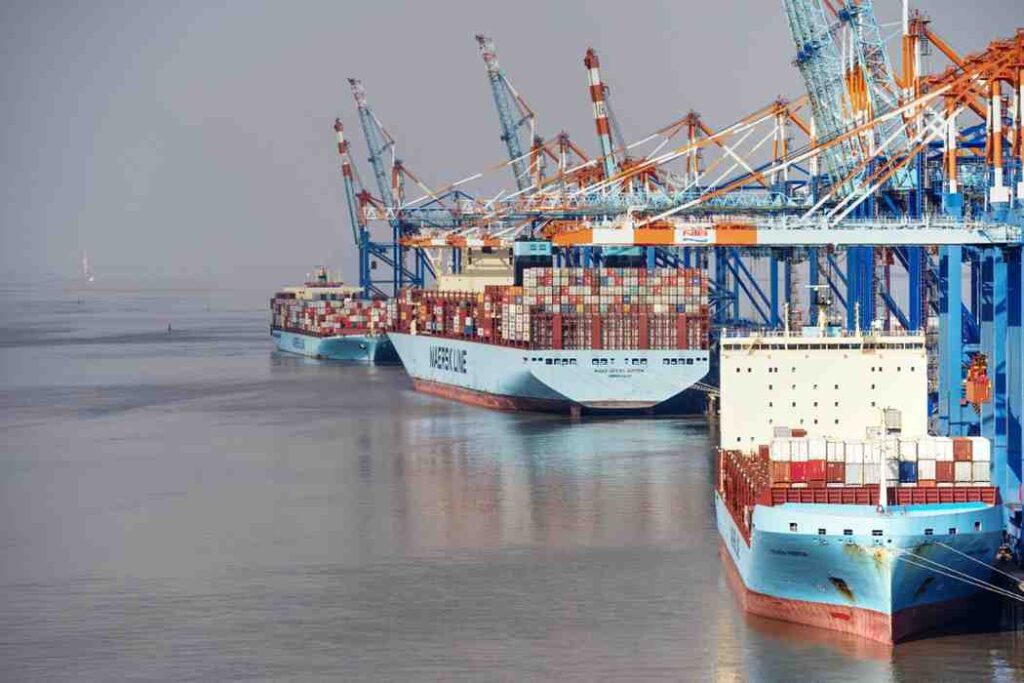
Because Poland receives most inbound containers through EU ports such as Gdańsk, Hamburg, and Rotterdam, choosing an efficient connection route greatly reduces drayage cost and variability. Although direct services provide shorter transit times, transshipment routes can offer more competitive pricing when demand is high. Consequently, importers often balance schedule stability and rate conditions to achieve predictable procurement cycles.
Route Type Comparison
| Route Type | Avg. Transit Time | Cost Range | Best for |
|---|---|---|---|
| Direct EU Gateway | 30–36 days | Medium | Fast solar project deployment |
| Via Singapore / Tanjung Pelepas | 34–42 days | Medium-Low | Flexible timing, lower rates |
| Via Middle East hubs | 35–45 days | Low | Budget-sensitive bulk shipments |
Because renewable projects depend on predictable timelines, businesses planning multi-MW solar farms often combine direct routes during urgent phases and cost-optimized transshipment lanes for non-critical batches.
What Risks Affect 40HQ Solar Panel Shipments—and How Can Importers Reduce Them?
Although 40HQ FCL offers the safest and most cost-effective mode for transporting solar panels, importers still face risks such as cargo vibration, moisture fluctuations, port congestion, and unexpected rate increases. Nevertheless, these challenges can be mitigated through preventive measures and stronger planning. For example, moisture-absorbing packets and thermal liners protect panels from condensation during winter voyages to Europe. Likewise, earlier bookings stabilize freight rates during peak renewable-sector demand.
Common Risk Categories
- Physical Damage: Prevented with enhanced padding, reinforced racks, and anti-shock supports
- Rate Fluctuations: Controlled through seasonal rate reviews and multi-carrier strategies
- Customs Delays: Reduced with accurate certificates and harmonized documentation
- Inland Congestion: Mitigated by securing truck slots at Gdańsk, Hamburg, or Rotterdam ahead of arrival
Because predictable delivery determines project installation timelines, Polish solar developers rarely rely on last-minute bookings.
Case Studies
40HQ Shipment of 550W Monocrystalline Panels to Gdańsk
Cargo Type: 27 tons of high-efficiency monocrystalline modules (550W)
Route: Shanghai → Gdańsk (via Rotterdam)
Transit Time: 37 days port-to-port
Cost Level: Medium-Low due to transshipment flexibility
Outcome:
Although the transshipment increased transit time by several days, the importer saved approximately 9–12% on freight cost. Additionally, reinforced vertical bracing prevented cell micro-cracks, and tracking tools notified the Polish warehouse team of early gate-in.
Bulk Solar Modules for a 10 MW Project Delivered via Hamburg
Cargo Type: Two 40HQ containers of 540W half-cut modules
Route: Ningbo → Hamburg (direct EU gateway)
Transit Time: 34 days door-to-terminal
Cost Level: Medium
Outcome:
Because the project required fast deployment, the importer selected a stable direct route. Moreover, early customs filing enabled rapid clearance, and Hamburg’s strong rail links shortened inland transit to Poznań, reducing total lead time by nearly 12%.
Why Working With a Specialized Freight Partner Improves Cost Accuracy and Stability
Since solar panels require careful container planning and compliance with EU renewable-energy standards, working with a logistics expert significantly improves cost predictability. A partner like Top China Freight supports route evaluation, 40HQ loading design, customs documentation, and multimodal routing through Poland’s major gateways. Furthermore, integrated services—such as sea freight and FCL/LCL consolidation—allow solar companies to scale import volumes without sacrificing schedule reliability.
Because photovoltaic supply chains rely on timely deliveries to maintain construction momentum, professional end-to-end coordination becomes invaluable as project sizes increase.

How Does Customs Compliance in Poland Affect Total Solar Import Cost?
Although customs compliance seems straightforward, photovoltaic modules fall under specific EU tariff classifications and product standards such as CE conformity and HS codes 8541.40 and 8541.90. Therefore, incomplete declarations quickly lead to inspections that extend clearance times and increase handling charges. Additionally, Poland’s renewable-energy incentives often require additional documentation, which importers must prepare before the vessel departs.
Essential Compliance Documents
| Document | Purpose |
|---|---|
| Commercial Invoice | Declares model type, wattage, and value |
| Packing List | Confirms pallet count and module configuration |
| Certificate of Origin | Supports EU tariff validation |
| CE / IEC Certificates | Proves regulatory compliance for PV modules |
| Bill of Lading | Needed for release and VAT processing |
When importers rely on a professional customs team or a trusted partner offering services similar to customs brokerage, they reduce paperwork errors and shorten the handover process.
Conclusion
Understanding the 40HQ FCL shipping cost for solar panels from China to Poland empowers importers to control expenses, improve transit reliability, and protect valuable photovoltaic modules throughout the logistics chain. Because renewable-energy projects depend on precise scheduling, optimized routing, stronger compliance management, and strategic multimodal planning deliver meaningful advantages. To elevate cost predictability and strengthen operational resilience, businesses may consult a professional logistics partner for tailored recommendations and route planning.
Request A Free Quote
Need a reliable logistics partner? Share your shipment details and we’ll provide a tailored quotation quickly and accurately.
FAQ:
What determines the shipping cost for a 40HQ solar panel container?
Rates vary by route type, season, carrier availability, weight, and destination port charges. Early booking improves cost control.
How can I reduce the risk of damage during transport?
Reinforced racks, padding, moisture control layers, and optimized loading patterns help protect photovoltaic modules.
Which EU ports are most efficient for Poland-bound solar shipments?
Gdańsk, Hamburg, and Rotterdam offer strong inland links and predictable throughput for renewable cargo.
How do transit times fluctuate on China–Poland routes?
Weather, EU port congestion, seasonal demand, and carrier schedule shifts all influence sailing duration.
Are 40HQ containers always suitable for solar panels?
Most standard module sizes fit well, though extremely large panels may require alternate bracing or equipment.