
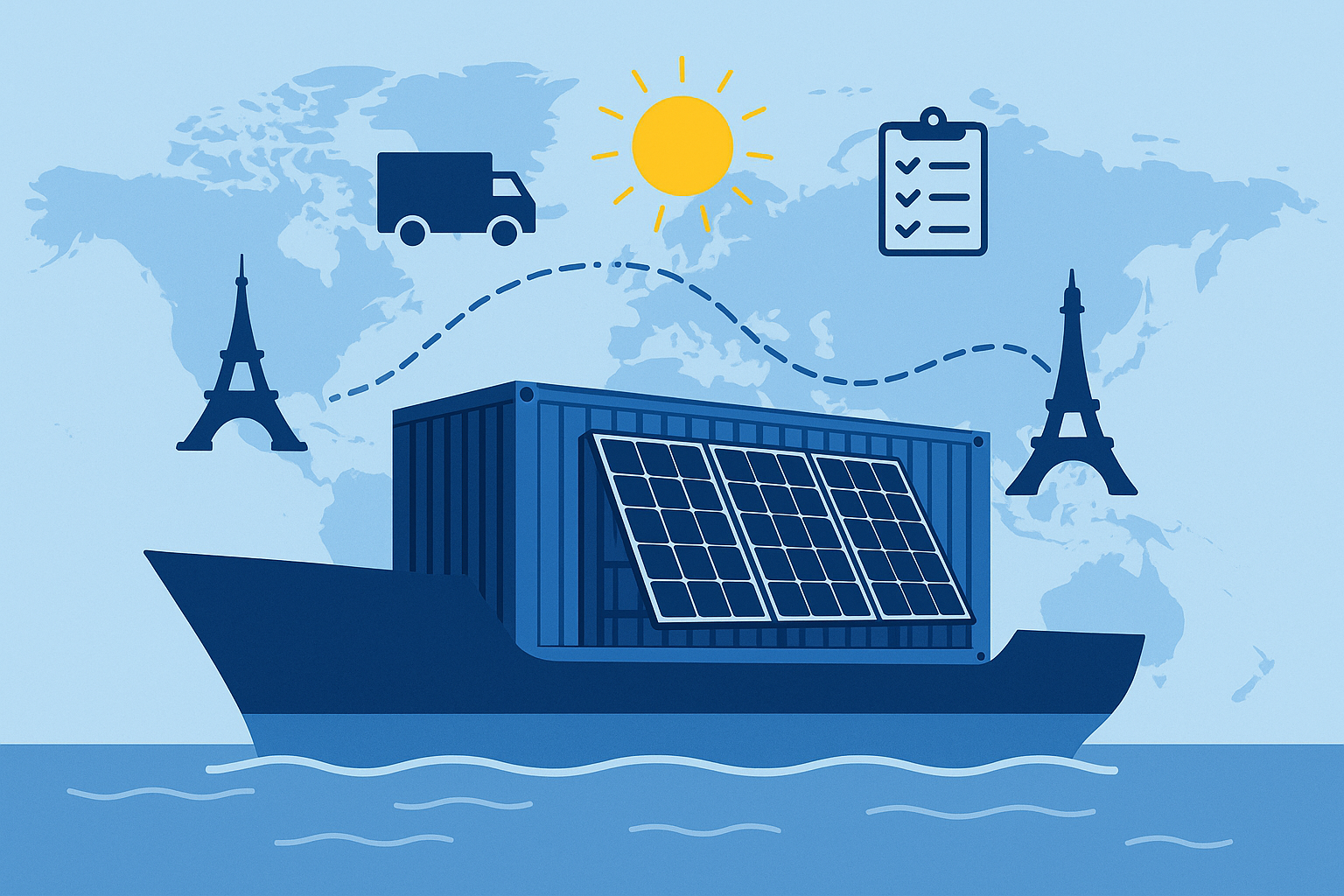
Planning a 40HQ FCL sailing schedule for solar panels from China to Europe demands precision because PV modules require stable weekly departures, predictable transit times, and early customs coordination. Moreover, Europe’s renewable energy sector grows rapidly, meaning any delay in solar panel supply chains affects installation timelines and project commitments. As this guide unfolds, you’ll find practical strategies—supported by Top China Freight—to help exporters and European importers strengthen schedule reliability and optimize cargo flow.

Why Is 40HQ FCL the Preferred Option for Shipping Solar Panels to Europe?
Solar panels are fragile, lightweight, and highly space-dependent. Therefore, 40HQ containers offer the optimal height and volume needed to load large quantities safely. Additionally, solar exporters gain predictable pricing when using FCL instead of fragmented LCL options.
Benefits for Solar Panel Shipments
- Maximized vertical loading capacity
- Better protection against breakage or micro-cracks
- Suitable for palletized or loose carton modules
- Lower freight cost per watt due to volume efficiency
Since Europe’s solar projects require large-scale deliveries, consistent FCL planning ensures stable supply.
What Makes Sailing Schedule Stability Essential for Solar Panel Importers?
Europe’s PV installation timeline is closely tied to vessel schedules. Although delays impact most industries, solar energy projects face tighter constraints because installation crews, electrical permits, and grid-connection windows are time-bound.
Risks When Schedules Change
- Missed installation deadlines
- Stockouts at European distribution hubs
- Increased warehouse pressure in China
- Higher demurrage or storage fees at destination ports
Because solar panels are often imported in large batches, schedule stability directly supports project execution.
How Do China’s Export Ports Support Weekly 40HQ Sailing for Solar Panels?
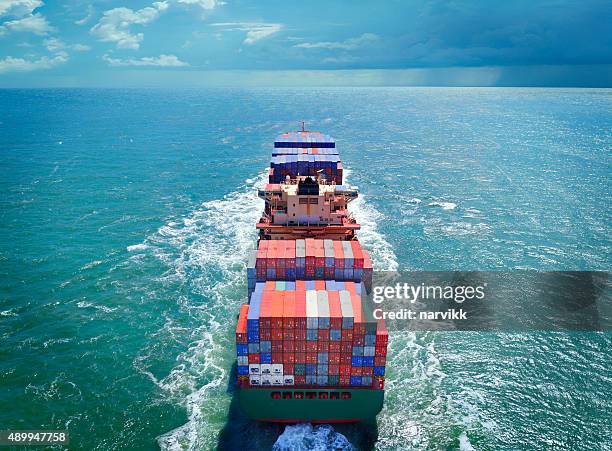
Major ports—including Shanghai, Ningbo, Qingdao, Shenzhen, and Xiamen—export large volumes of PV modules. As a result, carriers typically maintain weekly or twice-weekly sailings targeting Northern Europe, Western Europe, and the Mediterranean.
Weekly Sailing Frequency by China Port & Europe Route
| China Port | Europe Destination | Weekly Sailings | Notes |
|---|---|---|---|
| Shanghai | Rotterdam | 2–3 | High capacity for PV modules |
| Ningbo | Hamburg | 1–2 | Stable year-round schedule |
| Qingdao | Antwerp | 1–2 | Strong for North China factories |
| Shenzhen | Valencia | 1 | Good option for Mediterranean demand |
| Xiamen | Genoa | 1 | Suitable for South Europe distribution |
Since panel manufacturers cluster in Eastern and Southern China, these ports remain central to solar shipments.
How Does Transit Time Influence Solar Supply Chain Planning?
Transit time determines when European EPC contractors can begin site preparation. Moreover, delays affect labor scheduling, crane reservations, and subcontractor timelines.
Typical Transit Times
- China → Northern Europe: 28–36 days
- China → Western Europe: 30–40 days
- China → Mediterranean: 24–32 days
Although transit durations vary with weather, port congestion, and carrier rotations, consistent monitoring protects downstream planning.
Case Studies
40HQ PV Shipment from Ningbo to Rotterdam
Cargo: 40HQ with 650 solar panel cartons
Transit: 31 days
Outcome: Smooth customs + on-time EPC installation
The exporter synchronized ETD with production completion, while predictive ETA allowed the importer to pre-book trucks for inland delivery to three European sites.
PV Modules Shipped from Shenzhen to Valencia
Cargo: 40HQ with utility-scale solar modules
Transit: 26 days
Outcome: Zero delay in construction phase
Early sailing visibility helped the EPC contractor coordinate crane operations and panel mounting schedules, preventing costly labor downtime.
How Do European Port Choices Influence the Optimal Sailing Schedule?
Choosing the right port depends on inland distribution patterns, customs capacity, and downstream delivery plans. Moreover, different ports serve different solar markets across Europe.
Recommended European Ports by Market Demand
| Europe Region | Preferred Port | Reason |
|---|---|---|
| Northern Europe | Rotterdam / Hamburg | Strong green-energy distribution networks |
| Western Europe | Antwerp / Le Havre | Excellent inland connectivity |
| Southern Europe | Valencia / Genoa | Ideal for utility-scale PV projects |
| Eastern Europe | Koper / Gdansk | Fast-growing solar markets |
Selecting ports strategically helps importers shorten downstream lead times.
Can Solar Exporters Reduce Risks from Blank Sailings or Rerouting?
Blank sailings frequently occur when carriers rebalance capacity or when European demand fluctuates. However, exporters can mitigate these disruptions through diversification and early planning.
Strategies to Reduce Blank Sailing Impact
- Spread bookings across two or more carrier alliances
- Build flexible loading windows within the production schedule
- Avoid services with heavy transshipment dependency
- Track carriers’ monthly reliability reports
- Maintain backup routes via alternative ports in China
Because blank sailings may shift ETAs by more than a week, proactive planning helps safeguard solar project timelines.
How Do European Customs Timelines Influence Sailing Schedule Planning?
Customs readiness plays a crucial role because many solar panel shipments undergo documentation checks related to origin, certifications, or product compliance. Although solar cargo typically clears quickly, errors can delay final delivery.
Key Documents Required for Solar Panels
| Document | Purpose | Notes |
|---|---|---|
| Commercial Invoice | Declares value and product details | Include wattage & model types |
| Packing List | Verifies dimensions and quantities | Must match container load plan |
| Certificate of Origin | Supports EU import programs | Often needed for tariff benefits |
| CE/IEC Certificates | Ensures PV compliance | Prevents technical inspections |
| Bill of Lading | Controls release process | Must align with final consignee |
Moreover, early submission ensures importers can begin customs review before the vessel arrives.
Conclusion
To conclude, managing the 40HQ FCL sailing schedule for solar panels from China to Europe requires predictable departures, optimized loading, customs readiness, and strong inland coordination. Moreover, solar businesses that embrace visibility tools, carrier diversification, and proactive planning gain better control of installation timelines and project outcomes. Requesting tailored logistics solutions ensures consistent, on-time delivery for Europe’s fast-growing renewable energy market.
Request A Free Quote
Need a reliable logistics partner? Share your shipment details and we’ll provide a tailored quotation quickly and accurately.
FAQ:
How early should 40HQ bookings be made for solar panels?
Booking 2–4 weeks early secures space and prevents peak-season rollovers.
Which European ports are best for PV modules?
Rotterdam, Hamburg, Antwerp, Valencia, and Genoa offer strong renewable-energy distribution networks.
How can I improve transit-time accuracy?
Use predictive ETA tools and monitor carrier reliability to adjust inland plans faster.
What causes delays in solar shipments?
Port congestion, blank sailings, missing documents, and late loading often contribute.
How do I ensure safe container loading?
Use vertical frames, proper spacing, and shock-absorbing materials to protect PV modules.