Table of Contents
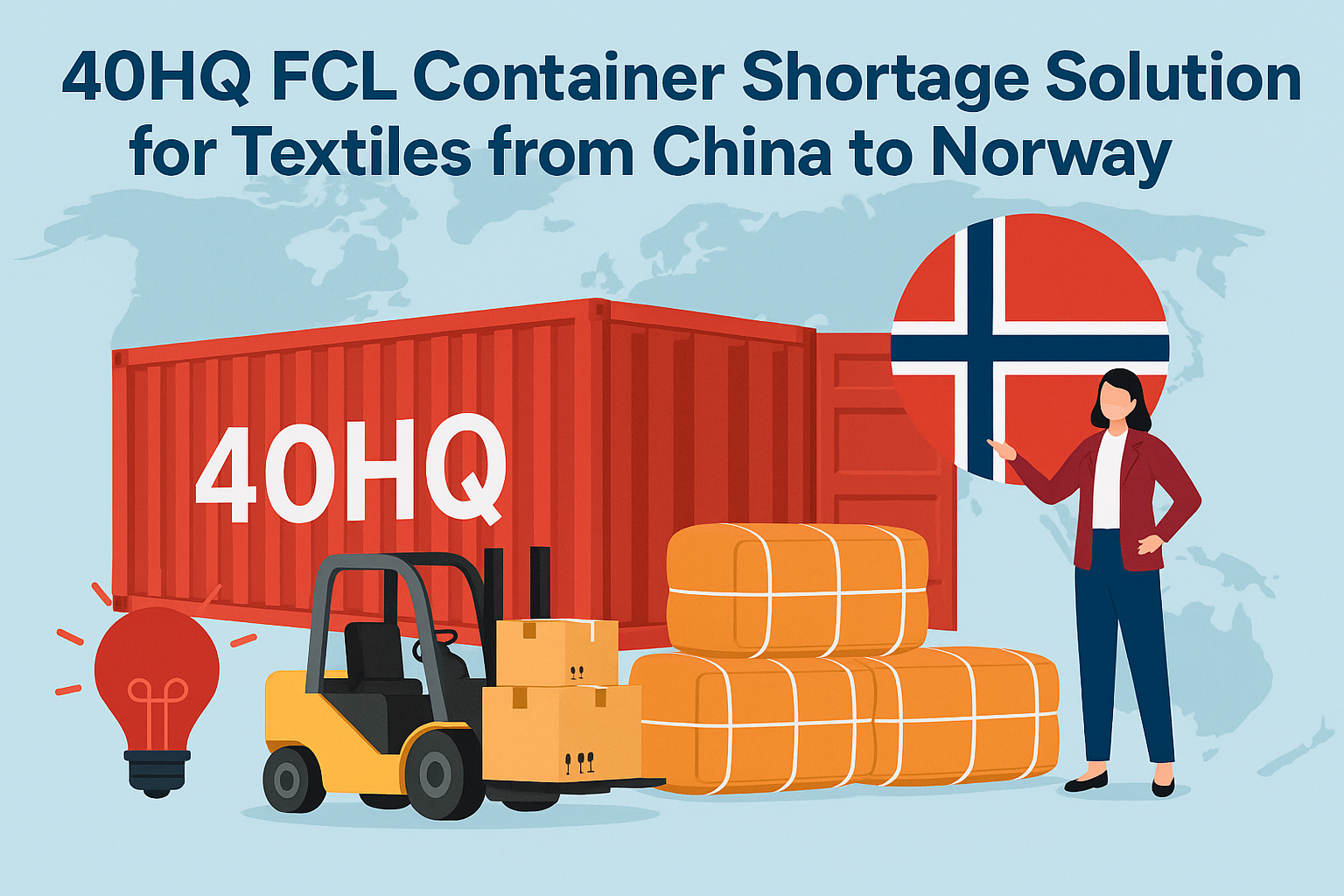
Container shortages have disrupted global textile exports, affecting manufacturers and importers alike. For companies shipping fabric, garments, or raw materials, finding an efficient 40HQ FCL container shortage solution for textiles from China to Norway is crucial to maintaining production schedules and profitability.

What Causes the 40HQ FCL Container Shortage in Textile Shipping?
The shortage of 40HQ FCL containers results from global trade imbalances, pandemic recovery delays, and port congestion. Since textiles are high in volume but light in weight, they rely heavily on 40HQ containers for cost-effective logistics.
| Reason | Description | Impact on Textile Exports |
|---|---|---|
| Trade Imbalance | More imports to Europe than exports to Asia | Containers stuck in EU ports |
| Port Congestion | Delays in loading/unloading | Slower container turnover |
| Equipment Mismanagement | Poor repositioning strategy | Uneven container distribution |
| Seasonal Demand | Textile exports peak before fashion seasons | Sudden capacity shortage |
Therefore, proactive logistics planning and early booking are essential for exporters handling high-volume textile shipments from China.
How Does Container Shortage Affect Textile Exporters from China?
Container shortages lead to increased freight rates, shipment delays, and higher inventory costs. For textile exporters in Guangzhou, Shanghai, or Shenzhen, these issues can interrupt supply chains and damage client relationships.
Moreover, carriers may prioritize higher-paying cargo such as electronics, leaving textile shipments waiting. Some forwarders introduce “premium space” services that guarantee container allocation but increase costs by 10–20%.
Despite these challenges, using 40HQ containers remains efficient for full textile loads due to their cubic capacity and ease of handling.
What Are the Best Solutions to Overcome Container Shortages?
Logistics experts recommend several strategies to handle 40HQ FCL container shortages effectively:
- Advance Booking: Reserve container space at least 3–4 weeks before the production finish date.
- Flexible Port Options: Use secondary ports such as Nansha or Xiamen when Shenzhen or Shanghai face congestion.
- Container Substitution: Switch to 20GP or 40GP containers temporarily to avoid waiting delays.
- Reefer or Open Top Alternatives: Non-perishable textiles can sometimes use reefer boxes in “dry mode.”
- Partnership with Reliable Forwarders: Companies like TopChinaFreight can provide container sharing and priority space allocation.
These solutions balance both timing and budget while keeping textile logistics stable across volatile markets.
How to Compare Shipping Methods for Textiles from China to Norway
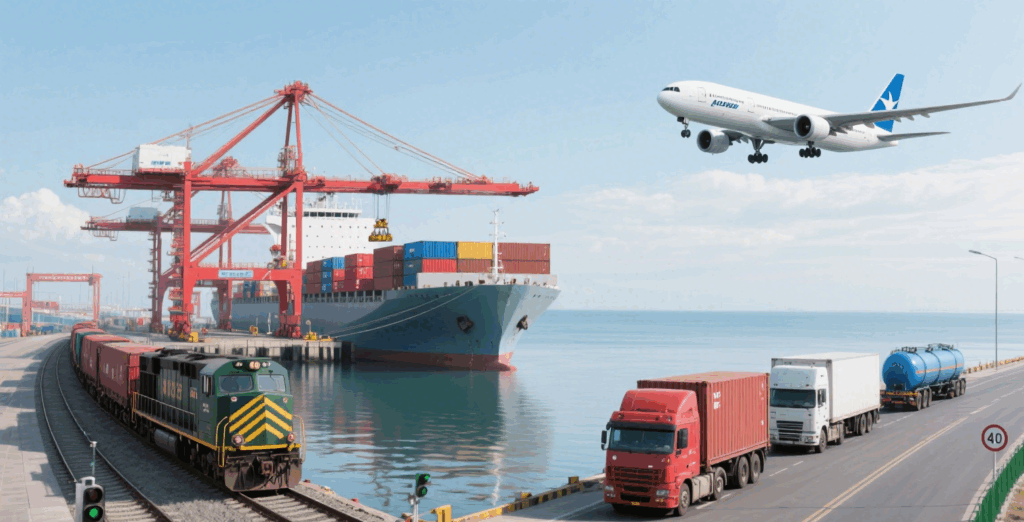
Different transport methods influence both costs and lead times. The following table provides a comparison for exporters planning 40HQ FCL shipments:
| Mode | Transit Time | Average Cost | Pros | Cons |
|---|---|---|---|---|
| 40HQ FCL Sea Freight | 32–40 days | $3,800–$4,800 | Economical, high volume | Container shortage risk |
| LCL Sea Freight | 38–45 days | $120/CBM | Good for small orders | More handling, slower |
| Rail Freight | 22–28 days | $7,000–$8,000 per 40HQ | Faster delivery | Limited route availability |
| Air Freight | 5–8 days | $6–$9/kg | Fastest transit | Expensive |
| Express Courier | 3–6 days | $10–$14/kg | For samples | Limited capacity |
Selecting the right balance between cost, timing, and reliability helps textile importers avoid delays and stock shortages in Norway.
Case Studies: Successful Textile Shipments Despite Container Shortage
🟦 Case 1: Cotton Fabric from Shenzhen to Oslo
- Container: 40HQ FCL
- Cargo: 65 CBM, 18 tons cotton rolls
- Solution: Switched to Ningbo port, used priority booking
- Transit Time: 33 days
- Result: On-time delivery with only 2-day delay
🟩 Case 2: Garments from Guangzhou to Bergen
- Container: 40HQ FCL
- Cargo: 21 tons of packaged apparel
- Solution: Used flexible route via Rotterdam transshipment
- Transit Time: 37 days
- Result: Saved $450 in freight cost, avoided demurrage
Need a shipping solution? 🚢 Request a Free Quote 📝 from TopChinaFreight and get the best rates and fastest routes today!
What Documents Are Required for Textile Shipments to Norway?
Accurate paperwork ensures smooth clearance at Norwegian ports and minimizes inspection delays.
| Document | Purpose | Notes |
|---|---|---|
| Commercial Invoice | Declares cargo value | Match HS code for textiles |
| Packing List | Lists fabric type and volume | Required for customs entry |
| Bill of Lading | Proof of shipment | Issued by carrier |
| Certificate of Origin | Proves Chinese origin | May reduce tariff |
| Textile Compliance Certificate | Ensures fabric safety standards | Required for EU imports |
| Importer Security Filing (ISF) | Pre-arrival filing | Avoid customs penalty |
Therefore, ensuring document accuracy helps reduce the total shipping time and avoids customs penalties in Norway.
How to Optimize Transit Time and Container Allocation
To minimize waiting time and maintain schedule efficiency, exporters should adopt the following strategies:
- Plan shipments during low-peak months like February or September.
- Negotiate annual volume contracts with shipping lines for container assurance.
- Use inland depots (e.g., Chongqing or Chengdu) to pre-position cargo.
- Opt for flexible delivery terms like CIF Oslo or DDP Bergen for smoother coordination.
- Monitor real-time vessel schedules to adjust export timelines.
By combining these tactics, businesses can secure containers faster even in global shortage conditions.
Why Choose TopChinaFreight for Textile Logistics to Norway?
TopChinaFreight offers comprehensive 40HQ FCL container shortage solutions through its vast network and carrier partnerships. The company supports exporters from factory pickup to final delivery, ensuring reliability and visibility throughout the supply chain.
| Service | Description |
|---|---|
| Guaranteed Space Allocation | Priority booking on major carriers |
| Multi-Port Flexibility | Shenzhen, Guangzhou, Ningbo, Qingdao |
| Customs Expertise | Full documentation and tariff handling |
| End-to-End Visibility | Real-time tracking and status updates |
| Cost Optimization | Contracted rates and consolidated freight |
With their professional assistance, textile exporters from China can overcome equipment shortages while ensuring on-time delivery to Norway.
Conclusion
In summary, solving the 40HQ FCL container shortage for textiles from China to Norway requires strategic planning, flexible routing, and collaboration with experienced freight forwarders. By combining proactive booking, alternative port use, and reliable logistics partners like TopChinaFreight, businesses can keep their textile exports running smoothly even during tight container supply periods.
Request A Free Quote
Get started with TopChinaFreight today! 🚢✨ Simply Request a Free Quote 📝 to receive a customized shipping solution tailored to your needs. Our experts will provide the best rates 💰, fastest routes 🚀, and professional guidance 🌍 for your international logistics.
FAQs
Q1.How long does a 40HQ FCL shipment take from China to Norway?
It typically takes 32–40 days depending on the departure port, vessel schedule, and customs clearance in Norway.
Q2.Which Chinese ports are best for shipping textiles to Norway?
Shenzhen, Ningbo, and Qingdao ports offer the fastest connections and reliable carriers for 40HQ FCL shipments.
Q3.How can I secure a 40HQ container during shortage periods?
Book early, use alternative ports, and work with forwarders offering container pooling or guaranteed space.
Q4.What’s the best transport mode if 40HQ containers are unavailable?
LCL, rail freight, or even reefer containers in dry mode can serve as flexible backup options.
Q5.Do textile shipments to Norway require special certificates?
Yes, EU imports must include textile safety compliance and certificates of origin for customs clearance.