
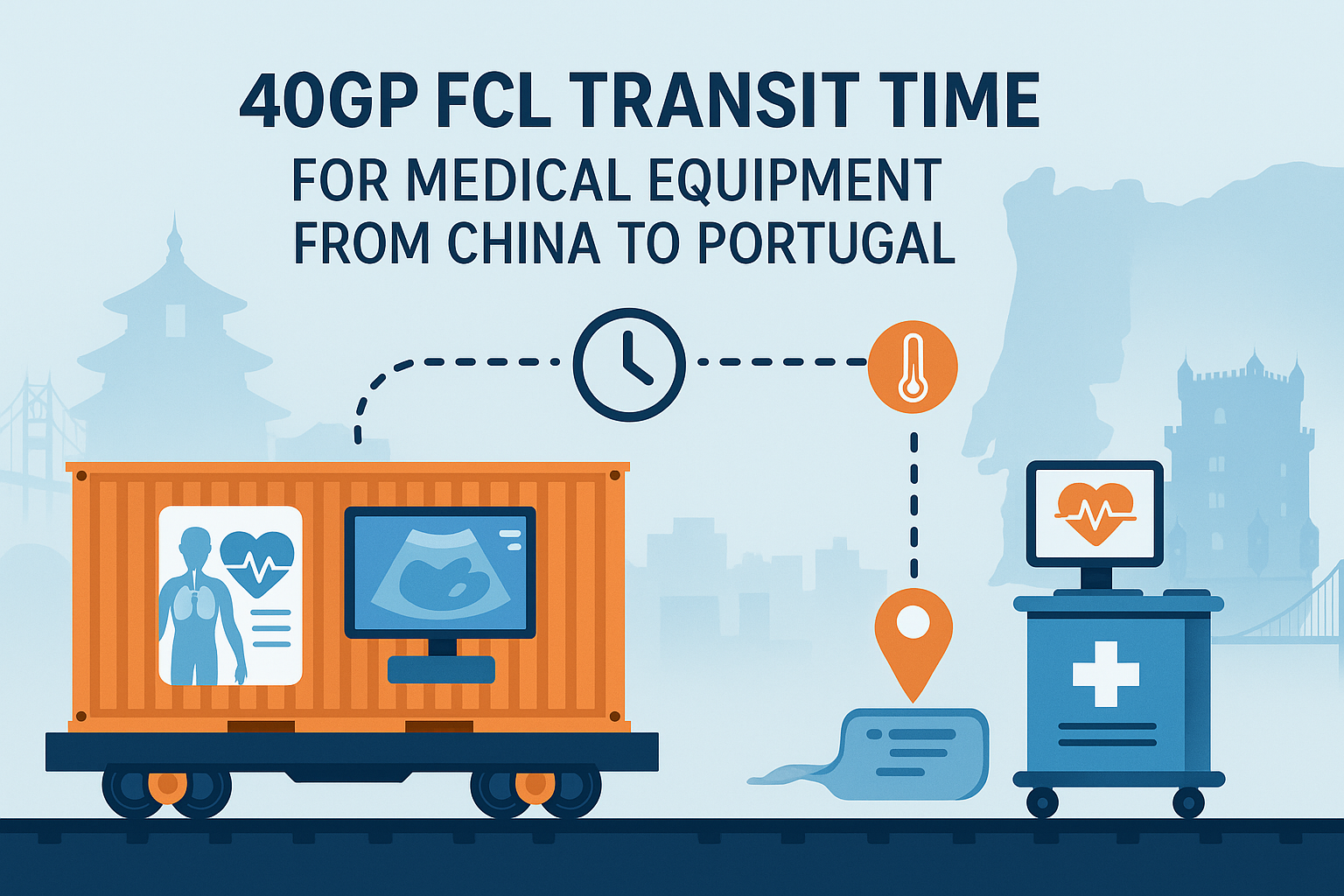
Although the 40GP FCL transit time for medical equipment from China to Portugal appears predictable on paper, real schedules often shift due to routing changes, equipment checks, and EU compliance procedures; however, the right planning and visibility tools can significantly improve reliability. Moreover, importers gain better control when working with experienced partners such as those found on the Top China Freight homepage, ensuring medical devices move safely and on schedule. As a result, healthcare supply chains maintain stability even during high-demand seasons.

Why Does Transit Time Matter So Much for Shipping Medical Equipment to Portugal?
Because medical devices are highly sensitive to temperature, vibration, humidity, and compliance errors, even minor delays may trigger quality concerns or inspection holds. Additionally, healthcare distributors in Portugal must align inventory planning with hospital and clinic demand cycles, which makes predictable transit time essential.
Furthermore, medical equipment cold-chain FCL transit time directly affects license validation windows, calibration schedules, and EU conformity checks. Therefore, importers must consider both operational and regulatory timelines.
How Is 40GP FCL Transit Time Calculated for Medical Equipment?
Transit time depends on vessel routing, port congestion, container handling sequences, and weather patterns across transit zones. Although carriers publish indicative sailings, medical cargo often requires extra steps such as temperature checks or additional packaging verification.
Key Factors Influencing Transit Time
- China port waiting time and cut-off periods
- Carrier service loop and transshipment locations
- Seasonal weather conditions
- EU port workload at Leixões or Sines
- Temperature-controlled 40GP container shipping requirements
- Reefer or dry container mode depending on device type
Moreover, supply chain visibility for healthcare cargo improves accuracy in planning, especially when dealing with multi-modal routes.

What Is the Typical Transit Time From China to Portugal for 40GP FCL?
Although transit performance varies, most China–Portugal routes fall within a predictable range.
Estimated Transit Times (Non-Contractual Reference Only)
| Route (China → Portugal) | Estimated Transit Time | Notes |
|---|---|---|
| Shanghai → Sines | 28–33 days | Stable route with moderate variability |
| Ningbo → Leixões | 30–36 days | Slightly longer due to routing loops |
| Shenzhen → Sines | 27–34 days | Popular for medical device exporters |
| Qingdao → Leixões | 32–38 days | Influenced by seasonal congestion |
Although these times guide planning, real-time monitoring helps detect delays earlier and offers better predictability.
How Do Compliance and Documentation Affect Transit Time?
Because medical equipment is regulated under EU MDR and Portuguese INFARMED requirements, documentation accuracy directly impacts clearance speed. Therefore, importers should prepare:
- EU MDR declarations
- CE conformity certificates
- China export documentation for medical equipment
- HS codes for diagnostic or electronic devices
- Packaging validation reports
- Test certificates for sterilized instruments
Moreover, medical device import compliance in Portugal demands attention to temperature history and traceability.
What Packaging Requirements Influence Transit Time Performance?
Although packaging may seem unrelated to transit duration, it directly affects handling efficiency. For instance, reinforced cartons reduce the risk of repacking at transshipment ports, which avoids major delays.
Critical Packaging Elements
- Shock-proof cushioning for delicate equipment
- Insulation for temperature-sensitive devices
- Humidity control systems for electronics
- Calibrated foam inserts for high-value machines
- Secure tamper-evident seals to streamline customs checks
Additionally, humidity-controlled FCL shipping for medical devices supports quality assurance upon arrival.
Real Case Studies
Shenzhen to Sines
Origin: Shenzhen, China
Destination: Sines, Portugal
Cargo: Portable diagnostic devices
Container: 40GP FCL
Transit Time: 29 days
Total Cost Level: Medium range
Outcome: With real-time monitoring and predictable routing, the importer avoided moisture exposure and prevented equipment recalibration delays. As a result, the distributor maintained its delivery commitments to multiple Portuguese clinics.
Qingdao to Leixões
Origin: Qingdao, China
Destination: Leixões, Portugal
Cargo: Electronic imaging equipment
Container: 40GP FCL
Transit Time: 35 days
Total Cost Level: Medium–High
Outcome: Thanks to humidity-controlled packaging and monitoring alerts, the importer identified a brief temperature spike and addressed the handling issue before customs inspection. Consequently, the shipment cleared without additional testing.
What Role Do Portuguese Ports Play in Transit Time Reliability?
Portugal’s major ports—Sines and Leixões—provide modern container-handling capabilities, although performance varies during industrial actions or peak seasons. Because medical devices often undergo additional scrutiny, documents must match exactly to avoid inspection queues.
Furthermore, Portugal port handling for temperature-sensitive cargo requires the receiving terminal to manage power plugs, lifting priorities, and proper storage. Consequently, accurate arrival forecasting becomes crucial for hospital and distributor planning.
Should Importers Combine Different Transport Modes for Better Lead-Time Control?
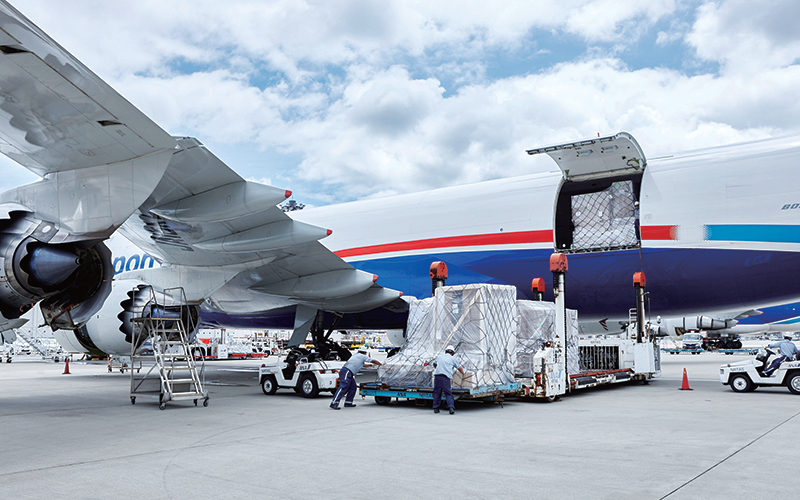
Yes. Although ocean freight is the primary mode for 40GP FCL shipments, multimodal strategies improve resilience. For instance, importers may use:
- Air Freight for urgent or high-value components
- Express Service for calibration tools or small devices
- Door-to-Door trucking for stable inland delivery
- Sea Freight for bulk shipments and consistent replenishment
To support these choices, integrated services such as air freight and door-to-door help synchronize lead times and reduce pressure on medical distribution networks.
Moreover, healthcare distributors benefit from blending modes across urgent and non-urgent SKUs.
Conclusion
The 40GP FCL transit time for medical equipment from China to Portugal becomes far more predictable when importers combine accurate scheduling, temperature-controlled packaging, continuous monitoring, and compliance preparation. Although weather changes, port congestion, or routing adjustments introduce variability, proactive planning and strong visibility systems protect delivery performance. Therefore, healthcare distributors should collaborate with trusted logistics partners to refine transit forecasts and safeguard sensitive medical devices throughout the journey. To explore optimized routes or obtain a detailed transit-time assessment, you are welcome to contact our team for tailored guidance.
Request A Free Quote
Need a reliable logistics partner? Share your shipment details and we’ll provide a tailored quotation quickly and accurately.
FAQ:
How are transit times estimated for 40GP medical equipment shipments?
Carriers analyze routing, port workloads, and seasonal factors. Monitoring tools refine estimates to improve accuracy for medical cargo.
What documents does Portugal require for medical equipment imports?
EU MDR files, CE certificates, HS codes, sterilization reports, and China export medical documentation help ensure smooth customs clearance.
How does monitoring improve transit-time predictability?
Real-time tracking reveals route deviations, temperature data, and port ETAs. These insights support accurate receiving and scheduling planning.
What factors cause Portugal port delays?
Industrial actions, congestion, equipment shortages, and seasonal peaks may extend handling times. Advance forecasting helps mitigate impact.
How can importers reduce transit-time variability?
Choosing stable carriers, applying predictive tools, and coordinating with ports improve delivery consistency for healthcare equipment.