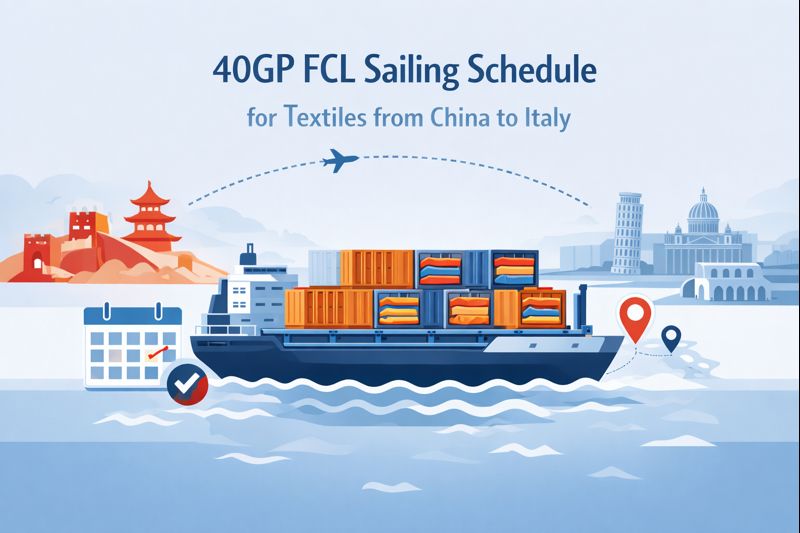
To begin with, the 40GP FCL sailing schedule for textiles from China to Italy plays a decisive role in production planning, inventory turnover, and seasonal sales cycles. Because textile exports depend heavily on stable weekly departures and predictable transit time, even small schedule changes can disrupt supply chains. Therefore, this guide explains how sailing schedules are structured and how exporters work with experienced partners like Top China Freight to maintain reliable delivery windows.
What Does a 40GP FCL Sailing Schedule Mean for Textile Shipments?
A 40GP FCL sailing schedule defines the planned departure and arrival timeline for full container textile shipments moving between China and Italy. Unlike spot bookings, scheduled sailings offer exporters a framework for forecasting delivery dates.
Why Textiles Depend on Fixed Sailing Schedules
Textile cargo often follows fashion seasons, retail promotions, or contract delivery dates. As a result, China to Italy 40GP FCL transit time for textiles must align with production and sales planning to avoid overstock or missed launches.
Which China Ports Offer the Most Reliable FCL Sailings to Italy?
Port selection significantly affects sailing frequency and transit consistency.
Common Departure Ports in China
Most textile exporters rely on:
Shanghai
Ningbo
Shenzhen (Yantian)
Qingdao
These ports provide frequent weekly FCL sailing schedules from China to Italy, offering more flexibility when production timelines shift.
How Often Do Weekly FCL Sailings Operate on This Route?
Frequency determines how easily exporters can adjust shipping plans.
Sailing Frequency Overview
Most major carriers offer weekly FCL sailings from China to Italy. During peak export seasons, some routes add extra sailings, while off-peak periods may see reduced frequency.
To improve predictability, many exporters coordinate shipments through reliable sea freight services combined with structured FCL shipping solutions to maintain schedule continuity.
How Long Is the Typical 40GP FCL Transit Time from China to Italy?
Transit time remains one of the most searched topics for textile exporters.
Average Sailing Time Range
In general, the 40GP container shipping time from China to Italy ranges between 28 and 38 days, depending on:
Port pair selection
Direct vs transshipment routing
Seasonal congestion
Although transit time may fluctuate, weekly departures help stabilize overall delivery schedules.
In this case, consistent weekly FCL sailing schedules from China to Italy allowed the exporter to match shipment arrival with retail production planning, avoiding excess inventory.
Shanghai to La Spezia Home Textiles
Route: Shanghai → La Spezia Cargo: Home textile products Container Type: 40GP FCL Transit Time: 35 days Total Shipping Cost Range: USD 4,200–5,100
Because the exporter aligned production with the confirmed sailing schedule, delivery remained stable even during minor port congestion, protecting seasonal sales timelines.
How Do Customs Procedures Impact the Sailing Schedule to Italy?
Although sailing schedules focus on vessel movements, customs procedures strongly influence the effective delivery timeline for textiles entering Italy. Therefore, exporters must look beyond port-to-port dates.
Key Customs Timeline Factors
In practice, the customs clearance timeline for textile imports into Italy depends on:
Accuracy of HS codes and fabric composition declarations
Completeness of commercial invoices and packing lists
Compliance with EU textile labeling and origin rules
When documents are prepared in advance, containers often clear customs within 2–4 working days, keeping the original sailing schedule intact.
Why Work with a Specialist for Textile Sailing Schedules?
Managing textile shipments requires balancing timing, cost, and compliance.
Partners such as Top China Freight support exporters by coordinating sailing schedules, documentation, and inland delivery into one structured plan. With integrated options including professional door-to-door transport and reliable customs brokerage services, exporters reduce uncertainty and improve on-time performance.
How Do Logistics Trends Affect Future Sailing Schedules?
Looking ahead, logistics trends continue to reshape schedules.
Emerging Schedule Trends
Recent developments include:
Increased use of fixed weekly rotations
Greater transparency in delivery schedules
More data-driven capacity planning
As these trends mature, exporters gain improved visibility into sailing reliability and long-term planning.
Conclusion
In summary, the 40GP FCL sailing schedule for textiles from China to Italy shapes every stage of the export supply chain, from production planning to final delivery. While transit times and weekly departures provide structure, real reliability comes from aligning schedules with customs readiness and inland logistics. Exporters who plan holistically achieve smoother delivery cycles and stronger supply-chain control.
Request A Free Quote
Start shipping smarter with TopChinaForwarder today! 🚢✨ Request a Free Quote 📝 and get a tailored logistics plan built around your cargo and timeline.