
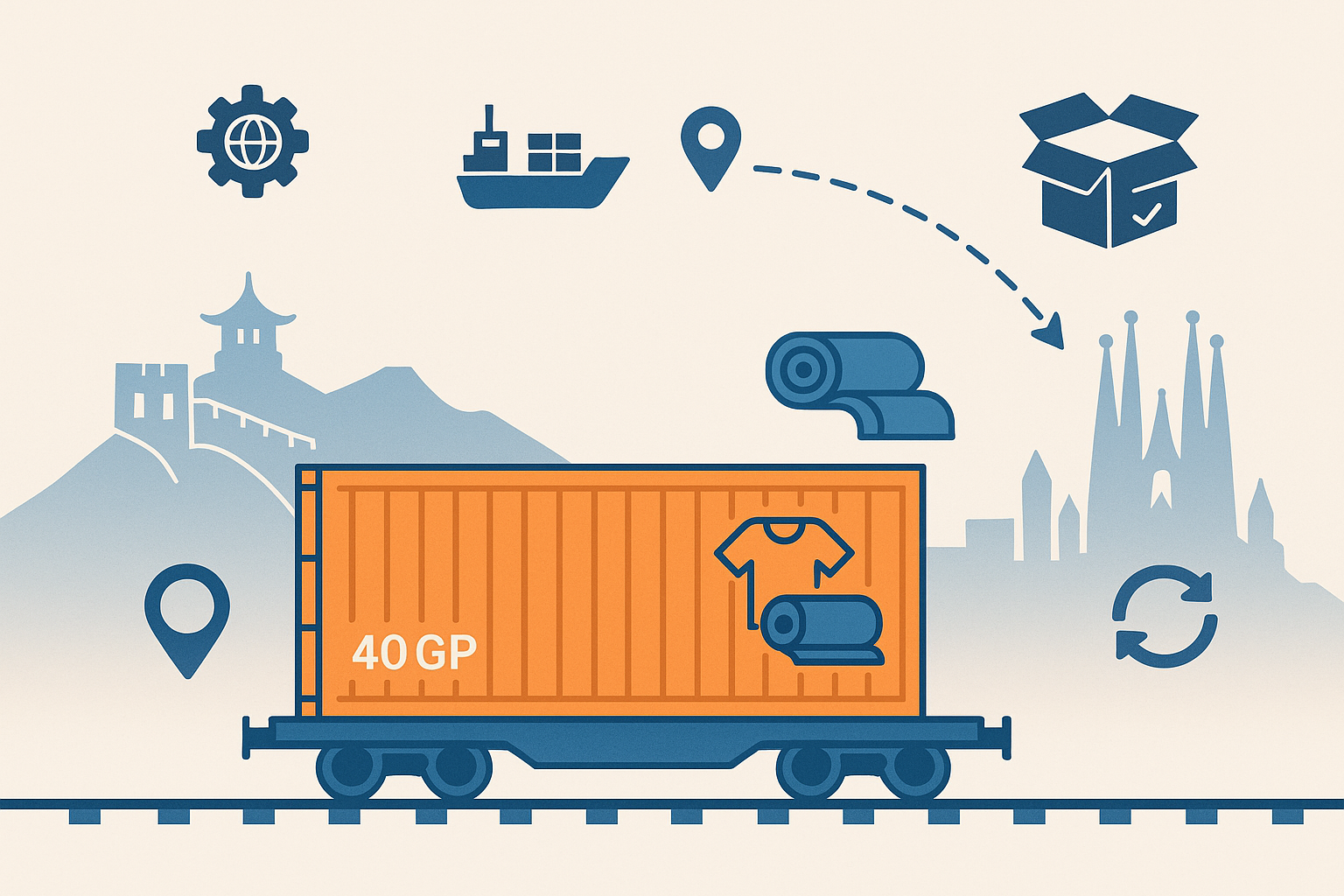
In textile trade, 40GP FCL detention prevention for textiles from China to Spain has become a critical concern as port congestion and tight container cycles increase costs. However, detention risks are rarely caused by a single delay; instead, they usually stem from poor coordination across the supply chain. Therefore, this guide—supported by operational experience from Top China Freight—offers practical, step-by-step strategies to reduce detention exposure before containers ever reach Spanish ports.

What causes detention risk in 40GP FCL textile shipments?
Although detention fees appear at the destination, their root causes often begin much earlier in the shipping process.
How textiles amplify detention exposure
Textiles typically ship in high volumes with tight seasonal demand. As a result, any delay—whether in customs or inland delivery—can quickly exceed free time. Moreover, mixed SKUs and varied HS codes often increase inspection probability.
Common upstream triggers
In many cases, detention starts with:
- Late export document submission
- Incorrect packing lists or weight declarations
- Unclear delivery appointments at destination
Because these issues compound, early prevention becomes far more effective than reactive solutions.

Why does container free time matter for China–Spain routes?
Free time is the most underestimated cost lever in FCL logistics, especially for Europe-bound textiles.
Understanding free time allocation
Typically, carriers offer 5–7 days of free detention at destination ports such as Barcelona or Valencia. However, this window shrinks during peak season. Therefore, planning container return timelines must start before vessel departure.
Impact on landed cost
Even a two-day overrun can significantly raise the landed cost per carton. Consequently, detention prevention directly improves profit margins for textile importers.
How can pre-shipment planning reduce detention risk?
Before containers are sealed, several proactive steps can eliminate downstream delays.
Optimizing loading and documentation
Accurate carton counts, standardized pallet layouts, and compliant HS codes reduce inspection risk. Additionally, exporters using integrated FCL & LCL services often benefit from earlier document validation and carrier coordination.
Aligning shipment schedules
Equally important, aligning factory readiness with vessel cut-off dates avoids last-minute rollovers. As a result, delivery schedules remain predictable, even during high-volume shipping cycles.
What documents are critical for smooth container release?
Although documentation was discussed earlier, it deserves deeper operational focus. Spanish customs pays particular attention to textile-specific details, including material composition, country of origin, and labeling compliance.
Below is a practical checklist frequently used to minimize clearance delays:
| Document | Purpose | Common Risk |
|---|---|---|
| Commercial Invoice | Customs valuation | HS code mismatch |
| Packing List | Cargo verification | Incorrect carton count |
| Bill of Lading | Cargo ownership | Name inconsistencies |
| Certificate of Origin | Trade compliance | Missing signatures |
| Textile Declarations | Material compliance | Incomplete fiber data |
When these documents are aligned and pre-reviewed, container release typically proceeds within hours rather than days.
Case Studies
Textile apparel shipment from Ningbo to Valencia
Origin: Ningbo, China
Destination: Valencia, Spain
Cargo: Folded apparel, boxed cartons
Container: 40GP FCL
Transit Time: 28 days
Freight Cost: USD 4,200 (all-in, excluding duties)
Challenge: Seasonal congestion at Valencia threatened to exceed standard free time.
Solution: Extended free time was negotiated, and inland trucking was pre-booked before arrival.
Result: Container returned within free time, zero detention charges, on-time warehouse delivery.
Home textile shipment from Shanghai to Barcelona
Origin: Shanghai, China
Destination: Barcelona, Spain
Cargo: Home textiles (bed linen)
Container: 40GP FCL
Transit Time: 30 days
Freight Cost: USD 4,450 (all-in, excluding duties)
Challenge: Customs inspection risk due to labeling requirements.
Solution: Pre-clearance document review and early submission.
Result: Clearance completed within 24 hours, container unloaded and returned with two free days remaining.
How do shipping schedules impact detention risk from China to Spain?
Shipping schedules determine far more than transit time. In fact, they influence container availability, port congestion, and inland transport coordination.
Direct sailings from major Chinese ports such as Ningbo, Shanghai, or Shenzhen often arrive at Spanish hubs with predictable discharge windows. Conversely, transshipment routes may introduce uncertainty, increasing the chance of arrival during congested periods.
Therefore, aligning vessel schedules with warehouse readiness and trucking availability is a core detention prevention strategy, not merely a transit-time optimization.
At this stage, smart shippers evaluate schedule reliability alongside freight rates, rather than prioritizing cost alone.

What role does supply chain visibility play?
Visibility transforms detention prevention from reactive to proactive. Real-time tracking of vessel arrival, container discharge, and customs status allows teams to adjust plans before delays escalate.
For example, when discharge is delayed, inland trucking appointments can be rescheduled in advance. Similarly, when inspections are triggered, warehouse teams can shift labor plans accordingly.
Modern FCL workflows supported by reliable sea freight services increasingly rely on such visibility tools to maintain predictable delivery schedules and control downstream costs.
How can experienced partners reduce detention risk long-term?
Detention prevention is not a one-time fix; it is a repeatable process. By analyzing historical shipments, identifying delay patterns, and adjusting routing strategies, importers gradually reduce exposure across the entire supply chain.
This is where experienced logistics partners such as Top China Freight add value—not by promising unrealistic timelines, but by designing stable, compliant FCL workflows that adapt to changing port and customs conditions.
Over time, this structured approach transforms detention from a recurring cost into a controlled variable.
Conclusion
Ultimately, 40GP FCL detention prevention for textiles from China to Spain depends on preparation, coordination, and informed decision-making rather than last-minute reactions. From documentation accuracy to inland delivery planning, each step directly affects detention exposure. By applying proven strategies and working with capable logistics partners, textile importers can protect margins, stabilize delivery schedules, and maintain long-term supply chain resilience.
Request A Free Quote
Start shipping smarter with TopChinaForwarder today! 🚢✨ Request a Free Quote 📝 and get a tailored logistics plan built around your cargo and timeline.
FAQ:
How are detention charges calculated for 40GP containers?
They are usually charged per day after free time expires, based on carrier tariffs that increase progressively.
Can detention be avoided completely for textile shipments?
Yes, when documentation, trucking, and unloading are synchronized, detention can often be eliminated.
Should I choose the cheapest freight rate to Spain?
Lower rates may increase risk. Total landed cost matters more than base freight alone.
Lower rates may increase risk. Total landed cost matters more than base freight alone.
Congestion and labor shortages increase delays, making advance planning essential.
Is insurance useful for detention costs?
Standard cargo insurance does not cover detention, so prevention remains the best solution.