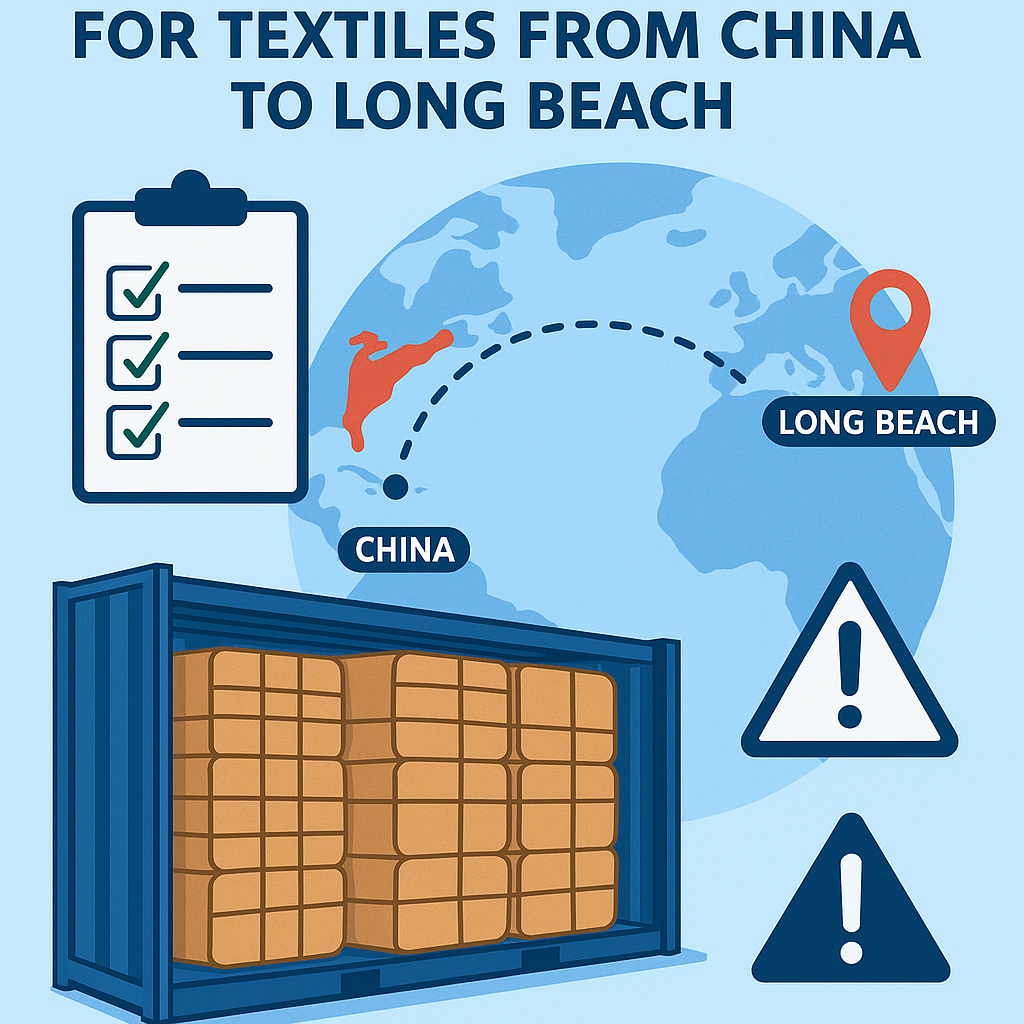
Managing textile shipments across the Pacific requires precision and planning. For exporters, 40GP FCL demurrage prevention for textiles from China to Long Beach is essential to avoid costly storage fees and ensure smooth logistics flow. This comprehensive guide explores how to prevent demurrage, optimize shipping efficiency, and manage textile cargo with expert-level strategies.

What Is Demurrage and Why Is It a Major Concern?
Demurrage refers to the fee charged by shipping lines when a full container remains at the terminal beyond the free time allowed after vessel arrival. For textile exporters shipping via 40GP FCL (Full Container Load), these charges can quickly accumulate.
| Fee Type | Description | Typical Rate (USD/Day) |
|---|---|---|
| Demurrage | Container stays at port beyond free days | $150–$300 |
| Detention | Container not returned after delivery | $100–$200 |
| Storage | Terminal space usage beyond deadline | $50–$100 |
In the textile trade, where delivery schedules are often tight and seasonal, avoiding demurrage helps maintain profit margins and customer satisfaction.
Why Use 40GP Containers for Textile Shipping?
A 40GP (General Purpose) container is the most common choice for textile transport due to its capacity, affordability, and global availability.
| Container Type | Capacity (CBM) | Ideal Cargo | Dimensions (m) |
|---|---|---|---|
| 20GP | 28 | Small textile rolls | 5.9 × 2.35 × 2.39 |
| 40GP | 58 | Bulk fabric and garments | 12.0 × 2.35 × 2.39 |
| 40HQ | 68 | Lightweight apparel | 12.0 × 2.35 × 2.69 |
Moreover, textile exporters prefer 40GP FCL because it allows better space utilization, faster loading, and lower per-unit freight costs compared to LCL shipments.
What Causes Demurrage in FCL Shipping to Long Beach?
Several operational factors contribute to demurrage for textile shipments from China:
- Port Congestion: Long Beach often experiences delays during peak import seasons.
- Customs Inspection Delays: Random inspections or missing documentation extend clearance time.
- Incomplete ISF Filing: Late or incorrect Importer Security Filing leads to U.S. Customs holds.
- Consignee Coordination Issues: Delayed trucking or warehouse readiness prolongs container storage.
- Holidays and Labor Shortages: Reduced manpower slows port operations during festive periods.
Understanding these causes allows exporters to anticipate and mitigate potential costs effectively.
How to Prevent Demurrage for Textile Shipments?
Preventing demurrage begins long before the cargo reaches Long Beach. Implementing structured planning reduces risks substantially.
| Strategy | Implementation | Expected Outcome |
|---|---|---|
| Early Booking | Reserve vessel and trucking slots in advance | Avoid congestion delays |
| Accurate Documentation | Verify invoices, packing lists, and ISF | Faster customs release |
| Real-Time Tracking | Monitor vessel arrival and port status | Timely delivery scheduling |
| Customs Broker Support | Use local agent in Long Beach | Faster clearance and coordination |
| On-Dock Pickup | Collect container directly upon release | Minimize terminal storage time |
Furthermore, communication between shipper, forwarder, and consignee must remain continuous to coordinate container pickup immediately after vessel discharge.
Case Studies: Real 40GP FCL Textile Shipments
Case 1: Ningbo → Long Beach
Cargo: 18 tons of cotton fabric
Container Type: 40GP
Freight Cost: USD 4,500
Transit Time: 21 days
✅ Result: Avoided demurrage through pre-arranged trucking and early customs filing.
Case 2: Shenzhen → Long Beach
Cargo: 20 tons of knitted garments
Container Type: 40GP
Freight Cost: USD 4,800
Transit Time: 23 days
✅ Result: Used real-time vessel tracking to coordinate delivery within 24 hours of discharge.
Need a shipping solution? 🚢 Request a Free Quote 📝 from TopChinaFreight and get the best rates and fastest routes today!
What Is the Typical Transit Time and Route?
Transit duration for textile shipping from China to Long Beach varies slightly by port of origin and carrier.
| Route | Departure Port | Transit Time | Carrier Example |
|---|---|---|---|
| Ningbo → Long Beach | Beilun Port | 20–23 days | COSCO |
| Shanghai → Long Beach | Yangshan Port | 22–25 days | CMA CGM |
| Shenzhen → Long Beach | Yantian Port | 21–24 days | Evergreen |
Although sea freight remains the most cost-effective option, port congestion can occasionally add 3–5 days to total delivery time.
What Documents Are Needed to Avoid Customs Delays?
Ensuring accurate and complete documentation prevents unnecessary clearance delays that often trigger demurrage.
| Document | Purpose | Issued By |
|---|---|---|
| Bill of Lading | Proof of shipment | Carrier |
| Commercial Invoice | Declared cargo value | Exporter |
| Packing List | Describes goods by item | Shipper |
| ISF Filing | U.S. import requirement | Importer |
| Arrival Notice | Advises consignee of cargo | Forwarder |
| Delivery Order | Authorizes cargo release | Carrier |
Always submit ISF filings at least 48 hours before vessel departure to avoid customs penalties and port holds.
How to Optimize 40GP FCL Operations for Textiles?
Effective demurrage prevention depends on integrated logistics coordination. Below are key operational tactics:
- Monitor Cut-Off Dates: Ensure containers are gated in before port deadlines.
- Use Professional Forwarders: Partner with reliable companies like TopChinaFreight for proactive monitoring.
- Choose Fast Clearance Ports: Avoid over-congested terminals by selecting carriers with alternate discharge options.
- Negotiate Free Days: Request extended free-time clauses (5–7 days) during contract negotiation.
- Digital Tracking Tools: Use EDI-based tracking systems to synchronize arrival notices and delivery schedules.
These steps create efficiency, visibility, and predictability across every stage of textile shipping.
Conclusion
The 40GP FCL demurrage prevention for textiles from China to Long Beach process relies on meticulous planning, transparent communication, and proactive customs handling. Exporters who monitor vessel schedules, prepare documentation early, and coordinate inland trucking can avoid costly storage charges entirely.
To ensure seamless textile logistics, TopChinaFreight provides expert 40GP FCL management, demurrage prevention, and door-to-door delivery solutions tailored to U.S. import requirements.
Resquest A Free Quote
Get started with TopChinaFreight today! 🚢✨ Simply Request a Free Quote 📝 to receive a customized shipping solution tailored to your needs. Our experts will provide the best rates 💰, fastest routes 🚀, and professional guidance 🌍 for your international logistics.
FAQs
Q1.What causes demurrage in FCL textile shipping?
Delays due to customs inspection, late container pickup, or port congestion often trigger demurrage at Long Beach.
Q2.How can I avoid demurrage charges for textiles?
Book early, track shipment progress, and coordinate with a reliable forwarder for on-time container pickup.
Q3.What is the standard free time at Long Beach port?
Most carriers allow 5–7 free days after discharge before demurrage charges start accumulating.
Q4.Are 40GP containers suitable for textile shipments?
Yes, 40GP containers provide optimal space for bulk fabrics while maintaining manageable freight costs.
Q5.How do tracking systems help prevent demurrage?
Real-time tracking updates inform importers of vessel ETA, enabling faster customs clearance and container release.