
- By rudy
- November 26, 2025
- Freight knowledge
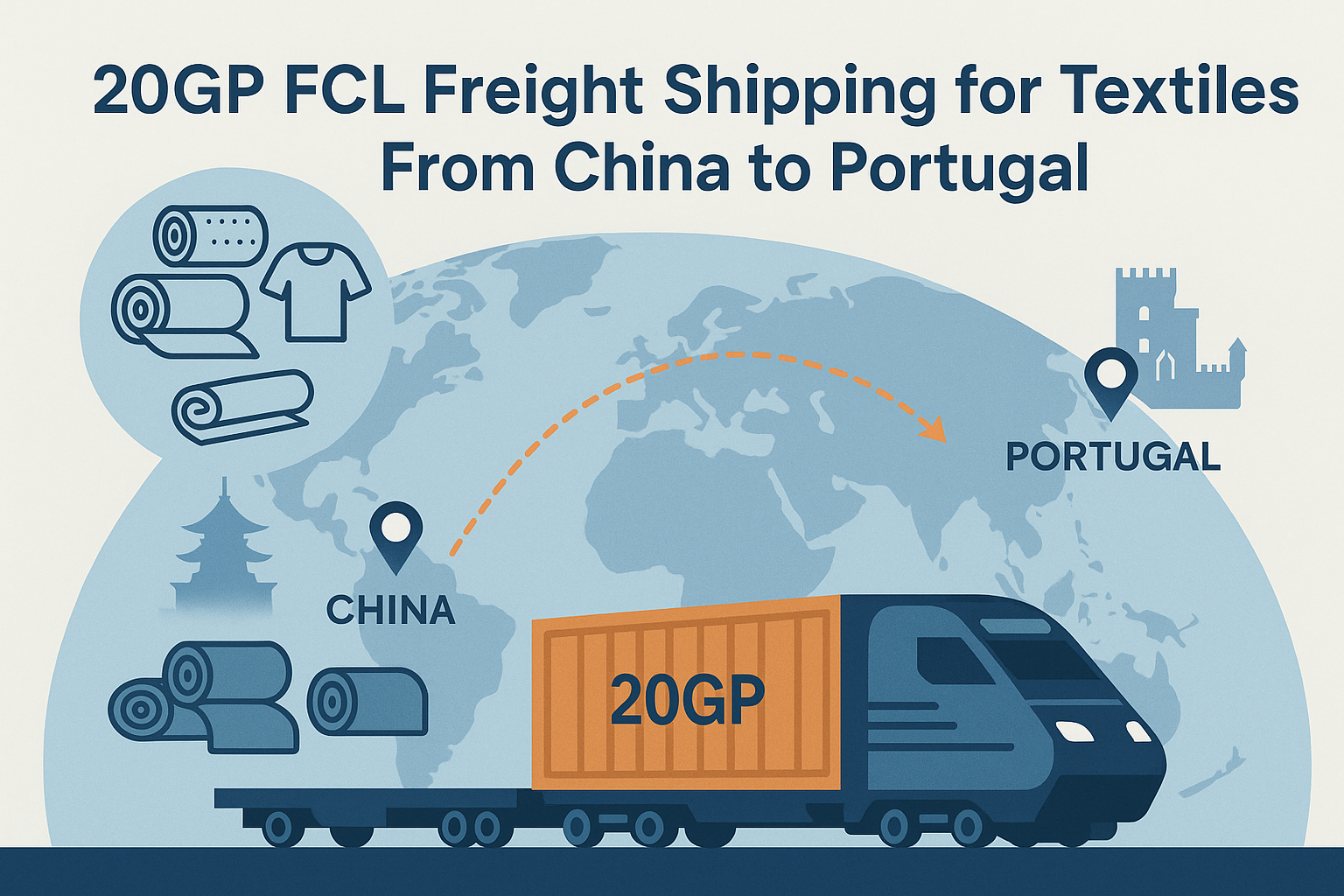
Although textile importers often struggle to control the 20GP FCL freight rate for textiles from China to Portugal, a clear strategy makes the process far easier. As supply chains tighten, businesses still succeed when they use structured planning, reliable partners, and trusted resources like the Top China Freight homepage for guidance. Therefore, this article explains practical steps, predictable freight ranges, and customs-ready solutions.

What Influences the 20GP FCL Freight Rate for Textiles from China to Portugal?
Because textile cargo mixes volume, weight, and seasonality, several variables influence the 20GP FCL freight rate for textiles from China to Portugal. Moreover, carriers adjust rates frequently based on equipment availability, route congestion, and fuel price indexes. Textile importers must therefore understand these drivers before locking in prices, since an informed cost strategy always reduces annual freight spend.
Key Cost Drivers
- Peak vs off-peak season
Fabric demand spikes before European fashion cycles, so textile shipping cost China to Portugal rises accordingly. - Port pair selection
Choosing Ningbo or Shanghai instead of inland feeder ports can lower the FCL freight cost for fabric import. - Surcharges and customs rules
Portugal textile customs clearance procedures also influence the final bill because inaccurate HS codes may trigger delays.
Because these variables combine, no two shippers pay the same price; however, ranges and patterns remain predictable when data is analyzed properly.
How Much Does a 20GP Textile Container Usually Cost?


Importers often struggle to plan budgets, yet they can still use reference ranges to evaluate quotations. Although freight varies each week, the following table offers a realistic comparison.
Estimated 20GP FCL Freight Cost (Textile Cargo)
| Route (China → Portugal) | Typical Cost Range (USD) | Usual Transit Time | Notes |
|---|---|---|---|
| Shanghai → Lisbon | 2,200 – 3,200 | 30–38 days | Stable sailings |
| Ningbo → Porto | 2,100 – 3,150 | 32–40 days | Competitive rates |
| Shenzhen → Lisbon | 2,300 – 3,350 | 28–36 days | Faster loading |
| Qingdao → Lisbon | 2,250 – 3,300 | 33–42 days | Longer routing |
These values reflect market trends and help textile buyers create accurate delivery schedules and supply chain plans.
What Shipping Time Should Textile Importers Expect?
Transit time for textile containers varies, yet patterns remain consistent. Additionally, textile importers should always add buffer time to avoid stock-out risks.
Main Shipping Time Factors
- Carrier routing and transshipment
- Port congestion in Shenzhen or Lisbon
- Customs readiness and fabric certification
- Weather-related vessel delays
Because textile shipments often support production cycles, timing accuracy becomes essential.
How Should You Prepare a Textile 20GP Container for Shipping?
Preparing a textile shipment requires strict packing standards. Although fabrics appear lightweight, they demand balanced stacking to prevent crushing and moisture absorption.
Packing Essentials
- Use moisture-resistant packaging
- Wrap fabrics in PE film
- Secure rolls vertically when possible
- Add desiccants to minimize humidity
- Use pallets only when required by buyers
Textile Container Packing Checklist
| Packing Task | Details | Importance Level |
|---|---|---|
| Material Protection | PE film + moisture barrier | High |
| Cargo Stability | Tight loading to avoid shifting | High |
| Carton Strength | 5-layer recommended | Medium |
| Label Accuracy | HS codes + origin | High |
| Weight Distribution | Avoid uneven floor load | Medium |
Because textile cargo often moves in large volumes, these rules help ensure stable freight pricing and reduced claims.
Case Study
1 — 20GP Textile Shipment from Ningbo to Lisbon
Cargo: 12,500 kg of cotton fabric
Loading: 68 rolls + 220 cartons
Shipping Time: 33 days
Total Cost: Within the 2,150–3,000 USD range
Outcome: The buyer saved 9% on freight after adjusting the port pair from Qingdao to Ningbo.
Because the cost difference directly affected retail pricing, this routing optimization improved margins and ensured on-time restocking.
2 — Fashion Brand Shipment from Shenzhen to Porto
Cargo: High-value polyester blends
Method: 20GP FCL with humidity-controlled packing
Transit: 29 days
Result: Fabric arrived without moisture issues due to enhanced packing solutions.
Value: Importer avoided a 2-week production delay by securing an early booking window.
These cases demonstrate how planning influences supply chain performance.
Why Do Customs Procedures Affect Textile Freight Costs?
Customs rules for fabric imports differ from general cargo. Additionally, textile import duty Portugal varies by HS code classification, making proper documentation essential.
Common requirements include:
- Commercial invoice
- Packing list
- Certificate of origin
- Textile composition declaration
Therefore, importers must prepare documents in advance to avoid demurrage.
For shippers needing end-to-end compliance, Top China Freight provides professional support through its customs brokerage service , ensuring smooth pre-clearance.
Can Route and Carrier Selection Reduce Your Textile Freight Rate?
Although many importers default to the cheapest rate, smarter strategies often reduce cost more effectively.
Smart Optimization Strategies
- Choose routes with consistent textile volume
- Avoid carriers with frequent rollover history
- Check shipping schedule for 20GP containers weekly
- Compare two–three port pairs for best-priced lanes
Moreover, stable textile freight pricing frequently comes from early booking — usually 10–14 days before the vessel cutoff.
What Should Importers Avoid When Shipping Textiles by FCL?
Many companies lose money because they overlook common mistakes.
Avoid These Errors
- Booking during peak weeks without rate comparisons
- Ignoring fabric-specific packing rules
- Providing incomplete customs documents
- Forgetting to update delivery schedules
Because these oversights increase both cost and risk, importers must manage them proactively.
Conclusion
In summary, importers who analyze demand cycles, optimize port choices, and prepare compliant documents can consistently secure a stable 20GP FCL freight rate for textiles from China to Portugal. Moreover, working with a capable logistics partner ensures predictable delivery schedules and smoother customs processes. To improve long-term planning, businesses should request updated quotations and compare seasonal trends.
Request A Free Quote
Need a reliable logistics partner? Share your shipment details and we’ll provide a tailored quotation quickly and accurately.
FAQ:
How often do textile freight rates change?
Rates adjust weekly, although major shifts occur during peak textile seasons or fuel-price changes.
Do textile shipments require special documents?
Commercial invoices, packing lists, composition statements, and origin certificates are usually required.
What causes delays for textile imports?
Port congestion, incomplete customs documents, and missed cutoffs are the most common reasons.
Are 20GP containers suitable for heavy textile rolls?
They work well, but cargo must be balanced to avoid floor loading issues.
How early should I book a textile container?
Booking 10–14 days in advance generally ensures space and stable pricing.